My journey with understanding the menstrual cycle started years ago when I had no idea why I felt completely different each week of the month. Nobody sat me down and explained it clearly. Once I started learning and tracking, everything changed. Understanding the menstrual cycle helped me plan better, feel less confused, and take real control of my health. If you have ever felt the same way, this guide is for you.
What Is the Menstrual Cycle and Why It Matters
Many people think the menstrual cycle is just “the period.” But it is so much more than that. It is a full monthly process that affects your energy, mood, skin, sleep, and focus every single day. Once you understand it, daily life starts to make a lot more sense.
Simple Definition of the Menstrual Cycle
The menstrual cycle is the body’s monthly preparation for a possible pregnancy. It starts on day one of your period and ends the day before your next one begins.
Here is what happens inside the body each month. The ovaries and uterus work together through a series of hormonal signals. Two key hormones drive this entire process: estrogen and progesterone. Estrogen rises in the first half of the cycle. Progesterone takes over in the second half.
The average cycle is 28 days. But real life is rarely that perfect. According to research published in StatPearls (updated September 2024), a normal cycle is considered regular if the difference between the shortest and longest cycle is 7 days or less for those aged 26 to 41, and 9 days or less for those aged 18 to 25 or 42 to 45. So if your cycle is 26 days one month and 31 the next, that can still be completely normal.
Menstruation typically begins around age 12 and continues until menopause. The average person experiences approximately 400 cycles over their lifetime. That is a lot of cycles to live through without ever truly understanding them.
Why Understanding Your Cycle Is Important
Knowing your cycle is not just useful for tracking fertility. It helps with so much more.
For starters, it helps you predict your period. No more being caught off guard. You learn when to expect cramps, fatigue, or mood shifts. You can prepare for them instead of being surprised.
It also supports fertility awareness. If you are trying to conceive, or trying not to, knowing your ovulation window is key. The fertile window is a short and specific part of your cycle. Missing it by a few days makes a huge difference.
Beyond that, cycle awareness improves your daily planning. Some days your brain is sharp. Other days, rest is what your body truly needs. When you know which phase you are in, you can plan workouts, work tasks, and social events around your natural energy.
A Real-Life Example
On day one of my cycle, I feel slow and heavy. Getting off the couch takes effort. By day 10, though, I feel sharp and motivated. I write more, plan more, and get more done. Neither of those feelings is random. Both are driven by hormones. And once I understood that, I stopped fighting my body and started working with it instead.
The Four Phases of the Menstrual Cycle Explained
Every month, your body moves through four distinct phases. Each one feels different. Each one has a purpose. Learning them is like getting a cheat sheet for your own body.
Menstrual Phase (Days 1–5)
This is where the cycle begins. The uterine lining sheds because no pregnancy occurred. Estrogen and progesterone are at their lowest. That is why you feel tired and slow.
Common symptoms during this phase include cramps, lower back pain, bloating, fatigue, and headaches. Some people also experience mood changes as hormone levels drop sharply.
Self-care during this phase matters a lot. Warm drinks like herbal tea or warm water with lemon can ease cramps. Light stretching or gentle yoga helps with circulation. Rest is genuinely needed here. Your body is doing real physical work, even if you are just lying on the couch.
Follicular Phase (Days 1–13)
Here is something interesting: the follicular phase actually overlaps with the menstrual phase. It starts on day one of your period and continues until ovulation.
During this phase, the pituitary gland releases follicle-stimulating hormone (FSH). This triggers the ovaries to develop several small follicles. One of them will eventually release an egg. As follicles develop, they produce estrogen. Estrogen levels rise steadily, and so does your energy.
By days 7 to 10, most people feel noticeably better. Focus improves. Motivation comes back. This is the best time to tackle big projects, set goals, or start something new. Your brain is literally running on rising estrogen, which boosts serotonin and supports mood.
Ovulation Phase (Around Day 14)
This is the shortest and most powerful phase of the cycle. A surge in luteinizing hormone (LH) triggers the dominant follicle to release a mature egg. That egg travels down the fallopian tube toward the uterus.
Ovulation itself lasts only 12 to 24 hours. But the fertile window is wider, sperm can survive in the body for up to five days. So the fertility window spans roughly five to six days before and including ovulation.
You might notice physical signs of ovulation. Cervical mucus becomes clearer and more stretchy, similar to raw egg whites. Your basal body temperature (BBT) rises slightly after ovulation. Some people also feel a mild, one-sided pelvic ache called mittelschmerz.
Emotionally, this phase often brings confidence and social energy. Many people feel their best during ovulation. Estrogen peaks here, and testosterone also rises slightly, boosting libido and assertiveness.
Luteal Phase (Days 15–28)
After ovulation, the empty follicle transforms into the corpus luteum. This structure produces progesterone, which prepares the uterine lining for a potential implanted embryo.
If no pregnancy occurs, the corpus luteum breaks down around day 25 to 28. Progesterone and estrogen both drop. This hormonal drop is what triggers PMS symptoms, and eventually menstruation.
The luteal phase is often the hardest for many people. Common symptoms include bloating, breast tenderness, fatigue, mood swings, irritability, cravings, and difficulty sleeping. These are all driven by progesterone dominance and the eventual hormone crash at the end of the phase.
This does not mean the luteal phase is all bad. The first half (days 15–20) often feels calm and focused. It is the second half, when progesterone peaks and then drops, that tends to feel rough.
Menstrual Cycle Phases at a Glance
Here is a quick expert-backed summary of all four phases in one place.
| Phase | Days | Key Hormone | How You Feel | Best Activities |
|---|---|---|---|---|
| Menstrual | 1–5 | Low estrogen + progesterone | Tired, crampy, slow | Rest, gentle stretching, warm drinks |
| Follicular | 1–13 | Rising estrogen | Energized, motivated, clear | Planning, learning, starting projects |
| Ovulation | ~14 | Peak estrogen + LH surge | Confident, social, sharp | Meetings, presentations, social events |
| Luteal | 15–28 | High progesterone | Calm → moody, bloated | Reflection, light tasks, self-care |
Common Symptoms During Each Cycle Phase
Your body sends signals every single day. Learning to read them changes everything.
Physical Symptoms
Physical symptoms vary by phase. During menstruation, cramps and fatigue are most common. During the follicular phase, energy returns and skin often clears up. Around ovulation, breast tenderness and increased vaginal discharge may appear. The luteal phase brings its own set of physical changes: bloating, breast soreness, acne flares, appetite shifts, and sleep disruption.
Skin changes are closely tied to hormones too. Estrogen helps skin look clear and hydrated in the first half of the cycle. The progesterone-dominant luteal phase can trigger breakouts, especially around the jawline and chin.
Appetite shifts are real and well-documented. Many people crave carbohydrates and sweets in the luteal phase. This is partly because progesterone raises body temperature slightly, increasing the metabolic rate and caloric need. Eating balanced meals helps manage cravings without the energy crash.
Emotional and Mental Changes
Mood changes throughout the cycle are driven by the same hormones that control physical symptoms. During the follicular and ovulation phases, rising estrogen boosts serotonin and dopamine. Focus is sharper. Motivation is higher. Anxiety tends to be lower.
In the luteal phase, as estrogen falls and progesterone rises, many people experience mood swings, irritability, or heightened anxiety. This is sometimes called premenstrual syndrome (PMS). The days just before menstruation, when both hormones drop sharply, are often the most emotionally challenging.
Brain fog is also a real phenomenon in the late luteal phase. Tasks that felt easy earlier in the cycle can feel harder. This is not laziness. It is a hormonal response.
When Symptoms Are Not Normal
Not every symptom is part of a healthy cycle. Some signs need medical attention.
Severe cramps that prevent you from going to work or school are not typical. According to the Mayo Clinic, you should talk to a healthcare provider if your periods become irregular after being regular, you bleed for more than seven days, you experience severe pain, or your periods stop for more than 90 days and you are not pregnant.
Very heavy bleeding, soaking through a pad or tampon every hour for several hours, is also a sign to seek care. So are cycles shorter than 21 days or longer than 35 days, and bleeding between periods.
Conditions like endometriosis, polycystic ovary syndrome (PCOS), uterine fibroids, and thyroid disorders can all affect the menstrual cycle. Early diagnosis makes management far easier.
How to Track Your Menstrual Cycle (Best Methods)
Tracking your cycle turns confusion into clarity. It is honestly one of the simplest health habits you can start today.
Manual Tracking (Calendar Method)
The simplest way to track your cycle is with a calendar. Mark the first day of your period as day one. Mark the last day of bleeding. Do this every month.
Over time, you will see your average cycle length. You will also notice patterns, which days you feel tired, which days you feel great, when PMS tends to hit. A simple notebook works perfectly for this.
The limitation of manual tracking is that it requires consistency. If you forget to log a few days, the data becomes less useful. It also does not predict ovulation as accurately as other methods.
Using Menstrual Cycle Tracking Tools
Apps and digital tools have transformed cycle tracking. Research published in the Journal of Medical Internet Research found that 431 participants, about 62% of the sample, used period tracker apps primarily to predict their next menstrual cycle.
Apps like Clue, Flo, and Ovia allow you to log symptoms, mood, sleep, and basal body temperature in one place. They use algorithms to predict your next period and ovulation window. The more data you enter, the more accurate the predictions become.
Smart wearables like the Oura Ring now take this even further. Research has shown that wearable sensors can track skin temperature, heart rate, and other physiological signals to identify menstrual cycle phases with up to 87% accuracy using machine learning models. These tools are still evolving, but they represent the future of cycle tracking.
What Data You Should Track
For the most useful picture of your cycle, track the following every month:
- Cycle length, the number of days from the first day of one period to the first day of the next
- Period duration and flow, how many days you bleed and how heavy it is
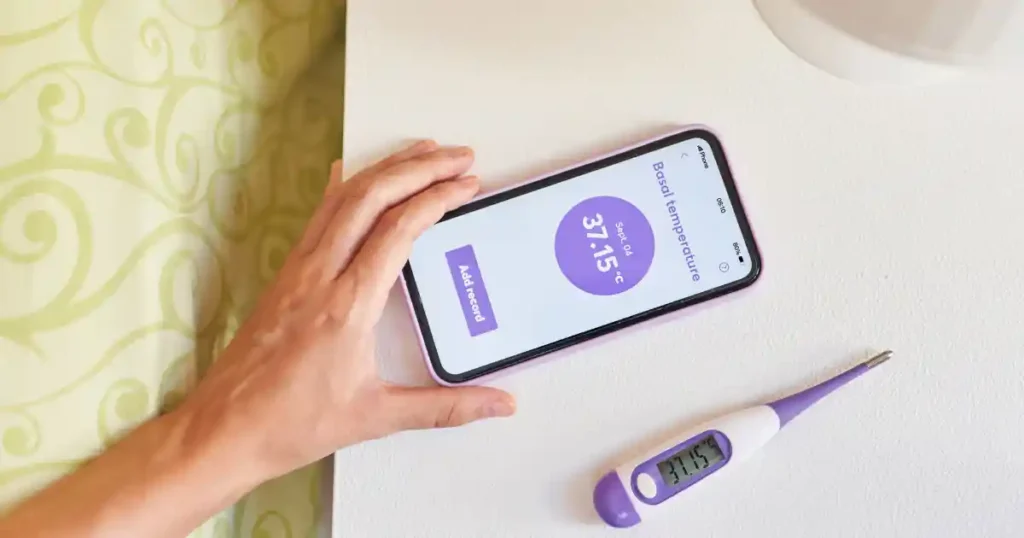
- Basal body temperature (BBT), taken every morning before getting up; a slight rise indicates ovulation has occurred
- Cervical mucus changes, consistency and color throughout the cycle
- Symptoms, cramps, bloating, headaches, breast tenderness
- Mood and energy, even a simple 1–5 scale helps reveal patterns
- Sleep quality, sleep often changes throughout the cycle
The Lancet confirms that documenting symptoms such as pain, mood, headaches, and digestive issues alongside cycle data provides a far more complete picture of health over time.
Best Menstrual Cycle Tracking Tools and Apps
There are many tools out there. The best one for you depends on how much detail you want to track.
Beginner-Friendly Tools
If you are just starting out, a simple period calendar app is perfect. Flo and Clue both offer clean, easy-to-use interfaces with helpful reminders. You enter your period start date, and the app handles the rest. Both send notifications when your next period or ovulation window is approaching.
Clue is especially popular for its clean design and science-based approach. It tracks over 30 different symptoms and is frequently cited in medical research.
Advanced Tracking Tools
For those who want more detail, ovulation prediction kits (OPKs) detect the LH surge that precedes ovulation. They are more accurate than app predictions alone and are commonly used by those trying to conceive.
Hormone-based tracking systems like the Mira Fertility Tracker measure actual hormone levels in urine. These provide lab-quality data at home. They are more expensive but give a precise picture of your hormonal patterns.
Wearables like the Oura Ring continuously monitor skin temperature and heart rate variability. When combined with a period tracking app, they can identify cycle phases with remarkable accuracy.
Expert Tip
Dr. Alyssa Dweck, a New York City-based gynecologist and Chief Medical Officer at Bonafide Health, advises women to “ask questions, track your symptoms, and find a healthcare provider who listens.” She has been voted Top Doctor in New York Magazine and has over 30 years of experience in obstetrics and gynecology. In my experience, that advice is spot-on. Tracking is the first step. Once you have three months of data, patterns become undeniable.
Manual vs Digital Tracking Comparison
Both methods work well. This table helps you decide which fits your lifestyle best.
| Feature | Manual Tracking | Digital Tools |
|---|---|---|
| Ease of Use | Simple to start | Very easy with apps |
| Accuracy | Moderate | High with consistent input |
| Reminders | No automatic reminders | Yes, push notifications |
| Symptom Insights | Limited without analysis | Detailed trend reports |
| Ovulation Prediction | Basic calendar calculation | Algorithm-based prediction |
| Privacy | Very high | Depends on app’s data policy |
| Cost | Free | Free to paid options available |
Understanding Ovulation and Your Fertility Window
This is one of the most searched topics in women’s reproductive health, and with good reason. Ovulation is the core event of the entire cycle.
What Is Ovulation?
Ovulation is the release of a mature egg from one of the ovaries. It happens once per cycle, typically around day 14 of a 28-day cycle. But this timing varies. If your cycle is longer or shorter, ovulation shifts accordingly.
The egg survives for only 12 to 24 hours after release. If sperm is not present during this window, fertilization cannot occur. This is why knowing when ovulation happens is so important for both achieving and avoiding pregnancy.
How to Calculate Your Fertile Days
Your fertile window is wider than just the day of ovulation. Because sperm can live inside the body for up to five days, the fertility window spans roughly five to six days total, the five days leading up to ovulation plus the day of ovulation itself.
A simple way to estimate ovulation: subtract 14 days from the length of your cycle. For a 28-day cycle, that puts ovulation around day 14. For a 32-day cycle, ovulation is around day 18.
Online ovulation calculators can help with this. Apps do it automatically based on your logged cycle data. For more precision, combine calendar tracking with BBT monitoring or OPKs.
Signs of Ovulation
Your body gives clear signals when ovulation is near. The most reliable include:
Cervical mucus changes: As ovulation approaches, discharge becomes clear, slippery, and stretchy, similar in texture to raw egg whites. This consistency helps sperm travel toward the egg.
Basal body temperature rise: BBT rises by about 0.2°C (0.4°F) after ovulation due to progesterone. By tracking this daily, you can confirm ovulation occurred, even though the rise happens after the fact.
Mild pelvic pain: Some people feel a brief, one-sided twinge during ovulation. This is called mittelschmerz, a German word meaning “middle pain.” It is harmless.
Increased libido: Estrogen and testosterone both peak around ovulation. This naturally increases sexual desire, which makes biological sense.
Factors That Affect Your Menstrual Cycle
Cycles are not always textbook-perfect. Many factors can shift the timing, length, and intensity of your cycle. Understanding these helps you interpret changes with less anxiety.
Lifestyle Factors
Stress is one of the most common causes of irregular cycles. When you are under high stress, the body produces cortisol. Elevated cortisol can suppress the hormonal signals needed for ovulation, causing delayed or missed periods.
Sleep also plays a key role. Poor sleep disrupts the hormonal rhythm that governs the cycle. Shift workers and those with inconsistent sleep schedules often report irregular periods.
Diet and exercise matter too. Extreme calorie restriction or very high-intensity training can reduce estrogen levels enough to stop ovulation entirely. This is called hypothalamic amenorrhea. On the other end, excess body fat can increase estrogen production and disrupt the cycle in a different way.
Travel across time zones temporarily disrupts circadian rhythms, which can shift your period by several days. This is common and usually self-corrects after a few cycles.
Medical Conditions That Affect the Cycle
Polycystic Ovary Syndrome (PCOS) is one of the most common hormonal disorders affecting the menstrual cycle. It is characterized by irregular cycles, elevated androgens, and often multiple small cysts on the ovaries. PCOS can make cycles unpredictable and ovulation difficult to detect.
Thyroid disorders, both hypothyroidism (underactive) and hyperthyroidism (overactive), can disrupt cycle length and flow. The thyroid plays a key role in overall hormonal balance.
Hormonal imbalances, including high prolactin levels or low estrogen from other causes, can also affect cycle regularity.
If your cycle changes significantly without a clear lifestyle reason, a blood test checking hormone levels, estrogen, progesterone, FSH, LH, thyroid, and prolactin, is a sensible first step.
Environmental and Daily Life Factors
Hot, humid climates can occasionally affect cycle timing through heat-related stress on the body. Major life events, new jobs, moving, relationship changes, can all trigger temporary irregularity through the stress response.
Medications including antidepressants, antipsychotics, and certain blood pressure drugs can also affect the cycle. If you start a new medication and notice changes, speak to your prescriber.
Menstrual Cycle Common Questions
These are the questions I hear most often, and the ones people search for most.
What Is a Normal Menstrual Cycle Length?
A healthy cycle falls anywhere between 21 and 35 days. The Mayo Clinic notes that menstrual bleeding typically occurs every 21 to 35 days and lasts two to seven days. Anything outside this range, or significant variation from your personal norm, is worth discussing with a doctor.
Can Stress Delay Your Period?
Yes, absolutely. Stress is one of the most common causes of a delayed period. High cortisol interferes with the hypothalamic-pituitary-ovarian (HPO) axis, the hormonal control system for the cycle. This can delay or even skip ovulation, pushing the period back by days or even weeks.
If you notice your period is late after a stressful event, it is usually not a cause for alarm. Give it a few weeks. If it does not return, see a healthcare provider.
Is It Normal to Have Irregular Cycles?
Sometimes, yes. Cycles are naturally more irregular in the first few years after menstruation begins and again in the years leading up to menopause. Occasional irregularity due to stress, illness, or travel is also common. But persistent irregularity, cycles that vary by more than 8 to 10 days consistently, is worth investigating.
When Should I See a Doctor?
See a doctor if you experience severe cramping that disrupts daily life, very heavy bleeding, cycles shorter than 21 days or longer than 35 days, bleeding between periods, or periods that stop for three or more months without pregnancy. These can be signs of underlying conditions that respond well to early treatment.
Are Period Tracking Apps Accurate?
Apps are helpful tools, but they have limits. They rely on the data you enter and use averages and algorithms. Research confirms that period tracker apps are becoming widely used among millennials and Gen Z to manage menstrual cycles, and that their use helps women gain better understanding of their bodies. But apps cannot account for every variable. Use them as a guide, not a guarantee.
Practical Tips to Manage Your Cycle Better
Small daily habits make a real difference across the entire month.
Daily Habits That Help
Stay hydrated. Water supports hormone transport and reduces bloating. Aim for 8 to 10 glasses per day, especially in the luteal phase.
Eat balanced meals. Whole grains, lean proteins, leafy greens, and healthy fats support hormone production and blood sugar stability. Magnesium-rich foods like dark chocolate, nuts, and spinach can reduce PMS symptoms.
Move your body. Light to moderate exercise throughout the month helps with mood, circulation, and cramp relief. You do not need to push hard every day. Adjust intensity to your phase.
Limit caffeine and alcohol. Both can worsen PMS symptoms, disrupt sleep, and amplify mood swings in the luteal phase.
Cycle-Based Planning Tips
This is where cycle awareness becomes genuinely powerful. Once you know your phases, you can plan your life around your natural energy.
During the follicular phase, take on new challenges. Schedule brainstorming sessions, job interviews, or difficult conversations. Your brain is primed for it.
Around ovulation, lean into social activities. This is a great time for presentations, team meetings, or important conversations. Your communication skills tend to peak here.
In the early luteal phase, focus on steady, detailed work. Editing, organizing, and finishing projects suits this phase well.
In the late luteal phase and during menstruation, dial it back. Protect your energy. Choose tasks that do not demand peak performance. Rest is not laziness here, it is smart planning.
A Personal Note
Some days I feel unstoppable. Some days I just want herbal tea and a blanket. Both are completely normal. The difference is that now I know which is which, and I plan accordingly. That awareness alone has reduced so much unnecessary frustration.
Learn Your Cycle, Improve Your Life
Understanding your menstrual cycle is not complicated. It just takes a little curiosity and consistency. Research published in The Lancet argues that the menstrual cycle is a vital sign across the entire lifespan, with the potential to improve public health, wellbeing, and clinical care. I could not agree more.
Start with one simple habit: mark the first day of your next period on a calendar. Do it the month after that too. After three months, you will already have more insight into your body than most people gain in years.
Track your symptoms. Notice your energy. Pay attention to your mood patterns. Over time, the picture becomes clear, and once it does, you will wonder how you ever navigated life without it.
Final Recommendation
If there is one thing I want you to take away from this guide on understanding the menstrual cycle, it is this: your cycle is data. Every symptom, every mood shift, every energy peak is information your body is sending you. The best first step is simply to start tracking, even a basic calendar method gives you powerful insight within 90 days.
Use a reliable app like Clue or Flo to make it easier. Pay attention to the four phases and let them guide your planning. If something feels consistently off, severe pain, very irregular cycles, or sudden changes, see a gynecologist. Catching hormonal or reproductive issues early makes treatment far simpler. Your cycle is not an inconvenience. It is one of your body’s most powerful health signals. Learn it, track it, and use it to live better every single month.
FAQs
What is a menstrual cycle?
The menstrual cycle is the monthly process your body goes through to prepare for pregnancy. It includes your period, ovulation, and hormonal changes.
How long is a normal menstrual cycle?
A normal menstrual cycle lasts between 21 and 35 days. It can vary from person to person and may change over time.
What are the phases of the menstrual cycle?
The menstrual cycle has four phases: menstrual, follicular, ovulation, and luteal. Each phase plays a role in fertility and hormone balance.
When does ovulation happen in the menstrual cycle?
Ovulation usually occurs around the middle of your cycle. This is when an egg is released and fertility is highest.
What are common menstrual cycle symptoms?
Symptoms may include cramps, mood changes, fatigue, and bloating. These can vary depending on your cycle phase.
Can stress affect the menstrual cycle?
Yes. Stress can delay or change your menstrual cycle by affecting hormone levels, which may shift ovulation timing.
Why should I track my menstrual cycle?
Tracking your menstrual cycle helps you understand patterns, predict periods, and manage health or fertility goals more easily.