Stopping birth control and waiting for ovulation to return was one of the most confusing experiences I have been through in understanding my own reproductive health. Nobody prepares you for the fact that your body does not simply switch back on overnight. Understanding ovulation after birth control, what to expect, how long it takes, and how to track the return of fertility, takes the confusion out of an already emotional process. This guide covers the full picture, from what happens hormonally when you stop, to the specific signs your cycle is returning, and the tools that make tracking easier every step of the way.
What Happens to Ovulation After Stopping Birth Control
Your body does not always bounce back instantly. Sometimes it does. Sometimes it takes a little time. The difference usually comes down to which method you were using and your individual hormonal baseline.
How Birth Control Affects Ovulation
Most hormonal birth control methods work by suppressing ovulation. Combined oral contraceptives, patches, rings, and hormonal IUDs use synthetic estrogen and progestin to prevent the LH surge that triggers egg release. The Depo-Provera injection uses progestin alone to achieve the same effect. The contraceptive implant releases a steady low dose of progestin that blocks ovulation across its full duration of use.
Hormonal contraception also thickens cervical mucus, making it harder for sperm to reach an egg, and thins the uterine lining. But suppression of ovulation is the primary mechanism in most combined methods. That suppression means the body’s natural hormonal rhythm, including the follicle development and LH surge cycle, is paused for the duration of use.
The copper IUD works differently. It contains no hormones and does not suppress ovulation at all. It prevents pregnancy through the copper’s toxic effect on sperm and by creating an environment in the uterus that is inhospitable to fertilization. This means fertility is not hormonally disrupted with the copper IUD.
What Happens After You Stop
Once you stop using hormonal birth control, synthetic hormones begin to clear from your body. For the pill, patch, and ring, this happens quickly. Hormones from these methods leave your system within a few days to a week. After that, the hypothalamic-pituitary-ovarian (HPO) axis begins to reestablish its natural rhythm.
The key word is “begin.” The HPO axis does not necessarily fire up at full strength in the very first week. For some people it does. For others, it takes one to three full cycles to reestablish a regular ovulatory pattern. Because birth control pills stop ovulation and give you normal cycles while you are taking them, stopping can also unmask cycle irregularities that existed before you started. When people stop their pills, they see what has been masked.
A Real-Life Context
You stop the pill expecting things to return to normal by next week. Your period arrives on schedule, so you assume ovulation is back. But tracking tools tell a different story. The BBT chart stays flat. The OPK stays negative. Cervical mucus stays dry or inconsistent for another cycle or two. That is your body recalibrating, not malfunctioning. Your body takes its own time. And that is completely okay.
How Long Does It Take to Ovulate After Birth Control
The timeline varies considerably depending on which method you used.
Immediate Return in Some Cases
For the pill, patch, ring, and implant, the return to ovulation can be rapid. You could ovulate as soon as 48 hours after coming off the contraceptive pill. Many people ovulate within their first natural cycle after stopping. Your menstrual cycle can take up to three months to fully reestablish itself after discontinuing the birth control pill, and your period may be irregular at first regardless of its regularity before starting oral contraception.
For those who have used the copper IUD, there is essentially no hormonal delay at all. Fertility is present the moment the IUD is removed. The only limiting factor is where you are in your natural cycle on the day of removal.
Delayed Ovulation After Some Methods
If you are using a hormonal IUD, the hormones will be gone from your body in the week after it is removed, and you should be back to ovulating either the next day or the next week, with a normal uterine lining within a month or so.
The contraceptive injection stands apart from all other methods. Unlike other methods, fertility can take longer to return after stopping Depo-Provera. On average, the delay is between six to twelve months. For some women, ovulation may take up to eighteen months to resume. This delay is not due to permanent infertility but rather the time required for the body to eliminate the high levels of medroxyprogesterone acetate stored in fat tissue.
Factors That Affect Your Personal Timeline
Several individual factors influence how quickly your cycle restores after stopping birth control. Your age matters. Younger people with higher ovarian reserve tend to see faster hormonal recovery. Underlying conditions like PCOS or thyroid dysfunction can extend the adjustment period because the hormonal disruption of those conditions was present before birth control and simply reappears once it stops masking them.
How long you used the method is frequently asked about but is less influential than most people expect. A 2018 study published in Contraception and Reproductive Medicine found that the type and duration of the contraceptive method used did not affect women’s long-term fertility or delay the return of ovulation. The exception is the contraceptive shot, where even long-term use does not extend the delay beyond what is normal for that method.
Ovulation Return Timeline by Birth Control Type
Here is a clear, method-by-method comparison of what to expect after stopping each type of contraception.
| Birth Control Type | Typical Ovulation Return | Notes |
|---|---|---|
| Combined pill, patch, ring | Days to 2 to 3 months | Hormones clear within days; cycles may take a few months to regularize |
| Progestin-only mini pill | Days to a few weeks | Clears very quickly, ovulation often returns in first cycle |
| Hormonal IUD | Within weeks to one month | Local hormones drop quickly after removal |
| Copper IUD | Immediate | No hormones; fertility present at removal |
| Contraceptive implant | Weeks to 3 months | Hormone clears within days of removal |
| Depo-Provera injection | 6 to 18 months | Longest delay; stored in tissue |
Signs That Ovulation Is Returning
Your body starts giving small but recognizable signals that the cycle is reactivating. Learning to read them removes a lot of the uncertainty from this period.
Cervical Mucus Changes
The return of fertile-quality cervical mucus is often the first physical sign that ovulation is approaching. As estrogen begins to rise in the follicular phase of your recovering cycle, the cervix starts producing the clear, stretchy, egg-white mucus that indicates fertility.
After stopping hormonal birth control, many people notice their discharge changes significantly compared to what it was while on the pill. Hormonal contraception typically produces dry or consistently creamy discharge. As natural estrogen resumes, mucus shifts through the dry-to-creamy-to-wet progression that marks the approach of ovulation.
Check cervical mucus daily from the time your period ends. Note the texture and amount. The first few cycles post-birth control may show mucus changes without a full ovulatory peak. Over two to three cycles, the pattern becomes clearer and more consistent.
Basal Body Temperature Shift
A sustained rise in BBT confirms that ovulation has occurred. After ovulation, progesterone production by the corpus luteum raises resting body temperature by 0.2 to 0.5 degrees. This elevated temperature persists for the remainder of the luteal phase.
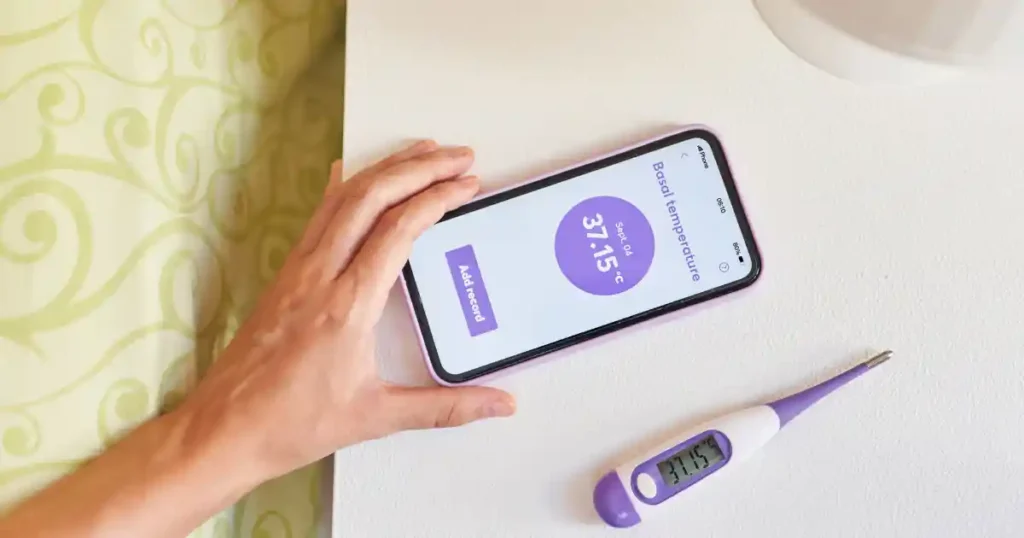
Take BBT every morning before getting up, at the same time each day, using a digital basal thermometer. A biphasic chart, with a clear division between lower pre-ovulation temperatures and higher post-ovulation temperatures, confirms ovulation happened in that cycle.
In the first one to two cycles after stopping hormonal birth control, BBT charts may look flat or inconsistent. That is normal during the adjustment period. By cycles two and three, most people start seeing a clearer biphasic pattern if ovulation is occurring.
Cycle Pattern Changes
The return of a recognizable cycle pattern is itself a meaningful sign. Periods becoming more predictable, arriving within a similar window each month, suggest that ovulation is occurring consistently. Irregular or unpredictable cycles during the first few months after stopping birth control are common and expected.
Research shows that 25% of people using a hormonal IUD get their period within a month of removal, 14% after two months, and 20% in three to six months. Cycle regularity is a trailing indicator of ovulation. Consistent ovulation typically shows up as consistent cycles within one to two months.
Common Symptoms After Stopping Birth Control
Some changes feel surprising. Others feel more familiar than expected. Most are a normal part of the hormonal adjustment.
Irregular Periods
Cycle irregularity in the first one to three months after stopping hormonal birth control is extremely common. Your cycles may arrive earlier or later than expected. They may be heavier or lighter than what you experienced on birth control. Flow may change noticeably, particularly if you were on a method that lightened periods significantly.
This irregularity does not mean something is wrong. It reflects your body’s HPO axis reestablishing its natural rhythm. Most people see their cycles stabilize within three months of stopping the pill or other short-acting methods.
Hormonal Symptoms
Some people experience acne, mood shifts, or breast tenderness after stopping hormonal birth control. These are the result of natural hormonal fluctuations returning after a period of hormonal suppression.
Combined oral contraceptives reduce acne for many people by suppressing androgens. When you stop, androgen levels rise back to their natural level, and acne can return temporarily. For most people, this stabilizes within three to six months as the cycle regulates.
Mood changes are also commonly reported. Hormonal contraception affects serotonin and other neurotransmitters. Coming off it can create a temporary adjustment period emotionally. If mood changes are significant or persistent, speak with your doctor.
Energy and Mood Shifts
Natural hormonal cycling, with its peaks of estrogen and progesterone across the month, produces noticeable shifts in energy, mood, and focus that many people did not experience while on hormonal birth control. Some days feel sharper, more energized, and more socially engaged. Other days feel calmer or more inward.
These shifts are a sign that your natural hormonal cycle is working. For most people, they feel manageable once they understand the underlying pattern. Cycle tracking helps you anticipate these shifts rather than being surprised by them.
Signs Ovulation Has Not Returned Yet
Not all the signs point in the right direction right away. Here is how to recognize when ovulation has not yet come back.
No Ovulation Symptoms
If three or more cycles post-birth control show no cervical mucus change, no BBT rise, and no OPK positive result, ovulation may not have returned yet. This is more likely with certain methods, particularly Depo-Provera, and in people with underlying hormonal conditions that were present before starting birth control.
Absence of fertile mucus, absence of any clear BBT shift, and consistently negative OPKs across multiple extended testing windows are the clearest tracking indicators of continued anovulation.
Irregular or Missing Periods
If you do not have a regular period on your own in three to four months after stopping hormonal birth control, you should see your doctor. Maybe you were not regular before you started hormonal contraception, or maybe something in your body has changed. But it is not due to the method you were using.
Absent periods beyond three months after stopping any short-acting method, and beyond twelve months after the last Depo-Provera injection, are worth investigating.
Negative Ovulation Tests
OPKs that consistently show negative results across a full extended testing window, combined with a flat BBT chart and no mucus changes, suggest the LH surge is not occurring. This can happen in the first one to three cycles post-birth control simply because the HPO axis is still recalibrating. After three or more full cycles, consistent absence of an LH surge is worth discussing with a gynecologist.
Ovulation vs No Ovulation After Birth Control
Here is a clear side-by-side comparison to help you interpret your own tracking data.
| Indicator | Ovulation Has Returned | Not Yet Ovulating |
|---|---|---|
| Cycle regularity | Becoming consistent, predictable | Irregular, very long, or absent |
| Cervical mucus | Clear, stretchy, egg-white quality | Minimal, dry, or consistently creamy |
| BBT pattern | Clear biphasic rise | Flat or random, no thermal shift |
| OPK results | Positive LH surge then negative | No surge or consistently negative |
| Energy and mood | Noticeable mid-cycle shift | No recognizable cycle-driven changes |
How to Track Ovulation After Birth Control
Tracking is the fastest and most reliable way to understand what your body is doing during the recovery period.
Use Ovulation Predictor Kits
OPKs detect the LH surge that precedes ovulation by 24 to 48 hours. After stopping birth control, start testing from around day eight of each new cycle. Test at the same time each day, ideally midday or early evening. Keep testing until you see a clear positive result or your period arrives.
In the first one to two cycles after stopping, you may get consistently negative results even across a long testing window. That is informative data. It tells you ovulation has not yet occurred in that cycle. Continue tracking and the pattern will become clearer as cycles progress.
Track Basal Body Temperature
BBT tracking post-birth control serves two purposes. It confirms ovulation in real time across each cycle, and it builds a personal baseline that makes future cycles easier to read. A chart with a clear thermal shift says ovulation happened. A flat chart says it did not, or has not yet.
Use a dedicated basal thermometer that measures to at least one-tenth of a degree. Take it at the same time each morning before any activity. The first few charts may look messy. By cycles two and three, the pattern generally clarifies.
Monitor Natural Signs
Cervical mucus, energy levels, mood, and libido all reflect where you are in your natural cycle. These signs can be tracked at zero cost with no equipment beyond a consistent daily check-in. The more data points you notice and log, the more complete your picture of cycle recovery becomes.
Best Tools to Monitor Ovulation Recovery
The right combination of tools makes the recovery period far less stressful and much more informative.
Cycle Tracking Apps
Apps like Clue, Flo, and Natural Cycles allow you to log BBT, OPK results, mucus observations, and cycle symptoms in one place. During the post-birth control recovery period, apps are especially useful for identifying patterns across irregular cycles that are hard to read manually.
They also provide visual charts that make it easy to see whether your cycles are regularizing month by month. After three cycles of consistent logging, most apps give increasingly useful predictions.
Hormone Testing Kits
Quantitative hormone monitoring through devices like the Mira Fertility Tracker measures actual LH and estrogen concentrations in urine. These are more precise than simple positive-or-negative OPK strips and are particularly valuable for the post-birth control period when hormonal patterns may be irregular and harder to interpret from a strip result alone.
Home blood spot tests that measure FSH, estrogen, and progesterone across the cycle are also available from companies like Everlywell. These provide a more clinical picture of whether hormones are recovering toward normal ranges.
Smart Devices for Temperature Tracking
Wearables like the Oura Ring and the Tempdrop continuously track skin temperature and physiological signals during sleep. They remove the need for strict morning timing with a manual thermometer and provide continuous data rather than a single daily reading.
During the post-birth control adjustment period, when cycles are less predictable and ovulation timing may vary significantly, continuous temperature tracking catches thermal shifts that a single morning reading might miss.
Expert Advice on Ovulation After Birth Control
“It’s normal for ovulation to take time to return after hormonal birth control,” says Dr. Jen Gunter, a San Francisco, California-based board-certified OB-GYN and pain medicine physician with more than 35 years of clinical experience. Dr. Gunter is an internationally bestselling author of The Vagina Bible and The Menopause Manifesto, both translated into 25 languages, and a recipient of the 2020 Media Award from The Menopause Society. She is board certified in OB-GYN in both Canada and the United States, and also board certified in pain medicine by the American Board of Pain Medicine and the American Board of Physical Medicine and Rehabilitation. Her life’s work is built around helping women understand their reproductive health with accurate, evidence-based information.
Her reassurance reflects exactly what the data shows: delayed return of ovulation after hormonal birth control is a biological timeline, not a sign of damage. It resolves on its own in the vast majority of cases without any intervention.
What Experts Recommend
Give your body at least three months before concluding that something is wrong. For pill, patch, ring, and implant users, three months is typically enough time for the HPO axis to fully reestablish regular ovulatory cycles.
Track consistently from cycle one. Do not wait to start tracking until three months have passed. Start observing mucus, OPKs, and BBT from your first natural cycle. Early data may be inconsistent, but it builds the baseline that makes later cycles easier to interpret.
Avoid comparing your timeline with others. Recovery after birth control is genuinely individual. Someone who was on the pill for ten years may recover faster than someone who was on it for six months. The length of use is not the determining factor. Your underlying hormonal health, age, and body composition all influence your personal timeline.
A Real-Life Tip
One cycle feels normal. The next one feels confusing. BBT charts flat, OPK never turns positive, mucus pattern is unclear. Then the cycle after that shows a visible thermal shift and a clear OPK positive. That back-and-forth is part of the process. It does not mean recovery is not happening. It means the HPO axis is testing its footing before settling into a consistent rhythm.
Factors That Affect Ovulation Recovery
Your recovery timeline is personal, shaped by several intersecting factors.
Duration of Birth Control Use
Longer use of most methods does not meaningfully extend the recovery timeline. A 2018 study found that the type and duration of the contraceptive method used did not affect women’s long-term fertility or delay the return of ovulation, with the exception of the contraceptive shot, where even duration does not extend the delay beyond what is standard for that method.
What longer use can mask, however, is underlying cycle irregularities. If your cycle was irregular before you started birth control, it will be irregular again when you stop. Birth control does not fix the underlying hormonal condition. It suspends it.
Age and Hormonal Health
Age influences how quickly the HPO axis recovers. Younger people with higher ovarian reserve typically see a faster return of regular ovulation. After the mid-thirties, ovarian reserve declines naturally, which can mean the recovery period involves slightly more variation.
Existing hormonal conditions, particularly PCOS, thyroid disorders, and elevated prolactin, become visible again once hormonal contraception stops masking cycle irregularity. If your cycles were irregular before you started, they are likely to be irregular again post-birth control, and that warrants evaluation rather than simply waiting.
Lifestyle Factors
Stress, sleep, nutrition, and exercise all affect the speed and quality of hormonal recovery post-birth control. High sustained cortisol from chronic stress suppresses the HPO axis. Poor sleep disrupts the circadian rhythm that governs hormone production. Extreme calorie restriction or very high training volume can suppress estrogen below the threshold needed for regular ovulation.
Supporting hormonal recovery through adequate sleep, a balanced nutrient-rich diet, and moderate consistent exercise gives your body the best conditions for a smooth and timely return to regular ovulatory cycles.
How to Support Ovulation After Birth Control Naturally
Targeted lifestyle habits can accelerate and smooth the recovery process.
Improve Diet and Nutrition
Eating a balanced diet rich in whole foods, healthy fats, lean protein, leafy greens, and antioxidants supports the hormone production that ovulation requires. Dietary fat is the building block for all steroid hormones, including estrogen and progesterone. Eliminating fat from the diet in the recovery period is counterproductive.
Magnesium-rich foods like dark chocolate, nuts, and spinach support estrogen metabolism and cycle regularity. Vitamin D supports follicle development. Iron from plant sources supports ovulation health. A diet that addresses these nutritional foundations supports a faster, cleaner return to ovulatory cycles.
Reduce Stress
The HPO axis reestablishes itself more smoothly when cortisol is managed. Consistent, practical stress reduction, whether through walking, time in nature, mindfulness practices, or simply protecting adequate downtime, reduces cortisol and supports the hormonal recovery process.
This does not mean eliminating all pressure. It means avoiding sustained high-stress periods during the post-birth control adjustment window, if that is manageable. The investment pays off in a faster, cleaner return to regular ovulation.
Maintain a Healthy Lifestyle
Sleep of seven to nine hours per night, moderate exercise, adequate hydration, and avoiding excess alcohol and caffeine all contribute to a hormonal environment that supports ovulatory recovery. These are not dramatic interventions. Done consistently, they create a foundation that gives your HPO axis the best conditions to recalibrate.
When to See a Doctor
Sometimes extra support is genuinely needed. Knowing when to seek it saves time and opens more treatment options.
Warning Signs
See a healthcare provider if your period has not returned within three months of stopping any short-acting method (pill, patch, ring, or implant). See a doctor if your cycles remain severely irregular beyond three months of stopping. Seek care if you have stopped Depo-Provera and your period has not returned within twelve months of your last injection.
Symptoms like severe pelvic pain, very heavy bleeding, or significant acne alongside absent cycles suggest an underlying condition that needs evaluation.
Timeline Guidance
If you are trying to conceive, the standard guideline is to seek fertility evaluation after twelve months of regular unprotected intercourse without success if you are under 35, and after six months if you are over 35. If your period has not returned within three months after stopping birth control, or six months if cycles remain irregular, it may be time to seek professional guidance to determine whether there are underlying issues affecting your fertility or if your body simply needs more time to readjust.
QA About Ovulation After Birth Control
Can You Ovulate Immediately After Stopping Birth Control?
Yes, in some cases. For most birth control methods, ovulation will occur within a couple of weeks of stopping. For the pill, you could ovulate as soon as 48 hours after coming off it. The copper IUD carries no hormonal delay at all. If you do not want to become pregnant immediately after stopping, use a backup method until you are ready.
Why Is My Cycle Irregular After Stopping Birth Control?
Hormonal adjustment is the most common reason. Your HPO axis needs time to reestablish its natural rhythm after a period of suppression. Additionally, birth control can mask cycle irregularities. When you stop, you see what was there before. If irregularity persists beyond three to four months, an underlying hormonal condition like PCOS or thyroid dysfunction may be the cause.
How Do I Know If I Am Ovulating Again?
Track three signs together. Look for egg-white cervical mucus in the days leading up to mid-cycle. Use OPKs to detect the LH surge. Confirm with a BBT rise in the day or two after ovulation. All three showing up in the same cycle, with the LH surge preceding the temperature rise by one to two days, is strong confirmation that ovulation occurred.
Does Birth Control Affect Long-Term Fertility?
The evidence consistently says no. Long-term use of hormonal contraception does not cause permanent fertility problems. A 2018 study found that the type and duration of the contraceptive method used did not affect women’s long-term fertility or delay the return of ovulation. Fertility returns to your natural baseline for your age once hormones clear. The only method that involves a meaningful delay is Depo-Provera, and even that delay resolves without permanent damage.
How Long Should I Wait Before Trying to Conceive?
There is no required waiting period for most methods. You can begin trying to get pregnant as soon as you feel comfortable. For Depo-Provera, factor in the six to eighteen month recovery timeline when planning. For all other methods, trying in your first natural cycle after stopping is medically safe.
Practical Tips to Track and Support Ovulation Recovery
Consistency and simplicity are your best allies during this period.
Build a Simple Tracking Habit
Start checking cervical mucus from the first day after your period ends in your first natural cycle. Take BBT at the same time every morning. Use OPKs from around day eight. Log everything in a cycle app. Even the first imperfect cycle gives you a baseline that makes the next one easier to read.
Keep it simple. A thirty-second morning check before getting up, a quick log in an app, and a daily mucus note. That is all it takes to build genuinely useful data over two to three cycles.
Be Patient With Your Body
Recovery takes its own time. Comparing your timeline to someone else’s will only create unnecessary anxiety. Your recovery is shaped by your specific hormonal history, your method, your age, and your overall health. All of those factors are unique to you.
Give your body three full cycles before drawing any strong conclusions. In most cases, that is all the time needed for the pattern to become clear.
A Personal Reflection
It is tempting to expect quick results. You stop the pill, you expect your body to reset within two weeks. That impatience is completely understandable. But your body is not a machine that switches states instantly. It is recalibrating a complex hormonal system that was paused for months or years. That takes time. Approach it with curiosity rather than frustration, track what you can, and trust that patterns reveal themselves. They always do.
Give Your Body Time to Reset
Ovulation after birth control does not follow a strict timeline. It follows your body’s timeline. For most people and most methods, that means a few weeks to three months. For Depo-Provera, it means six to eighteen months. In all cases, the delay is temporary and fertility returns to its natural baseline.
Tracking gives you clear, real-time information during the adjustment period. Three cycles of consistent data shows you exactly where your recovery stands. And when something feels off beyond the expected window, a gynecologist can help you find the answer quickly.
Final Recommendation
Understanding ovulation after birth control is one of the most practical things you can do for your reproductive health planning, whether your goal is conception or simply knowing your own cycle better. From personal experience, the clearest and most reassuring thing you can do is start tracking from your very first natural cycle after stopping.
Use cervical mucus observation daily, OPK strips to detect the LH surge, and BBT to confirm. Expect some irregularity in the first one to two cycles. That is normal, not alarming. If you were on the contraceptive injection, build a realistic twelve-month recovery window into your plans and track throughout that period so you catch the return of ovulation when it happens. If your period has not returned within three months of stopping any short-acting hormonal method, see your gynecologist promptly rather than waiting.
That appointment may simply confirm that your body needs more time. But it may also reveal a masked underlying condition that is worth treating early. Your cycle will return to its natural rhythm. Consistent tracking is what helps you recognize it when it does.
FAQs
When does ovulation return after birth control?
Ovulation after birth control can return within weeks or take a few months. It depends on the method and your body’s hormone balance.
How long does it take to ovulate after stopping birth control pills?
Ovulation after birth control pills may start within 2–4 weeks. Some people need a few cycles for hormones to settle.
Can I get pregnant before my first period after birth control?
Yes. Ovulation after birth control can happen before your first period, so pregnancy is possible even if your cycle has not returned yet.
Why is ovulation irregular after birth control?
Ovulation after birth control may be irregular as hormones adjust. Your body needs time to return to its natural cycle pattern.
How can I track ovulation after birth control?
You can track ovulation after birth control using cycle dates, temperature, and ovulation tests. Tracking helps you spot early patterns.
Does every birth control method affect ovulation the same way?
No. Ovulation after birth control varies by method. Pills, injections, and IUDs can affect timing differently.
When should I see a doctor about ovulation after birth control?
See a doctor if ovulation after birth control does not return after a few months. Early advice can help find any underlying issues.