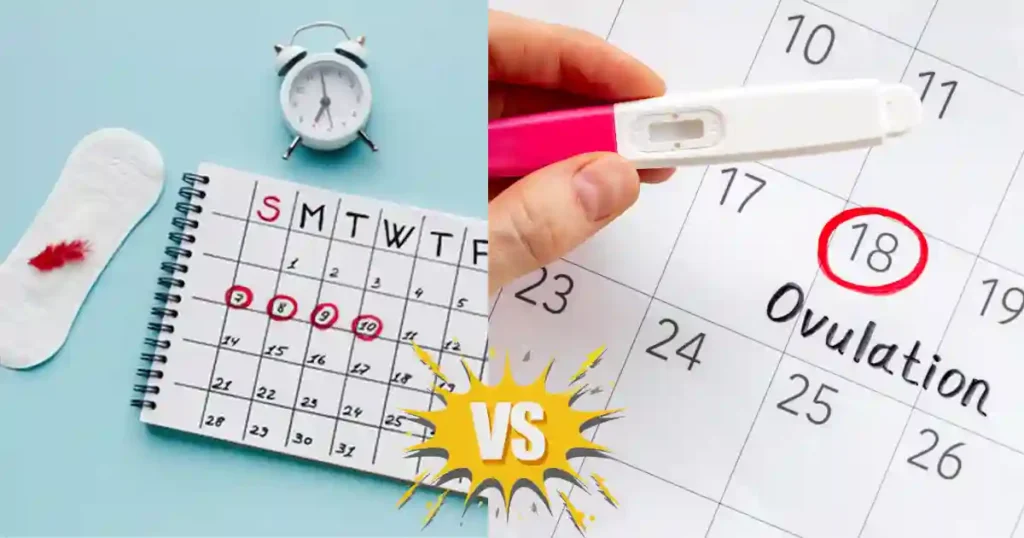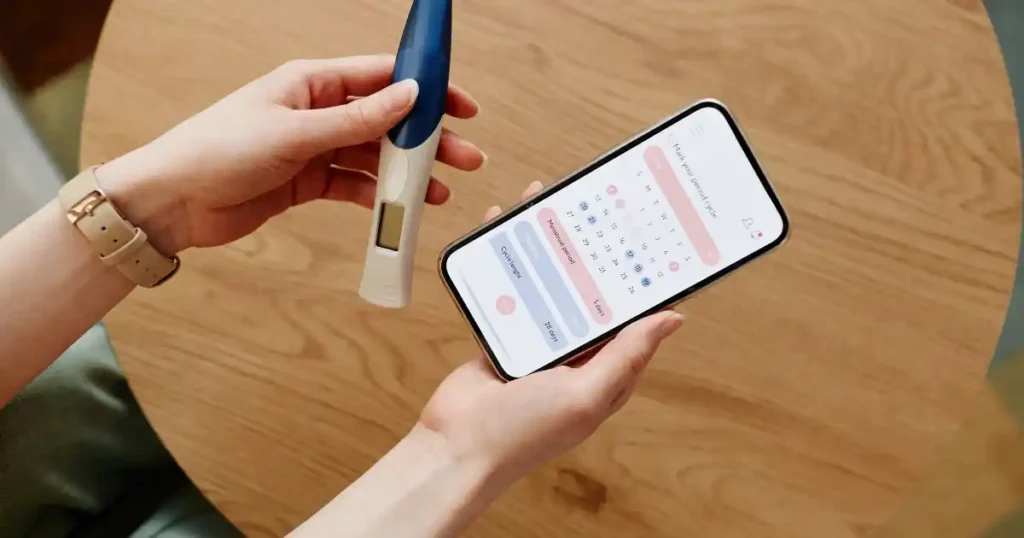
Trying to figure out whether ovulation calculators and wearables work was one of the first deep dives I made into fertility tracking. The promise is appealing: enter a few dates into an app, or sleep with a ring on your finger, and wake up knowing exactly where you are in your cycle. The reality is a bit more nuanced than that. Both tools have genuine value. Both have real limitations. Understanding where each one excels and where it falls short helps you use them in a way that actually gives you reliable information. This guide covers everything you need to know, backed by current research, so you can track smarter, not harder.
What Are Ovulation Calculators and Wearable Trackers
These tools promise clarity. But how they actually work is where things get interesting.
What Is an Ovulation Calculator
An ovulation calculator is a digital tool, available as a website or mobile app, that uses your menstrual cycle data to estimate when ovulation will occur. You enter two pieces of information: the date your last period started and your average cycle length. The calculator then uses those inputs to predict your next ovulation date and your fertile window.
The math behind most calculators is straightforward. Ovulation typically occurs 12 to 16 days before the next expected period. So the calculator subtracts that range from your expected next cycle start date and gives you a window of likely fertile days.
Popular apps like Clue, Flo, and Natural Cycles all use variations of this algorithm. Some incorporate additional data points like period duration, prior cycle history, and user-reported symptoms to refine predictions over time.
What Are Fertility Wearables
Fertility wearables are devices worn on or in the body that continuously monitor physiological signals and use those signals to predict ovulation and identify cycle phases. Most used wearable technology in the form of jewelry, such as the Oura Ring, or wrist-mounted sensors, such as the Ava bracelet.
The core data these devices collect includes skin temperature, heart rate variability, sleep patterns, respiratory rate, and resting heart rate. All of these physiological metrics shift measurably across the menstrual cycle in response to changing hormone levels. Wearables capture those shifts in real time.
Machine learning algorithms then analyze the collected data to identify patterns and predict ovulation. The more cycles of data a device collects, the more refined its predictions become for a specific individual.
A Real-Life Context
My first experience with an ovulation calculator was exactly what most people describe. I entered my last period date, typed in my average cycle length, and got back a prediction that felt almost too confident for something based on just two numbers. I wore a tracking ring the following year. The data felt more alive and specific. But I still learned that neither tool gave me certainty on its own. The tools work best as guides, not oracles. Understanding that distinction changed how I used them and how much I trusted what they showed me.
How Ovulation Calculators Work
Ovulation calculators are simple to use. But simplicity has clear limits.
Data Inputs Used
Every ovulation calculator starts with the same two inputs: the first day of your last menstrual period and your typical cycle length. Some apps also ask for your luteal phase length, period duration, or how many previous cycles you have logged.
The quality of the prediction is only as good as the data entered. If your cycles vary by seven or more days month to month, entering a single average number produces a prediction that may miss your actual ovulation window by a significant margin.
Prediction Method
Most calculators use the assumption that the luteal phase (the time from ovulation to your next period) is consistently 14 days. This is the standard Ogino-Knaus model. By subtracting 14 from your average cycle length, the calculator estimates your ovulation day. It then marks the five days before that as your fertile window.
For a 28-day cycle, this places ovulation around day 14. For a 32-day cycle, around day 18. For a 24-day cycle, around day 10. The math holds reasonably well for regular cycles. It becomes significantly less reliable when cycle length varies, ovulation is delayed by stress or illness, or the luteal phase itself is irregular.
Strengths and Limitations of Calculators
Ovulation calculators offer genuine advantages. They are free. They require no equipment. They take less than 30 seconds to use. For a person with very consistent cycles, they give a reasonable starting point for identifying the fertile window.
The limitation is what they cannot account for: real-time hormonal variation. A calculator cannot know if you are under unusual stress this cycle, if you slept poorly for a week, or if a mild illness is delaying ovulation. It applies a historical average to a current cycle that may be behaving differently. The result is a prediction, not a measurement. Ovulation calculators can fail for irregular cycles and cannot account for month-to-month hormonal changes that shift timing.
How Fertility Wearables Work
Wearables go deeper than calculators. They track real-time body changes rather than applying averages to historical data.
Sensors and Data Tracking
Modern fertility wearables use a combination of sensors. Skin temperature is the primary signal because it shifts measurably across the menstrual cycle. Progesterone causes a rise in body temperature in the luteal phase that is detectable at the skin surface. The Oura Ring, for example, measures nocturnal finger skin temperature continuously through the night to avoid daytime fluctuations from environment and activity.
Heart rate variability, or HRV, also changes across the cycle. HRV tends to be higher during the follicular phase and lower during the luteal phase as progesterone rises. Resting heart rate follows a similar pattern. Sleep quality and respiratory rate shift too. Wearables that collect all of these signals simultaneously give algorithms richer data to work with than temperature alone.
How Data Predicts Ovulation
The data from wearables is fed into machine learning algorithms that identify patterns across these physiological signals. These algorithms detect micro-trends in metrics such as skin temperature, HRV, and sleep disturbances that often precede or coincide with ovulation.
Over time, as the algorithm collects more cycles of data from a specific user, it refines its model for that individual’s personal physiology. This is why wearable accuracy improves with use. The device is learning your personal cycle pattern rather than applying a population average.
Types of Wearables Available
Smart rings are the most popular current format. The Oura Ring is the most widely researched. The Samsung Galaxy Ring is a newer entrant. Both use continuous nighttime temperature monitoring.
Wrist-based devices like the Ava Bracelet and the Tempdrop armband capture similar signals. The Ava Bracelet monitors skin temperature, HRV, breathing rate, movement, and pulse rate during sleep. Patch sensors, worn on the skin during specific phases of the cycle, represent a less common but growing category. The OvulaRing, an intravaginal biosensor, measures cervical temperature directly and has shown strong cycle phase detection accuracy in studies, though comfort limits broader adoption.
Ovulation Calculators vs Wearables Expert Comparison
Here is a clear, side-by-side comparison of how these two categories of tools differ across the most important user dimensions.
| Feature | Ovulation Calculators | Fertility Wearables |
|---|---|---|
| Data source | Manual date entry, historical averages | Continuous real-time physiological signals |
| Accuracy for regular cycles | Medium to high | High |
| Accuracy for irregular cycles | Low | Medium to high |
| Ease of use | Very easy, seconds per use | Easy, wear overnight |
| Cost | Free to low cost | Medium to high, $100 to $400+ |
| Improves over time | Slightly with more cycle history | Yes, significantly with each cycle |
| Real-time adaptability | No | Yes |
| Best suited for | Beginners, regular cycles | Data-focused users, irregular cycles |
Are Ovulation Calculators Accurate
They work. But only under specific conditions.
When Calculators Are Reliable
For a person with a consistent cycle length that varies by fewer than two to three days month to month, ovulation calculators provide a reasonable prediction. Research consistently shows that the average cycle is not 28 days for most people. But for those whose personal average is stable, calculators based on that average give a useful starting point.
Calculators also improve with more historical data. An app that has six months of logged cycle lengths can calculate a more accurate personal average than one using only a single cycle entry. The prediction is always an estimate, but a well-informed estimate is more useful than a random guess.
When Calculators Fail
Irregular cycles are where calculators consistently fall short. Calculators cannot reliably determine ovulation for people with irregular cycles, such as those with PCOS.
Any cycle that experiences ovulation earlier or later than the historical average, due to stress, illness, travel, significant weight change, or disrupted sleep, produces a prediction that misses the actual fertile window. The calculator does not know this happened. It continues to apply the same formula regardless of what changed in the current cycle.
A Real-Life Insight
Some months, the calculator prediction feels exactly right. The signs line up with what the app predicted. Other months, it is not even close. Your period arrives five days later than expected, which means ovulation shifted too. No calculator could have flagged that in real time. That contrast between months taught me that calculators are a useful hypothesis, not a confirmed answer.
Are Wearable Fertility Trackers Accurate
Wearables promise greater precision than calculators. The research confirms a meaningful improvement, though limitations remain.
Strengths of Wearables
A 2025 study published in the Journal of Medical Internet Research assessed the Oura Ring across 1,155 ovulatory cycles from 964 participants. The physiology method demonstrated superior accuracy over the calendar method, with approximately three-fold improvement. The results showed robust accuracy across various ages, cycle variability, and cycle lengths, with only small drops in detecting rate for shorter cycles under 26 days.
Wearables also provide continuous monitoring rather than a single daily data point. A basal body temperature reading taken once at 6 AM reflects conditions at that moment. A wearable collecting temperature data across eight hours of sleep captures trends and averages that are more resistant to single-night disruptions.
The Oura Ring was also notable for performance across irregular cycles, which is a specific improvement over calendar-based methods that show large accuracy decreases for users with long or irregular cycles.
Limitations to Consider
Wearables are not perfect. Research from a 2024 systematic review in JMIR confirms several real-world limitations. The Oura Ring can detect the fertile window from three days prior to ovulation and two days after. Detecting fertility three days after ovulation is not clinically useful since the egg is only viable for 24 hours. This means consumers should be aware of a potential two-day gap at the post-ovulatory end of the predicted window.
Elevated body temperature from infection, illness, or fever can misconstrue wearable readings significantly. A wearable cannot distinguish between a temperature rise caused by progesterone after ovulation and a temperature rise caused by a minor illness. This produces false signals that can mislead fertile window predictions.
Wearable results should also be interpreted with caution in individuals with menstrual cycle disorders, particularly PCOS, thyroid and prolactin disorders, and during in vitro fertilization cycles. The algorithms are trained on general population data and may not accurately represent hormonal patterns in these conditions.
Accuracy Improves Over Time
Both research and real-world experience confirm that wearable accuracy improves after two to three cycles of consistent use. The first cycle provides baseline data. The second begins to establish personal patterns. By cycles two to three, the algorithm has enough individual data to make meaningfully more accurate predictions than a population average would provide.
This improvement trajectory means that patience and consistency are prerequisites for getting reliable data from a wearable device.
Accuracy Comparison Table for Ovulation Tracking Tools
Here is a clear breakdown of how accuracy compares across different use scenarios for calculators versus wearables.
| Tracking Scenario | Calculator Accuracy | Wearable Accuracy |
|---|---|---|
| Regular cycles, 3 or more months of history | Medium to high | High |
| Irregular cycles or PCOS | Low, often misleading | Medium to high |
| First-time use, first cycle | Medium, uses assumptions | Medium, building baseline |
| Long-term use, multiple cycles logged | Medium with diminishing improvement | High and improving |
| Travel or stress affecting the current cycle | Low, not adaptable | Medium, partially adaptable |
| Illness or fever in current cycle | Low, not adaptable | Low to medium, may be misleading |
Best Tools for Ovulation Tracking
There are many tools available. The right choice depends on your goals, budget, and cycle regularity.
Ovulation Calculator Apps
Clue, Flo, and Natural Cycles are the most widely used period and ovulation tracking apps. All three use cycle history to generate predictions, with increasingly sophisticated algorithms as more data is entered. Natural Cycles is FDA-cleared as a contraceptive method when used as directed, which reflects its clinical validation for cycle regularity detection.
For beginners or those with regular cycles, a calculator app is a completely reasonable starting point. It costs nothing, requires no equipment, and gives a working estimate of the fertile window. Pair it with OPK test strips to verify the predicted window with real-time hormone data.
Wearable Devices
The Oura Ring is the most comprehensively researched consumer wearable for fertility tracking. The Ava Bracelet has strong clinical backing from a 2019 study published in Scientific Reports showing 89 percent accuracy in detecting the five most fertile days of the cycle. The Tempdrop is a wrist-worn BBT device that records temperature automatically during sleep, removing the need for strict morning timing.
Each device captures slightly different signal combinations. The Oura Ring focuses on temperature, HRV, and sleep. The Ava Bracelet monitors five physiological parameters. The Tempdrop focuses on temperature with a retroactive adjustment algorithm. All three outperform manual tracking for users who wear the device consistently.
Combined Tool Approach
Using both a calculator and a wearable together gives the most complete picture available from at-home technology. The calculator provides a prediction based on cycle history. The wearable provides real-time physiological data that either confirms or shifts that prediction.
A 2024 systematic review underscored that fertility wearables are a significant upgrade over manual BBT charting or symptom logging by reducing user burden while improving accuracy, especially important for users with irregular cycles or those undergoing fertility treatment.
Adding OPK test strips to either tool provides biochemical confirmation of the LH surge that neither calculators nor wearables can directly measure. That three-layer approach, calculator for prediction, wearable for physiological tracking, and OPK for hormonal confirmation, gives the most reliable fertile window identification currently possible outside a clinical setting.
Expert Advice on Ovulation Tracking Tools
“No single tool is perfect. Combining methods gives the most reliable fertility tracking,” says Dr. Jessica Shepherd, a Dallas, Texas-based board-certified OB-GYN, FACOG, with over 20 years of clinical experience, founder of Sanctum Med and Wellness, and Chief Medical Officer of Hers. Dr. Shepherd received her MD from Ross University School of Medicine and her MBA from the University of Louisville, completed her residency at Drexel University College of Medicine, and a fellowship in Gynecologic Endoscopy and Minimally Invasive Surgery at the University of Louisville. She was previously Director of Minimally Invasive Gynecologic Surgery at the University of Illinois at Chicago, is a regular contributor on Good Morning America and The Today Show, and is the author of Generation M: Living Well in Perimenopause and Menopause. She serves on the Advisory Board for Women’s Health Magazine, Women’s Health.org., and the Society for Women’s Research.
Her recommendation to combine methods directly mirrors what the clinical research consistently shows: no single tool captures everything, but layered methods together approach genuinely useful accuracy.
What Experts Recommend
Combine calculators with real-time data. A calculator gives you a starting window. An OPK tells you whether the LH surge is actually happening in that window. A wearable confirms the physiological shift after ovulation. Each tool answers a different question, and together they provide a more complete answer than any one could alone.
Track consistently for multiple cycles. One month of data produces one prediction. Three months of data produces a pattern. Patterns are where useful insights live. Give any tool at least three cycles before drawing conclusions about its reliability for your specific body.
Focus on patterns across cycles, not single days. A single confusing day of data within an otherwise clear cycle is noise. A consistently ambiguous pattern across multiple cycles is signal. That distinction determines when to act on the data and when to keep tracking.
A Real-Life Tip
At first, the data from a new tracking app or wearable feels confusing. Charts look messy. Predictions vary. Nothing seems to line up as neatly as you expected. Then, around cycles two and three, something shifts. You start to recognize your personal temperature pattern. You notice that your energy peaks two to three days before the predicted ovulation date. You see the same mucus change arriving at the same cycle day month after month. The patterns do not appear overnight. They build. And once they do, reading your cycle becomes genuinely intuitive.
Common Mistakes When Using Ovulation Tools
These mistakes are easy to make and just as easy to fix once you know what to look for.
Relying Only on One Tool
Any single tool, whether a calculator, a wearable, or OPK strips alone, captures only one dimension of the ovulatory process. Calculators predict based on historical averages. Wearables detect physiological shifts. OPKs confirm the hormonal surge. Each one answers a different question.
Relying on a calculator alone misses real-time information. Relying on a wearable alone misses the specific biochemical confirmation of LH. Using only OPKs without cycle context makes it harder to know when to start testing. All three together eliminate each other’s blind spots.
Inconsistent Data Entry or Usage
Skipping days of symptom logging reduces the quality of app predictions. Forgetting to wear the wearable for three consecutive nights creates gaps in temperature data that the algorithm cannot fill accurately. An OPK taken only on some days of the expected window may miss a brief LH surge entirely.
Consistency matters more than precision. Imperfect daily data collected consistently is more useful than perfect data collected intermittently. Set reminders. Keep devices charged. Make the habit as frictionless as possible.
Expecting Instant Accuracy
No tracking tool gives its best performance in the first cycle of use. Calculators improve with more historical cycle data. Wearable algorithms improve as they build a personal physiological baseline. Even OPKs take a cycle or two to calibrate your expectations about what your personal positive looks like.
Give any new tool three months before evaluating its usefulness. That timeline allows the algorithm, and your own recognition of patterns, to reach a level of reliability that supports real decisions.
Factors That Affect Tool Accuracy
Your body is not a fixed system. That is why tools sometimes miss, and understanding why helps you interpret confusing data without unnecessary worry.
Cycle Irregularity
Irregular cycles are the single biggest factor reducing tool accuracy. Calculators are particularly affected, producing predictions that can miss the actual ovulation day by a week or more in highly variable cycles. Wearables handle irregularity better but still show reduced accuracy compared to regular cycle users.
For anyone with cycles that vary by more than eight to ten days month to month, building in a longer OPK testing window each cycle compensates for the uncertainty in calculator and wearable predictions. Start testing earlier and continue later than the estimated window suggests.
Lifestyle Factors
Stress delays ovulation by suppressing the HPO axis hormonal signals. When ovulation shifts, all tool predictions based on prior cycle averages shift with it. The calculator does not know your deadline at work pushed ovulation back four days. The wearable may partially detect the change through elevated heart rate or disrupted sleep, but cannot always isolate ovulation delay from general stress physiology.
Travel across time zones and poor sleep affect wearable temperature readings directly. A single night of unusual sleep on a transatlantic flight produces abnormal skin temperature data that may influence the algorithm’s prediction for that cycle. Note significant travel and sleep disruptions in your cycle app so you can account for them in your data interpretation.
Health Conditions
PCOS is the most significant health condition affecting tracking tool accuracy. Elevated LH levels in PCOS cause OPKs to give false positives. They also make wearable predictions less reliable because the hormonal pattern PCOS produces differs from the population-average patterns on which algorithms are trained.
Wearable results should be interpreted with caution in individuals with PCOS, thyroid disorders, and prolactin disorders. For those conditions, a hormone monitor that measures quantitative LH concentrations gives more specific data than any current wearable algorithm can provide.
When Should You Use Calculators vs Wearables
The right tool depends on your situation, your cycle type, and how much data you want.
Best Use Cases for Calculators
Calculators are ideal for beginners who are building cycle awareness for the first time. They are also appropriate for those with regular cycles who want a quick, free estimate of their fertile window without investing in hardware.
For someone in the early months of tracking, a calculator provides an immediately useful prediction that helps them know when to start watching for physical signs and testing with OPKs. It is a low-barrier entry point to cycle awareness that serves its purpose well within its limitations.
Best Use Cases for Wearables
Wearables deliver the most distinctive value for people with irregular cycles who need real-time physiological data rather than historical averages. They are also particularly useful for data-focused users who want long-term cycle health insights beyond just ovulation prediction.
For those with cycle irregularity from PCOS, thyroid conditions, stress, or other factors, a wearable’s ability to detect physiological shifts independently of calendar calculations represents a meaningful improvement over apps alone. The Oura Ring’s research-backed performance across irregular cycles makes it specifically relevant for this group.
Combined Use Strategy
The strongest approach uses each tool for what it does best. A calculator or app provides the starting prediction and tracks cycle history over time. A wearable provides continuous physiological monitoring that either confirms or shifts the predicted window. OPK strips provide biochemical confirmation of the LH surge at the critical moment.
Use the calculator to know approximately when to start OPK testing. Use the wearable data to identify physiological confirmation of the post-ovulatory shift. Use the OPK positive as the real-time hormonal signal. Together they cover prediction, physiological tracking, and hormonal detection.
Ovulation Tracking QA
Do Ovulation Calculators Really Work?
Yes, within clear limits. Calculators work reliably for people with consistent cycle lengths. They provide a reasonable fertile window estimate that correctly identifies the approximate timing of ovulation in regular cycles. They fail for irregular cycles, stress-shifted ovulation, and any cycle that deviates meaningfully from the user’s historical average. Use them as an estimate, then confirm with OPKs.
Are Wearables Better Than Apps?
Generally yes, over time. Wearables collect real-time physiological data that adapts to what your body is actually doing in the current cycle. Apps apply historical averages that cannot adapt in real time. For users with regular cycles and consistent habits, the practical difference may be small. For users with irregular cycles, wearables offer a meaningful accuracy advantage that grows with each logged cycle.
Can Wearables Detect Ovulation Exactly?
No wearable can pinpoint the exact moment of ovulation. They predict patterns and identify the fertile window with strong general accuracy. Ovulation was detected with a sensitivity of 83.3 percent in a fertile window from negative three to positive two days around the verified ovulation day in Oura Ring research. That is clinically useful for timing purposes but not a precise confirmation of the 12 to 24 hour ovulation event itself.
Should I Use Both Tools Together?
Yes. The combined approach consistently outperforms either tool alone. Calculator predictions set the testing window. Wearable physiological data tracks the cycle in real time. OPK strips confirm the hormonal surge. Each layer compensates for the limitations of the others. The combination is the approach most consistently supported by both clinical evidence and real-world tracking experience.
How Long Before Tools Become Accurate?
Most tracking tools reach meaningful accuracy after two to three cycles of consistent use. Calculators improve as more cycle history is entered. Wearable algorithms improve as they build your personal physiological baseline. OPKs become easier to interpret as you learn what your personal positive looks like. Give any new tool a minimum of three cycles before drawing conclusions about its reliability for your body.
Practical Tips to Improve Ovulation Tracking Accuracy
Small, consistent habits produce the clearest long-term results with any tracking tool.
Be Consistent
Wear your wearable every night, not just during the expected fertile window. Charge it before bed so a dead battery does not create a gap in your temperature record. Log your symptoms and OPK results at the same time each day. Enter your cycle start dates accurately into your app every month.
Consistency is the single most important input for tracking accuracy. Imperfect data collected every day is more useful than perfect data collected only occasionally.
Combine Multiple Methods
Use OPK strips to add biochemical data to whatever technological tools you rely on. Check cervical mucus daily for a free, real-time physical sign that neither calculators nor wearables can replicate. Take BBT if you do not use a wearable, or use it alongside your wearable data for confirmation.
Physical body signals and digital tools tell different parts of the same story. Combining them gives you the fullest picture available.
A Personal Reflection
Some days you forget to log. Some days you check the app twice before breakfast. It is not about perfection. It is about building enough consistent data over enough cycles that your personal pattern becomes visible. Once you see that pattern, you recognize it immediately when it appears again. That recognition is worth every morning of consistent tracking that built it.
Tools Help, But Your Body Leads
Ovulation calculators and wearables are genuinely useful tools. Research confirms that wearables offer significantly improved accuracy over calendar methods, with approximately three-fold improvement in ovulation date estimation. Calculators provide a fast, free starting estimate that works well for regular cycles.
Neither replaces understanding your own body’s signals. Cervical mucus, energy changes, and physical signs of ovulation add a dimension of real-time awareness that no algorithm currently replicates.
Use the tools. Learn from your body. Combine both. And give the process enough time to show you your patterns.
Final Recommendation
Understanding whether ovulation calculators and wearables work comes down to one core insight: each tool answers a different question, and the best results come from using them together. From personal experience and from studying the clinical research closely, the clearest recommendation is this: start with a free cycle tracking app to log your period dates and build a historical baseline.
Add OPK test strips to detect the LH surge biochemically each cycle. If your cycles are irregular or you want more precise physiological data, invest in a well-researched wearable like the Oura Ring or Ava Bracelet after two to three cycles of app tracking, so you already have baseline data to contextualize the wearable’s readings. Give any new tool three complete cycles before evaluating its accuracy for your body. Do not expect first-cycle perfection.
Combine physical signs like cervical mucus observation with your digital tools for the most complete picture. If after three to six months of combined tracking you still cannot identify a clear ovulatory pattern, or if cycle irregularity makes tools consistently unreliable, book an appointment with a gynecologist or reproductive endocrinologist. Your accumulated tracking data gives that conversation a productive and well-documented starting point.
FAQs
How do ovulation calculators and wearables work?
Ovulation calculators and wearables work by using cycle data or body signals. They estimate your fertile window and ovulation days.
Are ovulation calculators and wearables accurate?
Ovulation calculators and wearables can be helpful but are not perfect. Accuracy improves when you track data regularly over time.
What data do ovulation calculators use?
Ovulation calculators use cycle length, period dates, and patterns. Some tools also include symptoms for better predictions.
How do wearables track ovulation?
Wearables track ovulation by monitoring body temperature, heart rate, and sleep. These signals help detect cycle changes.
Can I rely only on ovulation calculators and wearables?
You can use them as a guide, but not alone. Combining them with body signs or test kits gives better results.
Do ovulation calculators and wearables work with irregular cycles?
They may work, but results can vary. Tracking over several cycles helps improve predictions for irregular patterns.
Why should I use ovulation calculators and wearables?
They make tracking easier and more consistent. This helps you understand your cycle and plan better over time.