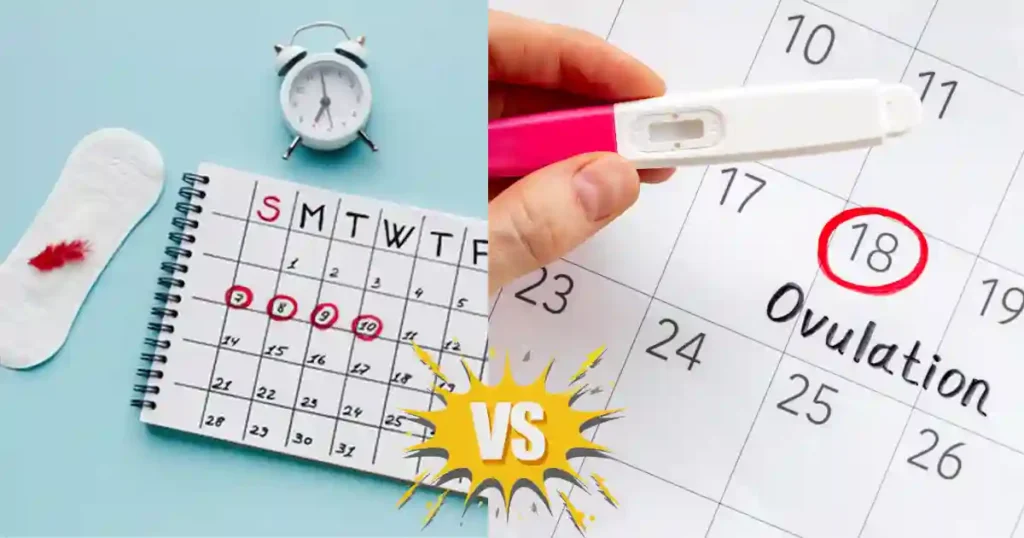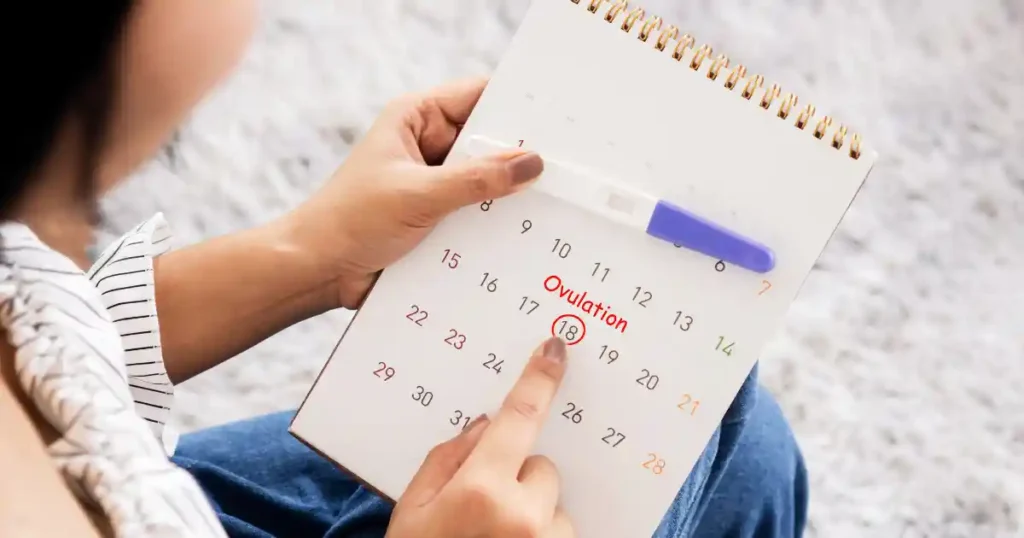
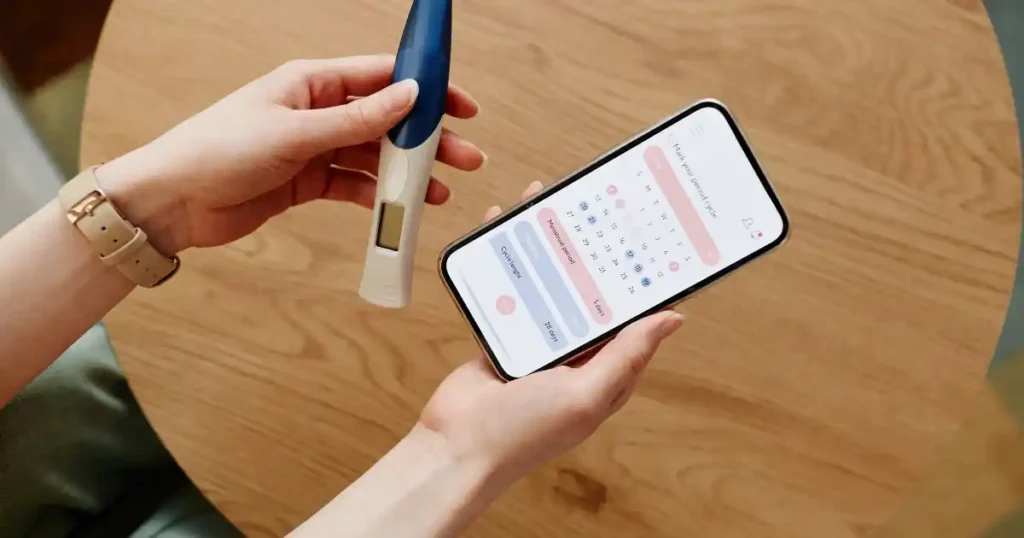
One of the first things I did when I started trying to understand my fertility was enter my dates into three different ovulation calculators online. Each gave me a different fertile window. Two of them were off by more than a week compared to my actual OPK results that cycle. That was the moment I started seriously questioning why ovulation calculators don’t work the way most people assume they do. The truth is that these tools have real, documented limitations that affect the majority of people who use them. This guide explains exactly why calculators fall short, what the research actually says about their accuracy, and which tracking methods reliably fill the gap.
Understanding Ovulation Calculators
Not all ovulation calculators are created equal. But most of them share the same fundamental limitation.
How Ovulation Calculators Work
Every ovulation calculator starts with two inputs: the date of your last period and your average cycle length. From those two numbers, it applies a formula. Most use the standard model: subtract 14 days from your cycle length to estimate your ovulation day. For a 28-day cycle, that predicts ovulation on day 14. For a 32-day cycle, it predicts day 18.
The fertile window is then calculated by marking the five days before that estimated ovulation date as fertile. The calculator returns a predicted window, typically a specific date range, labeled as when you are most likely to conceive.
That is the entire algorithm for most free calculators. Two inputs, one subtraction, a date range. That simplicity is both the appeal and the problem.
Why Accuracy Can Be Low
The formula assumes two things that are often not true. First, it assumes your cycle length is consistent from month to month. Second, it assumes your luteal phase is always exactly 14 days.
Research from Albert Einstein College of Medicine found something striking about that day-14 assumption. In a study of 949 women, the most likely day of ovulation for a 28-day cycle was actually day 16, at 21 percent likelihood. Day 14 was associated with only a 14 percent likelihood of ovulation. That means the most widely used ovulation prediction formula is wrong for the majority of women even with a textbook 28-day cycle.
Beyond timing errors, calculators cannot detect real-time hormonal events. They apply historical data to future predictions without any feedback from your body in the current cycle. Illness, stress, travel, or disrupted sleep this month affect when you actually ovulate. The calculator does not know any of that happened.
A Real-Life Context
I used three different ovulation calculator websites in the same sitting in Denver, Colorado. All three had different predicted windows despite using the same cycle length. One gave a 6-day window. One gave a 12-day window. A study examining 53 fertility calculators found that only 4 of them could accurately predict the ideal fertility window. Four out of fifty-three. That figure tells you everything you need to know about relying on calculator predictions for something as time-sensitive as ovulation.
Common Reasons Ovulation Calculators Fail
Understanding the specific failure modes helps you know exactly what calculators cannot compensate for.
Irregular Cycles
Ovulation day varies considerably for any given menstrual cycle length, making it impossible for calendar and app methods that use cycle length information alone to accurately predict the day of ovulation. That conclusion came from a peer-reviewed study published in the journal Current Medical Research and Opinion, examining four published calendar methods applied to data from 949 women.
For irregular cycles, the gap between predicted and actual ovulation can be substantial. If your cycles range between 24 and 38 days across recent months, no single average cycle length accurately represents what your body will do in any given month. The calculator applies the average anyway and produces a prediction that may miss your actual fertile window by a week or more.
Only about 30 percent of women had their fertile window at the time indicated by standard clinical guidelines. The remaining 70 percent had their fertile window either earlier or later, even though their cycles were regular. For irregular cycles, that inaccuracy is significantly greater.
Hormonal Fluctuations
Stress elevates cortisol, which suppresses the HPO axis hormonal signals that drive ovulation. A high-stress work week, a major life event, or even a difficult few nights of sleep can push ovulation back by several days. The calculator’s prediction does not shift. It continues to show the same window based on your historical average regardless of the hormonal disruption that cycle.
Thyroid disorders, hyperprolactinemia, PCOS, and hormonal imbalances all affect when ovulation occurs, and in some cycles, whether it occurs at all. A calculator cannot screen for anovulatory cycles. It predicts a fertile window every month whether ovulation happened or not.
Lifestyle and Environmental Factors
Illness, fever, and significant infections can temporarily suppress ovulation or delay the LH surge. Travel across multiple time zones disrupts circadian rhythms that influence hormone production timing. Medications including certain antidepressants, antipsychotics, and fertility drugs directly alter hormone levels in ways that shift ovulation timing.
None of these variables are inputs a calculator can accept. They all affect the current cycle in real time while the calculator applies a formula based on past cycles that did not include those disruptions.
Overreliance on the Algorithm
Calculators cannot detect a mid-cycle hormonal event. They cannot confirm whether the LH surge actually occurred. They cannot identify anovulatory cycles where no egg was released. Ovulation calculators cannot confirm whether you have actually ovulated. A positive prediction window is not the same as confirmed ovulation. These are fundamentally different things.
Signs Your Ovulation Calculator Is Not Accurate
Real-life body signals often tell a very different story than what any app or online tool predicts.
Cycle Inconsistencies
If your period consistently arrives earlier or later than the calculator predicted, that tells you ovulation shifted in those cycles. Calculators predict your period date from your estimated ovulation date. When those predictions are consistently off, it reflects the core problem: the calculator’s ovulation estimate was wrong.
Skipped periods, very long cycles, or erratic cycle lengths over several consecutive months are clear signals that cycle-length-based prediction is not producing useful results.
Basal Body Temperature Trends Don’t Match
BBT is one of the clearest retrospective confirmations of ovulation. When your temperature chart shows a sustained rise on a day that is significantly different from the calculator’s predicted ovulation date, you have direct evidence that your actual ovulation did not match the prediction.
This discrepancy is common. Tracking BBT alongside calculator predictions for two to three cycles usually reveals just how far off the prediction can be, especially if lifestyle factors are influencing the cycle during that period.
Cervical Mucus Observations Differ
Fertile-quality cervical mucus, clear, stretchy, and similar in texture to raw egg whites, appears in the days immediately before ovulation. If that mucus pattern consistently shows up outside the calculator’s predicted window, your actual fertile window does not match what the calculator is telling you.
Cervical mucus responds to your actual estrogen levels in real time. It does not respond to a formula. When the two disagree, trust the mucus.
LH Test Strip Discrepancies
An OPK positive result on a day outside the calculator’s predicted window is the most straightforward evidence that the calculator missed. This happens frequently. The probability of ovulating was spread across a range of 11 to 20 days even in 28-day cycles. A calculator predicting a narrow window within that range will simply miss the actual surge day in a large proportion of cycles.
Alternative Methods for Accurate Ovulation Tracking
When calculators fall short, these methods provide real, reliable insight into your actual fertility window.
LH Test Kits
OPK test strips detect the LH surge in urine directly. Urinary hormone testing to track ovulation is popular with patients and clinicians alike and may be used with regular or irregular cycles. That flexibility is one of the most important advantages LH testing has over calculator methods. It does not assume when your surge will happen. It detects it when it does happen.
Start testing a few days before the calculator’s estimated ovulation date. Test at the same time each day, ideally midday to early evening. Continue testing until you see a clear positive, then confirm the peak with one more test the following day.
For irregular cycles, start testing earlier and run a wider daily window to ensure you catch the surge wherever in the cycle it occurs. Quantitative LH monitors that report actual hormone concentrations are especially useful for PCOS or elevated baseline LH situations.
Basal Body Temperature Tracking
BBT is your resting body temperature taken every morning before any activity. After ovulation, progesterone causes a sustained temperature rise of approximately 0.2 to 0.5 degrees Fahrenheit that persists through the luteal phase. This pattern confirms that ovulation has occurred.
BBT is a retrospective confirmation tool. It does not predict ovulation in advance. But tracked consistently over two to three cycles, it builds a clear biphasic chart that shows exactly when your personal ovulation timing falls. That confirmed personal timing becomes the most reliable basis for future fertile window prediction.
Only urinary hormone testing, cervical mucus monitoring, and BBT measurements are currently established methods that can accurately detect the timing of ovulation and the length of the luteal phase. Calculators are not on that list.
Cervical Mucus Monitoring
Checking cervical mucus daily after your period ends costs nothing and gives real-time estrogen-driven data on the approach of ovulation. The shift from dry or creamy to clear and stretchy signals that estrogen is rising and ovulation is approaching. Peak mucus quality typically coincides with the one to two days immediately before and during ovulation.
Cervical mucus monitoring combined with OPK testing provides both the physical early warning and the biochemical confirmation needed for the most accurate home-based fertile window identification.
Wearables and Smart Devices
Wearables continuously track physiological signals including skin temperature, heart rate variability, respiratory rate, and sleep quality across the cycle. These signals shift measurably in response to hormonal changes. Machine learning algorithms analyze those signals to predict ovulation timing.
The Oura Ring detected 96.4 percent of ovulations with an average error of plus or minus 1.26 days. For individuals with irregular cycles, 82 percent of Oura Ring estimations were within 2 days of the reference ovulation date, compared to just 32.5 percent for calendar method estimations. That is more than a 2.5-fold accuracy advantage for irregular cycles specifically.
Women with irregular cycles may benefit from gaining insight into predicted fertile dates based on body temperature, heart rate, and respiratory rate, rather than relying on electronic diary entry of past dates, which may not predict future ovulatory dates.
Comparing Ovulation Tools vs Calculators
Here is a clear comparison of the main tracking methods for real-world accuracy and practical usability.
| Method | Accuracy for Irregular Cycles | Strengths | Limitations |
|---|---|---|---|
| Online calculators | Low | Fast, free, zero equipment | Assumes regular cycles, cannot detect real-time changes |
| LH test strips (OPKs) | High | Detects LH surge directly in any cycle | Daily testing required, PCOS can cause false readings |
| Basal body temperature | Medium to high | Confirms ovulation, builds personal pattern | Retrospective only, requires consistent timing |
| Cervical mucus observation | Medium | Free, real-time estrogen signal | Subjective, requires practice to read accurately |
| Wearables and smart devices | High, robust across cycle variability | Continuous automated tracking, adapts to individual | Cost, needs 2 to 3 cycles for calibration |
Expert Insights on Ovulation Calculator Limitations
“Online calculators are convenient, but they are a starting point, not a substitute for real tracking methods,” says Dr. Jessica Shepherd, a Dallas, Texas-based board-certified OB-GYN and FACOG, founder of Sanctum Med and Wellness, Chief Medical Officer of Hers, and author of Generation M: Living Well in Perimenopause and Menopause. Dr. Shepherd completed her residency at Drexel University College of Medicine and a fellowship in Gynecologic Endoscopy and Minimally Invasive Surgery at the University of Louisville. She was previously Director of Minimally Invasive Gynecologic Surgery at the University of Illinois at Chicago, serves on the Advisory Board for Women’s Health Magazine and Women’s Health.org, and is a regular contributor on Good Morning America and The Today Show.
Her framing of calculators as a starting point rather than a substitute reflects precisely what the evidence shows. Only about 15 percent of women actually have a regular 28-day cycle. Out of 108 free apps studied, only 20, fewer than one in five, were identified as being able to accurately track a woman’s monthly cycle. Of the 88 apps deemed inaccurate, many contained misleading or outright false health information. The calculator landscape is largely unreliable, and understanding that from the start changes how usefully you deploy these tools.
Expert Recommendations
Combine multiple methods for better accuracy. Use a calculator to identify approximately when to start testing. Use OPK strips to detect the actual LH surge in real time. Use BBT to confirm the post-ovulatory temperature shift. Use cervical mucus observation as a daily free physical signal that complements all other data.
Track at least two to three cycles to identify your personal patterns. One cycle of data is insufficient. Three cycles reveal whether your actual ovulation timing matches the calculator’s prediction or diverges consistently from it. If it consistently diverges, your tracking strategy needs to account for that divergence with real-time methods.
Do not panic over minor variations. A single cycle that does not match the calculator is not evidence of a fertility problem. It is evidence that the calculator has the same limitations in your cycle that it has in most cycles.
A Real-Life Tip
Using LH strips alongside a tracking app was the change that finally made my fertility predictions align with reality. The app told me when to start testing. The strips told me when my LH surge actually happened. The gap between those two data points was my proof that the calculator prediction needed correction. After two cycles of seeing where my actual surge fell relative to the prediction, I adjusted my testing window and stopped missing my fertile window. That clarity felt like a genuine breakthrough.
Common Mistakes When Using Ovulation Calculators
These errors are easy to make and equally easy to correct.
Assuming Perfect Regular Cycles
Entering a single cycle length and trusting the output as a precise prediction ignores the natural variation that affects most cycles. Even people with generally regular cycles experience occasional shifts in ovulation timing due to stress, illness, or lifestyle changes. A calculator does not account for any of these.
Track actual cycle lengths for at least three months. Use the pattern of those real cycle lengths to inform when you start OPK testing, rather than relying on the calculator’s day-14 assumption.
Ignoring Lifestyle Impacts
Stress, poor sleep, illness, and certain medications all affect ovulation timing in the current cycle. Feeding only dates into a calculator while ignoring these factors creates a prediction that does not reflect your actual biological reality this month. Log lifestyle context in your tracking app alongside your cycle dates so you can interpret unexpected fertile window shifts accurately.
Relying on a Single Calculator
Doctors put 53 fertility calculators to the test and found only 4 of them could accurately predict the ideal fertility window. Different calculators use different algorithms, assumptions, and cycle-length databases. Using one and trusting its output without cross-referencing against physical signs or OPK results amplifies the risk of acting on a prediction that does not match your actual biology.
Misinterpreting Calculator Predictions
Treating a calculator’s predicted window as a precise medical fact rather than a rough estimate creates unrealistic expectations. The output is a statistical probability range. It is not a confirmed ovulation date. When physical signs, OPK results, or BBT data point to a different timing, those real-time biological signals should take priority over the algorithmic estimate.
Calculator Mistakes Reference Table
Here is a clear summary of the most common mistakes when using ovulation calculators and how to correct each one.
| Mistake | Effect | How to Avoid |
|---|---|---|
| Assuming a perfect regular cycle | Missed fertile window | Track actual cycle lengths for 3 or more months |
| Relying on one calculator | Conflicting or misleading predictions | Confirm with OPKs, BBT, or cervical mucus |
| Ignoring lifestyle factors | Ovulation shifts not accounted for | Log stress, sleep, travel, and illness in tracking app |
| Overreacting to single-cycle variations | Anxiety, premature conclusions | Focus on patterns across multiple cycles |
| Treating predictions as exact dates | Wrong intercourse timing | Use predictions as a starting point to begin testing |
Tips to Improve Ovulation Prediction Accuracy
Small, consistent adjustments produce dramatically better results than any single tool change.
Combine Methods
Use OPK test strips to detect the actual LH surge. Use BBT every morning to build your personal post-ovulatory temperature shift pattern. Use cervical mucus observation daily as the free, real-time physical layer that supports all other tracking. Log all data into a tracking app so the pattern becomes visible across months.
The three established methods that can accurately detect ovulation timing are urinary hormone testing, cervical mucus monitoring, and BBT. Use all three together.
Track Multiple Cycles
Two to three cycles of consistent multi-method tracking is the minimum needed for reliable personal ovulation pattern recognition. One cycle tells you one data point. Three cycles show you your personal variation range and the factors that influence it. That range becomes your personalized fertile window estimate, far more reliable than any calculator’s generic formula.
Monitor Lifestyle Factors
Note sleep quality, stress level, travel, and illness in your tracking log. These are the variables most likely to shift ovulation timing in any given cycle. When a cycle’s actual ovulation timing diverges from your personal pattern, the lifestyle context note is usually what explains it. Understanding the why behind the shift is what prevents unnecessary panic and improves your interpretation over time.
A Real-Life Insight
After tracking BBT and using LH strips consistently for three months, I finally knew my real fertile window. No more guesswork. No more conflicting calculator outputs. My OPK consistently showed a surge on day 15 to 17. My BBT consistently confirmed the temperature shift two days after. My app’s prediction, once I entered three months of real surge dates, matched that pattern reliably. The three-month investment in consistent multi-method tracking produced a personalized picture that no calculator ever could.
Ovulation Calculators common Questions
Do Ovulation Calculators Work for Irregular Cycles?
Not reliably. It is not possible for calendar and app methods that use cycle-length information alone to accurately predict the day of ovulation. For irregular cycles, that limitation is especially pronounced. Combine a calculator estimate with LH test strips and BBT tracking for accurate fertile window identification when cycles are unpredictable.
How Many Cycles Should I Track for Reliable Results?
At least two to three cycles of consistent tracking with multiple methods. One cycle is a single data point. Three cycles reveal your personal ovulation timing pattern and the factors that shift it from month to month. Six cycles of data give a high level of personalized accuracy.
Can Lifestyle Changes Affect Calculator Predictions?
Yes. Stress, poor sleep, illness, and certain medications all shift actual ovulation timing in ways the calculator cannot account for. The calculation remains the same regardless of what your body is experiencing that month. Physical tracking methods respond to what is actually happening. Calculators do not.
Should I Stop Using Ovulation Calculators Entirely?
No. They are a useful starting point that costs nothing and requires no equipment. They tell you approximately when to begin OPK testing each cycle. That time-saving function has real value. The mistake is treating calculator predictions as confirmation rather than as a starting estimate. Use them to start the process, then confirm with real-time biological data.
Are Wearables More Accurate Than Calculators?
Yes, significantly. The physiology method demonstrated superior accuracy over the calendar method, with approximately three-fold improvement. Calendar-based fertility tracking should be used with caution, particularly for individuals with irregular menstrual cycles. Wearables adapt to your actual physiological signals in real time. Calculators apply historical averages. That difference produces a meaningful accuracy gap that grows larger for irregular cycles.
Practical Takeaways
Simple, consistent habits produce better tracking outcomes than any single tool.
Be Consistent
Check cervical mucus every day. Take BBT every morning before getting up. Test OPKs at the same time each day during your testing window. Log all data immediately, not from memory later. Consistency is the non-negotiable foundation for any tracking method.
Use Tools Wisely
Calculators give you a starting estimate. OPKs give you biochemical detection. BBT gives you confirmation. Physical signs give you real-time context. Use each tool for what it actually does well, and combine them so each method’s strength compensates for another’s limitation.
Focus on Patterns, Not One Cycle
One confusing cycle is not evidence of a problem. One flat BBT chart does not confirm anovulation. One cycle where the OPK never turned positive may reflect stress, illness, or travel rather than a fertility issue. Three to six cycles of consistent data reveal your real pattern and make single-cycle anomalies interpretable rather than alarming.
A Personal Reflection
The day I stopped trusting a single online calculator and started paying attention to my own body was genuinely liberating. My mucus told me something was happening. My OPK confirmed it. My BBT chart showed the temperature rise two days later. None of those three signals required a formula. They reflected what was actually happening in my body. That direct connection between observation and understanding is what cycle tracking is supposed to feel like.
Why Calculators Alone Don’t Work
Ovulation calculators are convenient. They are a reasonable first step. But they are built on an assumption that ovulation is predictable from cycle length alone, and the research consistently shows that it is not. Accurate fertility tracking requires real-time biological data that only urinary hormone testing, cervical mucus monitoring, and BBT can provide. Combine all three. Use calculators as the starting estimate that tells you when to begin testing. Let the testing and physical signs tell you what is actually happening.
Final Recommendation
Understanding why ovulation calculators don’t work for most people is the foundation for building a tracking strategy that actually produces reliable results. The clearest advice from both the research and personal experience is this: use a calculator or app to estimate when to start OPK testing each cycle, then immediately layer in real-time methods to confirm what is actually happening.
Test OPKs daily at midday to early evening during the estimated window. Track cervical mucus every day from the end of your period onward. Add BBT every morning to build your personal post-ovulatory temperature pattern across two to three cycles. Together, these three methods give you urinary hormone detection, physical estrogen signaling, and temperature confirmation, the only established combination that accurately identifies both ovulation timing and luteal phase health.
If after three to six months of consistent multi-method tracking your OPKs never show a clear surge, your BBT chart never shows a biphasic pattern, or your cycles remain severely irregular, book an appointment with a gynecologist or reproductive endocrinologist. Bring your tracking data. That organized evidence gives your doctor a clear, immediate picture of your hormonal patterns and makes diagnosis faster and more accurate.
FAQs
Why do some ovulation calculators don’t work well?
Ovulation calculators don’t work well for everyone because they rely on averages. If your cycle is irregular, results may be off and less accurate.
Are ovulation calculators don’t work for irregular cycles?
Ovulation calculators don’t work reliably for irregular cycles. They cannot adjust for changing cycle lengths, which affects prediction accuracy.
Can ovulation calculators don’t work without accurate data?
Yes, ovulation calculators don’t work well without correct inputs. Wrong cycle dates or missed data can lead to poor or misleading estimates.
Do ovulation calculators don’t work for all women?
Ovulation calculators don’t work the same for all women. Each cycle is unique, so results may vary based on hormones and lifestyle factors.
Why do ovulation calculators don’t work compared to tests?
Ovulation calculators don’t work as precisely as test kits. Calculators estimate timing, while tests detect hormone changes linked to ovulation.
Can stress make ovulation calculators don’t work?
Yes, stress can affect cycles, so ovulation calculators don’t work as expected. Changes in hormones may shift ovulation timing.
How can I improve results if ovulation calculators don’t work?
If ovulation calculators don’t work well, combine methods. Use ovulation test kits, track symptoms, and monitor cycle patterns for better accuracy.