Realizing that ovulation calculators can be wrong was a turning point in how I approached fertility tracking. There is something deeply reassuring about typing two numbers into a box and getting back a confident six-day prediction. But that confidence is borrowed. It comes from a formula, not from your body. When I started comparing calculator predictions against my actual OPK results and BBT charts, the gaps were eye-opening. Some months the predictions were close. Other months they were off by nearly a week. This guide explains exactly why ovulation calculators can be wrong, what conditions and lifestyle factors amplify those errors, and which tracking methods give you reliable data that no formula can replicate.
How Ovulation Calculators Work
Even though calculators are convenient, they have limitations that most users overlook entirely.
The Basic Formula
Every ovulation calculator uses the same core logic. You enter your last period date and your average cycle length. The calculator subtracts 14 days from your cycle length to estimate your ovulation day, then marks the five days before that as your fertile window.
For a 28-day cycle, that puts ovulation on day 14. For a 30-day cycle, it moves to day 16. For a 24-day cycle, it shifts to day 10. The math is simple. The output looks precise.
That precision is an illusion. The formula assumes your luteal phase is always exactly 14 days long. Research published in Current Medical Research and Opinion, examining data from 949 women, found that even in textbook 28-day cycles, ovulation most commonly fell on day 16, not day 14. Day 14 had only a 14 percent probability of being the actual ovulation day. The prediction formula built into almost every calculator is systematically off for the majority of people who use it.
Built-In Assumptions That Can Fail
Ovulation calculators are built on three assumptions that frequently fail in the real world.
The first is that your cycle is consistently the same length. Most people’s cycles vary by at least a few days from month to month. That variation directly shifts when ovulation occurs.
The second is that the luteal phase is always 14 days. Research shows that luteal phase length varies between individuals. Using a fixed 14-day assumption for everyone introduces a predictable source of error.
The third and most consequential assumption is that the formula applies equally regardless of lifestyle, health status, or hormonal conditions. Illness, stress, thyroid disorders, PCOS, medications, and environmental disruptions all affect ovulation timing in ways a calculator has no mechanism to detect or account for.
A Real-Life Context
Entering my data into three different online calculators in Chicago, Illinois gave me three completely different fertile windows. All three used the same inputs. All three applied different algorithms to the same numbers. Two were off by more than five days compared to my actual OPK result that cycle. That experience made the limitation concrete in a way no research article could.
Common Reasons Calculators Give Wrong Predictions
Understanding the specific failure modes helps you know exactly when and why the calculator cannot be trusted.
Irregular Cycles
Calculator formulas fail most dramatically for irregular cycles. Ovulation calculators cannot accurately predict ovulation for individuals with irregular cycles or those with longer than average cycles of more than 32 days or shorter than average cycles of fewer than 26 days.
If your cycle has ranged from 24 days to 36 days in the past year, no single average captures your actual variation. The calculator applies one number to every future cycle regardless of whether that cycle is running short or long. In a cycle that will actually run 35 days due to stress, the calculator predicts ovulation on day 16 when it will actually happen on day 21. That five-day gap means the predicted fertile window has already passed before the actual one opens.
Hormonal Changes
PCOS, thyroid disorders, and elevated prolactin all alter the hormonal cascade that determines when ovulation occurs. PCOS causes hormonal imbalance that disrupts ovulation and egg development. Thyroid disorders, both hypothyroid and hyperthyroid, interfere with hormone regulation and lead to irregular menstrual cycles.
There is a specific and often overlooked thyroid interaction worth knowing about. TSH (thyroid-stimulating hormone) molecules look similar to LH, so an ovulation test may falsely read as positive when it is picking up TSH rather than an actual LH surge. This cross-reactivity means someone with an undiagnosed thyroid condition might see persistent OPK positives throughout their cycle that are not representing a true LH surge. A calculator that is calibrated to average hormonal patterns has no awareness of this individual condition.
Stress elevates cortisol, which suppresses the HPO axis. A particularly demanding period at work, a difficult personal situation, or even a week of poor sleep can delay ovulation by several days in that cycle alone. The calculator’s prediction remains unchanged while your biology shifts.
Lifestyle and Environmental Factors
Travel across time zones disrupts circadian rhythms that govern hormone timing. A single long-haul flight can delay ovulation in the cycle it occurs by two to four days. The calculator prediction does not shift because the calculator does not know you flew from New York to Tokyo.
Late nights, dietary changes, and significant exercise increases or decreases all affect the hormonal environment in ways that shift ovulation timing within a cycle. Medications including antibiotics in some cases, hormonal therapy at any dose, and fertility drugs that contain LH or hCG directly alter hormone levels in measurable ways.
All of these variables affect real-time hormonal events. The calculator applies historical data. Those two things describe different biological situations.
Overreliance on the Algorithm
Calculators cannot detect a real-time hormone surge. They cannot identify an anovulatory cycle where no egg was released. They cannot know whether the LH surge occurred early, on time, or not at all. They produce a date prediction from a formula applied to past cycle averages. That prediction is structurally unable to detect mid-cycle variations.
Ovulation calculators cannot confirm whether you have actually ovulated. A predicted fertile window is not a confirmed one. Treating the two as equivalent is the core overreliance mistake.
Signs Your Calculator Predictions Are Wrong
Your body gives clear signals when the calculator’s prediction does not match your actual cycle. Learning to read these signals is the fastest path to better tracking.
Cycle Length Variations
If your period consistently arrives significantly earlier or later than the calculator predicted, that timing gap reflects a miscalculated ovulation estimate. Calculators predict your period date from your ovulation estimate. When those predictions are consistently wrong, the underlying ovulation estimate is wrong.
Short cycles under 21 days or long cycles over 35 days indicate that ovulation is happening at a time that the standard formula cannot accurately represent. These cycle lengths fall outside the range where the 14-day luteal phase assumption holds reliably.
Basal Body Temperature Patterns Don’t Match
BBT rises sustainably by approximately 0.2 to 0.5 degrees Fahrenheit after ovulation due to progesterone. That thermal shift on your chart marks when ovulation actually occurred. When that shift consistently appears significantly before or after the calculator’s predicted window, the calculator is wrong for your cycle.
Two to three cycles of BBT tracking alongside calculator predictions shows you exactly how much the formula diverges from your personal ovulation timing. That gap is your evidence. It is also your guide for adjusting when you begin OPK testing.
Cervical Mucus Doesn’t Align
Fertile-quality cervical mucus, clear, stretchy, and similar in texture to raw egg whites, appears in the days immediately before ovulation driven by rising estrogen. When that mucus pattern consistently shows up three to five days before or after the calculator’s predicted fertile window, your actual estrogen surge is not happening on the calculated schedule.
Mucus responds to your actual hormone levels in real time. It does not apply a formula. When fertile mucus and calculator predictions disagree persistently, trust the mucus.
LH Test Strip Surprises
An OPK positive on a day well outside the calculator’s predicted window is direct biochemical evidence that the prediction was wrong. If your calculator predicts ovulation on day 14 and your OPK turns positive on day 19, the calculator missed your actual surge by five days.
This type of discrepancy is common. Logging OPK results alongside calculator predictions across two to three cycles makes the gap visible and measurable. Once you know how far your personal ovulation timing diverges from the prediction, you can adjust your testing window accordingly to catch the actual surge reliably.
More Reliable Alternatives to Calculators
When calculators give wrong predictions, these methods provide genuine insight grounded in your actual biology.
LH Test Strips
OPK test strips detect the LH surge in urine directly. They do not apply a formula based on historical averages. They measure what is happening in your body today.
The LH surge typically precedes ovulation by 24 to 36 hours. A positive OPK test strip result, where the test line is as dark as or darker than the control line, means your surge is present and ovulation is imminent. This real-time biochemical detection is the most direct home-based ovulation confirmation tool available without a blood test.
Start OPK testing earlier than the calculator’s predicted window suggests, especially if you have noticed that your actual surge tends to arrive later than predicted. For irregular cycles, begin testing around day eight to ten regardless of cycle length, and continue through day twenty-two or until a clear positive is confirmed.
Basal Body Temperature Tracking
BBT tracking is the standard retrospective confirmation method for ovulation. Track it every morning at the same time before any activity. After ovulation, progesterone causes a sustained temperature rise that persists through the luteal phase. A biphasic chart, one with clearly lower readings before ovulation and clearly higher readings after, confirms that ovulation occurred in that cycle.
BBT does not predict ovulation in advance. But tracked consistently over two to three cycles, it builds your personal ovulation timing baseline. That personalized baseline is far more accurate than any population-average formula.
Cervical Mucus Monitoring
Checking cervical mucus daily after your period ends gives you a free, real-time estrogen signal that neither calculators nor BBT tracking can provide in advance. The shift from dry or creamy to clear and stretchy marks the approach of ovulation as estrogen rises.
Combining cervical mucus observation with OPK testing gives you both the physical early warning and the biochemical confirmation. When both agree, your fertile window identification becomes highly reliable regardless of what the calculator predicted.
Smart Wearables
Wearables continuously track physiological signals including skin temperature, heart rate variability, and sleep quality throughout the menstrual cycle. These signals shift measurably in response to hormonal changes and are analyzed by machine learning algorithms that detect ovulation patterns across cycles.
The accuracy advantage of wearables over calculators is especially pronounced for irregular cycles. For individuals with irregular cycles, 82 percent of wearable-based estimations were within two days of the reference ovulation date compared to just 32.5 percent for calendar method estimations. That is more than double the accuracy for the group where calculators fail most significantly.
Comparing Ovulation Tracking Tools
Here is a clear comparison of the main tracking methods for real-world accuracy and practical usability.
| Method | Accuracy for Irregular Cycles | Strengths | Limitations |
|---|---|---|---|
| Online calculators | Low | Fast, free, no equipment needed | Assumes regular cycles, cannot detect real-time changes |
| LH test strips | High | Detects LH surge directly in real time | Daily testing required, PCOS may cause false readings |
| Basal body temperature | Medium to high | Confirms ovulation, builds personal baseline | Retrospective only, requires consistent morning timing |
| Cervical mucus observation | Medium | Free, real-time estrogen signal before ovulation | Subjective, requires practice to read accurately |
| Wearables and smart devices | High across variable cycles | Continuous automated tracking, adapts to individual patterns | Higher cost, needs two to three cycles for calibration |
Expert Advice on Ovulation Calculator Limitations
“Calculators are just estimates. Women with irregular cycles must combine methods to predict fertile days accurately,” says Dr. Jessica Shepherd, a Dallas, Texas-based board-certified OB-GYN and FACOG, founder of Sanctum Med and Wellness, Chief Medical Officer of Hers, and author of Generation M: Living Well in Perimenopause and Menopause. Dr. Shepherd completed her residency at Drexel University College of Medicine and a fellowship in Gynecologic Endoscopy and Minimally Invasive Surgery at the University of Louisville. She was previously Director of Minimally Invasive Gynecologic Surgery at the University of Illinois at Chicago, serves on the Advisory Board for Women’s Health Magazine and Women’s Health.org, and is a regular contributor on Good Morning America and The Today Show.
Her framing of calculators as estimates rather than predictions deserves emphasis. An estimate acknowledges uncertainty. A prediction implies reliability. Most calculator interfaces present their output in the language of prediction. Understanding them as estimates changes how you use them and prevents the overreliance that produces the most costly tracking mistakes.
Expert Tips
Track multiple cycles before drawing conclusions. One cycle of data tells you one thing. Three cycles show you your personal variation range, which is the information that makes any tracking method meaningful.
Use at least two methods together. OPK plus BBT, or OPK plus cervical mucus observation, gives you biochemical detection and physical confirmation. Either pairing compensates for what each method cannot provide alone.
Be patient with minor deviations. Cycles vary naturally from month to month. A cycle that arrives a few days earlier or later than the calculator predicted is not evidence of a problem. It is evidence that cycles are biological, not algorithmic.
A Real-Life Insight
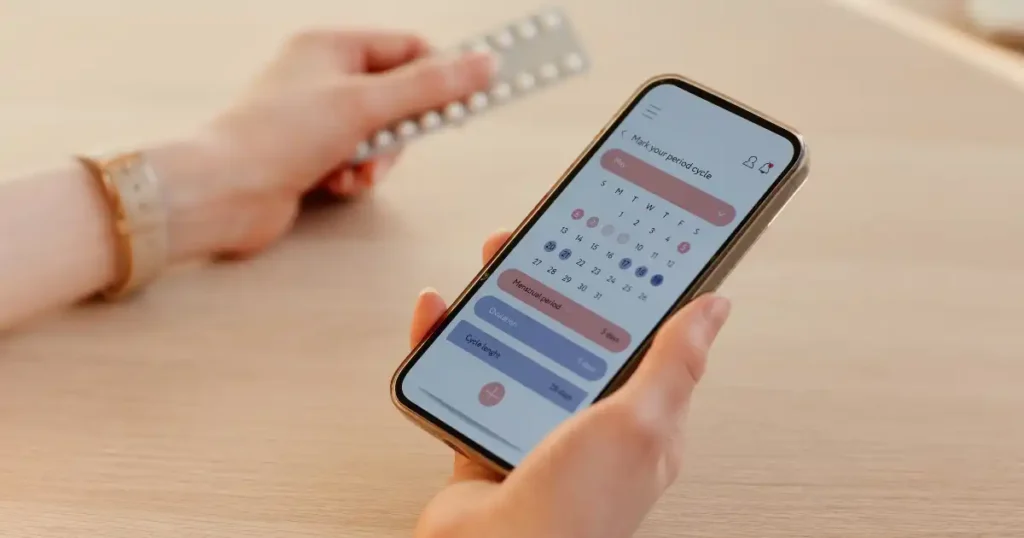
Combining LH strips with a tracking app was the change that finally made my fertility predictions align with reality. The app narrowed the window. The strips confirmed the actual day. After two months of logging both, the gap between the prediction and the reality became visible in the data. I adjusted my testing window by three days earlier based on what I learned. That one adjustment changed everything. It felt, as many people describe it, like connecting dots on a calendar that I simply could not read before.
Common Mistakes When Using Ovulation Calculators
These errors are easy to make and equally easy to correct once you know what to watch for.
Assuming Standard 28-Day Cycles
Entering a cycle length of 28 as a default assumption when your actual cycles vary between 26 and 33 days introduces systematic prediction error in every cycle. Use your actual average calculated from three to six real cycles, not an assumed number.
If you have not tracked your cycles carefully before, your estimated cycle length may already be wrong. Spend two to three months logging actual start dates before relying on any calculator prediction.
Relying on One Method Only
Calendar apps alone miss real-time cycle shifts. OPKs alone without cycle context make it harder to know when to start testing. BBT alone gives no advance warning. Each tool answers one question. Using only one tool leaves the other questions unanswered.
Combine at minimum a cycle tracking app for historical context with OPK strips for biochemical real-time detection. Add BBT for post-ovulatory confirmation when you want the most complete picture.
Ignoring Lifestyle and Health Factors
Tracking only cycle dates without noting stress, sleep quality, illness, travel, and medication changes means that unexpected cycle shifts are harder to interpret. A delayed ovulation in a high-stress month looks alarming in isolation. With a context note that documents the stressor, it reads as a recognizable physiological response.
Log lifestyle context every cycle. That habit transforms confusing data into interpretable patterns.
Overreacting to Minor Variations
Some cycle-to-cycle variation is completely normal and expected. Focusing on a single unusual cycle rather than on patterns across multiple cycles generates anxiety without generating useful information. Three cycles of data revealing a consistent three-day gap between calculator prediction and actual surge timing is actionable. One unusual cycle is noise.
Calculator Mistakes Reference Table
Here is a clear summary of the most common calculator-related mistakes and how to correct each one.
| Mistake | Effect | How to Avoid |
|---|---|---|
| Assuming a standard 28-day cycle | Missed fertile window | Track actual cycle lengths for 3 or more months |
| Using one calculator without confirmation | Conflicting or inaccurate predictions | Confirm with OPKs, BBT, or cervical mucus |
| Ignoring lifestyle and health factors | Cycle shifts not accounted for | Log stress, sleep, travel, and illness as context |
| Treating predictions as exact dates | Wrong timing of intercourse | Use predictions as a starting point to begin testing |
| Overreacting to single-cycle deviations | Unnecessary anxiety | Focus on patterns across multiple cycles |
Tips to Improve Accuracy of Ovulation Predictions
Simple, consistent adjustments produce meaningfully better tracking data over time.
Combine Multiple Methods
Use OPK test strips to detect the actual LH surge. Use BBT every morning to build your personal post-ovulatory temperature shift pattern. Observe cervical mucus daily from the end of your period as the free real-time physical signal. Log all data into a tracking app so the pattern becomes visible across months.
The combination of urinary hormone testing, cervical mucus monitoring, and BBT tracking is the only established approach that can both identify the fertile window in advance and confirm ovulation after the fact.
Track Multiple Cycles
Two to three cycles of consistent multi-method tracking is the minimum needed for reliable personalized ovulation pattern recognition. One cycle gives you one data point. Three cycles give you your personal ovulation timing range and the factors that influence it. That range becomes your actual fertile window guide.
Monitor Lifestyle Factors
Note sleep quality, stress level, travel, illness, and medication changes in your tracking log. These variables are responsible for the majority of cycle-to-cycle ovulation timing variation that calculators cannot account for. When a cycle deviates from your established pattern, the lifestyle context note is usually what explains it.
A Real-Life Example
After three months of using OPK strips and BBT tracking together, I finally knew my real fertile window without any guesswork. The app showed my cycles averaged 29 days. My OPK consistently surged on day 17 to 18. My BBT confirmed the rise two days later. The calculator had been predicting ovulation on day 15 every single month. I had been timing everything around a window that consistently arrived two to three days later than predicted. Fixing that one timing error changed my whole approach.
QA About Ovulation Calculators
Can Calculators Be Trusted for Irregular Cycles?
Not reliably. Ovulation calculators cannot accurately predict ovulation for individuals with irregular cycles. For cycles that vary significantly in length, combine calculator estimates with OPK test strips and BBT or cervical mucus tracking. Real-time biological methods compensate for the formula’s inability to adapt to current-cycle variation.
How Long Should I Track Before Drawing Conclusions?
At least two to three cycles of consistent multi-method tracking. One cycle is a single data point. Three cycles reveal your personal ovulation timing pattern and the lifestyle factors that shift it. Six cycles give you a high level of confidence in that pattern.
Do Lifestyle Changes Affect Calculator Predictions?
Yes, significantly. Stress, poor sleep, illness, travel, and certain medications all shift actual ovulation timing in ways the calculator cannot account for. Physical tracking methods respond to what is happening in your body in real time. Calculators apply historical averages regardless of current conditions.
Should I Stop Using Calculators Completely?
No. They serve a genuine purpose as a low-effort starting estimate. They tell you approximately when to begin OPK testing each cycle. That practical time-saving function is valuable. The mistake is treating calculator output as confirmed ovulation timing rather than as a rough guide to start your testing window.
Are Wearables More Accurate Than Calculators?
Yes, especially for irregular cycles. Calendar-based predictions should be used with caution, particularly for individuals with irregular menstrual cycles. Wearables continuously adapt to your physiological signals across cycles rather than applying population averages. That fundamental difference produces meaningfully better accuracy for the majority of users.
Practical Takeaways
Consistent habits with the right combination of tools produce dramatically better fertility tracking results than any single calculator.
Track Consistently
Log every cycle start date accurately. Test OPKs at the same time daily during your testing window. Take BBT every morning before any activity. Note lifestyle context in your tracking app. Daily consistency is what transforms individual data points into reliable patterns.
Use Tools Wisely
Calculators give you a starting estimate to initiate testing. OPKs give you the real-time biochemical signal. BBT gives you post-ovulatory confirmation. Physical signs give you moment-to-moment context. Use each for what it actually does, not for what it cannot do.
Focus on Trends, Not One Cycle
One off-cycle is not evidence of a problem. One calculator prediction that missed the mark is not evidence that all tracking is futile. Three to six cycles of consistent data create the picture that makes both individual cycles and overall patterns interpretable.
A Personal Reflection
The day I stopped trusting a single online calculator and started paying direct attention to my own body felt genuinely freeing. My cervical mucus told me something was changing. My OPK confirmed the surge. My temperature chart showed the rise the following morning. None of that required a formula. It required attention, consistency, and the right combination of tools applied to real biological data. That direct connection between observation and understanding is what ovulation tracking is supposed to feel like.
Why Ovulation Calculators Can Be Wrong
Ovulation calculators are convenient starting points, not finishing points. Their limitations are real, well-documented, and most pronounced exactly where accurate tracking matters most: irregular cycles, hormonal conditions, and lifestyle-disrupted ovulation. Combining multiple tracking methods, accounting for lifestyle factors, and observing real physical signs dramatically improves accurate fertile window identification regardless of what any calculator predicts.
Final Recommendation
Accepting that ovulation calculators can be wrong is the first step toward building a tracking strategy that actually works. Based on the research and personal experience, the most reliable approach is this: use a calculator or app to identify approximately when to begin OPK testing each cycle, then immediately layer in real-time methods that respond to your actual biology rather than a formula.
Test OPKs daily at midday to early evening from a few days before the calculator’s estimated window. Observe cervical mucus every day from the end of your period. Add BBT tracking to build your personal ovulation timing baseline over two to three cycles. Together, these three methods give you detection, physical confirmation, and post-ovulatory verification that no calculator can replicate.
If you have PCOS, a thyroid condition, or significant cycle irregularity, consider upgrading to a quantitative LH monitor that reports actual hormone concentration rather than a simple positive or negative result, which is more reliable for distinguishing true surges from elevated hormonal baselines. If three to six months of combined tracking still shows no clear LH surge or biphasic BBT pattern, book an appointment with a gynecologist. Your tracking data gives that conversation a well-organized and immediately useful starting point.
FAQs
Why do ovulation calculators can be wrong?
Ovulation calculators can be wrong because they use averages, not real-time hormone data. If your cycle varies, predictions may not match your actual ovulation.
Are ovulation calculators can be wrong for irregular cycles?
Yes, ovulation calculators can be wrong for irregular cycles. Changing cycle lengths make it hard for fixed formulas to give accurate fertile windows.
Can ovulation calculators can be wrong without proper data?
Ovulation calculators can be wrong if the input data is inaccurate. Incorrect cycle dates or missed periods reduce the reliability of results.
How often do ovulation calculators can be wrong?
Ovulation calculators can be wrong fairly often for some users. Accuracy depends on cycle regularity, tracking consistency, and personal hormone patterns.
Do stress and lifestyle make ovulation calculators can be wrong?
Yes, stress and lifestyle can make ovulation calculators can be wrong. Hormonal shifts may change ovulation timing beyond predicted dates.
Are ovulation calculators can be wrong compared to test kits?
Ovulation calculators can be wrong more often than test kits. Tests detect hormone surges, while calculators only estimate based on past cycles.
How can I reduce errors if ovulation calculators can be wrong?
To reduce errors when ovulation calculators can be wrong, combine methods. Use ovulation tests, track symptoms, and log cycles for better accuracy.