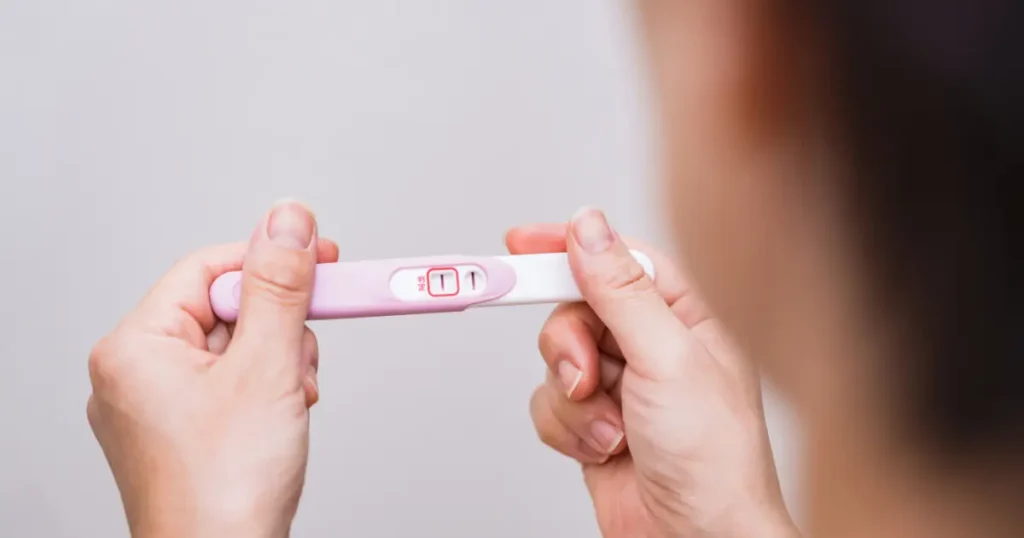
The decision between an ovulation calculator vs fertility monitor is one that comes up early in almost every serious fertility tracking journey. Calculators are free and instant. Monitors are precise and hormone-based. They are built differently, serve different purposes, and perform very differently depending on your cycle type and goals. After using both extensively and researching the clinical evidence behind each, I can tell you that the right answer is almost never “either-or.” Understanding what each tool actually measures, and where each one falls short, is what lets you choose the right combination for your specific situation. This guide covers everything clearly so you can make that choice with confidence.
Understanding the Difference Between Ovulation Calculators and Fertility Monitors
Many people confuse calculators and monitors, but each has unique strengths and distinct limitations that shape when and how they should be used.
What Is an Ovulation Calculator
An ovulation calculator is a digital tool that estimates your fertile window using historical cycle data. You enter your average cycle length and the date of your last period. The tool applies the standard formula, subtracting 14 days from your cycle length to estimate ovulation, and returns a predicted fertile window spanning five to six days.
More advanced calculators and apps accept additional inputs. Some allow you to enter BBT readings, cervical mucus observations, or OPK results. These additional data points move a basic calculator closer to individualized prediction. But the core output remains a calendar estimate derived from your cycle history, not a direct measurement of your hormones in the current cycle.
Calculators are ideal for beginners building initial cycle awareness, for those with regular cycles who want a free, low-effort starting estimate, and as the first layer in a multi-method tracking strategy.
What Is a Fertility Monitor
A fertility monitor is a device that measures actual hormone concentrations in your urine to detect ovulation directly rather than predicting it from calendar data. The most established monitors measure LH and estrogen (E3G). Advanced quantitative monitors like the Mira also measure progesterone metabolite (PdG) and FSH.
Qualitative monitors like the Clearblue Fertility Monitor return easy-to-read results: Low, High, or Peak fertility, based on whether your measured hormone levels have crossed defined thresholds. Quantitative monitors like the Mira return actual numeric hormone concentrations in mIU/mL, giving you a detailed, day-by-day picture of your hormonal curve across the entire cycle.
Fertility monitors are ideal for anyone with irregular cycles, PCOS, thyroid conditions, or previous difficulty identifying their fertile window through calendar methods alone. They provide the closest thing to clinical-lab hormone monitoring available at home.
A Real-Life Context
Using a calculator in Raleigh, North Carolina for several months gave me a predicted fertile window that felt consistent and reassuring. Then I switched to a fertility monitor for one cycle as a comparison. The monitor’s LH and estrogen readings told a completely different story. My actual hormone-based fertile window opened two days later than the calculator predicted and peaked on a day the calculator had already marked as post-fertile. For a couple actively trying to conceive, that two-day discrepancy is a missed cycle. That one comparison made the value of hormone-based detection unmistakably clear.
How Each Tool Works and Collects Data
Understanding the mechanics of each tool explains why their outputs differ so significantly for the same person in the same cycle.
Ovulation Calculator Data Inputs
Every ovulation calculator needs at minimum: the first day of your last period and your average cycle length. Most apps improve predictions when you add three or more months of cycle history so the algorithm can calculate a personal average rather than using a single entry.
The most accurate calculator-based apps also accept BBT readings, OPK results, and cervical mucus observations. When these physiological data streams are added, a well-designed app moves substantially closer to the accuracy of a monitor because it is no longer relying only on calendar math. However, that improvement only comes with consistent daily data entry from the user.
Fertility Monitor Data Inputs
Fertility monitors require urine samples tested with disposable test wands or strips. Most monitors instruct you to begin testing within the first few days of your period and continue daily through your predicted fertile window and often beyond it.
Qualitative monitors process your urine sample internally and return a simple fertility level reading. Quantitative monitors analyze the urine with the same technology used in professional labs and transmit actual hormone concentration values to a smartphone app. The estrogen metabolite E3G was found to be the best predictor of the beginning of the fertile window, while LH best predicted the onset of ovulation. That two-hormone combination is what makes fertility monitors significantly more powerful than LH-only OPK strips.
Many monitors now integrate with apps for data visualization, trend tracking, and cycle predictions that improve with each logged cycle. Some, like Mira, also offer FSH tracking for those who want to monitor ovarian reserve indicators alongside fertility markers.
A Real-Life Example
Making the switch from a calculator to a hormone monitor was described by many users as seeing the difference between a map and GPS. The calculator tells you roughly where you are. The monitor tracks where you actually are in real time. That distinction, between estimation and measurement, is what drives the practical accuracy difference between the two tools.
Accuracy and Reliability Comparison
Understanding where each tool succeeds and where it falls short is the most important practical knowledge for choosing between them.
Ovulation Calculator Accuracy
Calendar-based fertility tracking apps have an average accuracy of approximately 19 to 22 percent for predicting the actual fertile window in research studies. That is the documented performance of free calendar-based apps as a category. For regular cycles with minimal month-to-month variation, individual users can experience significantly better personal accuracy. For irregular cycles, PCOS, or cycles affected by lifestyle disruption, accuracy drops substantially.
Calculators work best alongside symptom tracking and LH tests. Using a calculator as the sole fertility prediction tool without any real-time confirmation method represents a significant gap between what the tool claims and what it can reliably deliver.
Fertility Monitor Accuracy
Hormone-based fertility monitors provide significantly higher accuracy than calendar-based methods. Research shows that while calendar-based fertility tracking apps are often inaccurate, averaging 19 percent accuracy, home ovulation trackers from market-leading brands are much more reliable, up to 99 percent accuracy. The Mira Fertility Max wand demonstrates detection rates of 99.5 percent for LH, 99.0 percent for E3G, and 99.5 percent for PdG, giving it lab-grade accuracy for at-home use.
A 2021 peer-reviewed study comparing the Mira quantitative monitor to the Clearblue Fertility Monitor against reference blood hormone testing found that the estimated day of ovulation from the two monitors was highly correlated, with the Mira LH peak day coinciding with one of the Clearblue peak days 86 percent of the time. Both monitors provided an accurate estimate of the fertile window.
Qualitative monitors like Clearblue give simple high or peak readings. Quantitative monitors like Mira give actual hormone concentration numbers. Both significantly outperform calendar calculators. The choice between them depends primarily on whether you need the additional detail that quantitative tracking provides.
Expert Opinion
Calculators are good for rough estimates, but fertility monitors provide personalized, hormone-based accuracy, says Dr. Jessica Shepherd, a Dallas, Texas-based board-certified OB-GYN and FACOG, founder of Sanctum Med and Wellness, Chief Medical Officer of Hers, and author of Generation M: Living Well in Perimenopause and Menopause. Dr. Shepherd completed her residency at Drexel University College of Medicine and a fellowship in Gynecologic Endoscopy and Minimally Invasive Surgery at the University of Louisville. She serves on the Advisory Board for Women’s Health Magazine and Women’s Health.org, and is a regular contributor on Good Morning America and The Today Show.
Her framing captures the relationship between these tools exactly. The calculator provides a rough, fast, free estimate. The monitor provides personalized, hormone-driven accuracy. Both have their place in a complete tracking strategy.
Accuracy and Reliability Reference Table
Here is a clear, side-by-side comparison of both tools across the key dimensions for practical fertility tracking.
| Feature | Ovulation Calculator | Fertility Monitor |
|---|---|---|
| Data source | Calendar-based formula, cycle history | Direct urinary hormone measurement |
| Overall accuracy | Low to medium (approximately 19% avg for apps) | High (up to 99% for leading monitors) |
| Handles cycle irregularity | Reduced accuracy, not adaptive | Adjusts to actual hormone levels automatically |
| Confirms ovulation occurred | No, prediction only | Yes, with PdG tracking |
| Identifies fertile window start | Yes, estimate only | Yes, via E3G rise detection |
| Ideal user | Beginners with regular cycles | TTC couples, irregular cycles, PCOS users |
| Ease of use | Very easy, minimal daily effort | Moderate, daily testing required |
| Cost | Free to low cost | $50 to $300 or more for device plus ongoing wands |
Advantages and Limitations of Each Tool
An honest, balanced view of both tools helps you set realistic expectations before committing to either one.
Ovulation Calculator Advantages
The most significant advantage is accessibility. Calculators are free, available on every smartphone, and require no equipment beyond the phone you already have. Setup takes under two minutes. The visual calendar output is immediately understandable. For a beginner trying to build basic cycle awareness, these advantages make a calculator the right first tool.
Calculators also provide a useful framework for knowing when to begin more resource-intensive testing. Instead of using OPK strips every day of the month, a calculator tells you roughly when to start, reducing per-cycle costs significantly.
Ovulation Calculator Limitations
Calculators cannot detect real-time hormonal events. They apply a formula based on your cycle history to predict what will happen in the current cycle. When the current cycle deviates from that history due to stress, illness, travel, or lifestyle change, the calculator’s prediction does not adapt. For irregular cycles, this limitation is most severe. The prediction may miss the actual fertile window by a week or more.
Calculators also cannot confirm whether ovulation actually occurred. A positive prediction window is not the same as confirmed ovulation. For anyone who needs that confirmation, whether for conception planning or cycle health monitoring, a monitor is required.
Fertility Monitor Advantages
The primary advantage is measurement versus estimation. A fertility monitor tells you what your hormones are actually doing today. LH detection identifies the surge that precedes ovulation by 24 to 36 hours. E3G detection identifies the estrogen rise that marks the beginning of the fertile window. PdG detection confirms that ovulation occurred and that progesterone is rising in the luteal phase.
Fertility monitors adjust automatically to irregular cycles because they respond to hormonal events whenever they occur in the cycle, not to a calendar date. For irregular cycles, PCOS, or cycles affected by hormonal conditions, this real-time adaptability is the key advantage.
Fertility Monitor Limitations
Cost is the primary limitation. The Clearblue Fertility Monitor device costs roughly $100 to $200, with test sticks purchased separately for each cycle. The Mira Ultra4 Kit starts at approximately $249 for the analyzer plus initial wands, with ongoing wand purchases required per cycle. For many users, this ongoing cost is the barrier to adoption.
Daily testing during the fertile window requires consistency and planning. The testing window sometimes needs to start early in the cycle and run longer than expected. For anyone who cannot commit to daily urine testing during the monitoring period, the accuracy advantage of a monitor diminishes.
How to Use Both Tools Together Effectively
The most reliable fertile window identification comes from using both tools in a strategic sequence.
Step 1: Track Your Cycle with a Calculator
Start with a calculator or period tracking app. Log three to six months of cycle start dates. Calculate your personal average cycle length and your cycle variability range. Use the calculator’s output to generate a predicted fertile window estimate and identify when to start fertility monitor testing each cycle.
This preparatory step reduces the number of test wands or sticks required per cycle by narrowing the window during which you test. It also builds the cycle history that makes any app-based prediction progressively more accurate over time.
Step 2: Confirm Fertile Days with a Monitor
Begin fertility monitor testing a few days before the calculator’s predicted ovulation date to ensure you capture the estrogen rise that precedes the LH surge. Test daily at the same time, following the monitor’s specific instructions for urine collection and testing window timing.
Look for the transition from Low to High to Peak fertility on qualitative monitors. On quantitative monitors, watch the numerical LH and E3G curves for the characteristic rise-and-peak pattern. The day of the LH peak is when ovulation is most imminent, typically within 24 to 36 hours.
Step 3: Monitor Physical Symptoms Alongside
Add cervical mucus observation daily from the end of your period. The shift from dry or creamy to clear, stretchy, egg-white-quality discharge reflects rising estrogen and approaching ovulation. This free physical sign often precedes the LH surge by one to two days and provides continuous real-time data between your daily hormone measurements.
Add BBT every morning to confirm the post-ovulatory progesterone-driven temperature rise. Tracking BBT alongside monitor data gives you both predictive hormonal data and retrospective confirmation of ovulation in the same cycle.
Practical Tip
Combining both the calculator’s cost-saving triage function with the monitor’s hormonal precision significantly optimizes the efficiency and accuracy of your tracking. The calculator tells you when to start testing. The monitor tells you what is actually happening. Physical signs tell you in real time without any equipment. All three together represent the most comprehensive home-based fertile window identification approach available.
Common Mistakes Users Make
These mistakes are easy to make across both tool categories and straightforward to correct.
Mistake 1: Using Only a Calculator
This is the most common fertile window tracking error and the one with the most direct consequence. Calendar calculators average approximately 19 percent accuracy for predicting the actual fertile window. Relying solely on a calculator to time intercourse means missing the actual fertile window in the majority of cycles for most users.
The fix is to add a fertility monitor or at minimum OPK strips alongside the calculator to provide real-time hormonal confirmation of the predicted window.
Mistake 2: Ignoring Hormonal Signals
An LH surge that arrives several days before or after the calculator’s prediction is not an anomaly. It is reality. When the hormonal signal and the calendar prediction diverge, the hormonal signal is always more accurate. The biological event of the LH surge is the actual trigger of ovulation, not the calendar formula.
Mistake 3: Not Following Monitor Instructions
Fertility monitors require specific urine collection procedures, testing times, and device-specific protocols. Ignoring these guidelines, such as testing with the wrong urine concentration, testing at the wrong time of day, or failing to use test sticks from the same pack as required by some monitors, reduces accuracy significantly. Follow the instructions exactly, especially in the first two to three cycles while you are learning the device.
Calculator and Monitor Mistakes Reference Table
Here is a clear summary of the most common mistakes with both tools and how to address each one.
| Mistake | Effect | How to Fix |
|---|---|---|
| Using calculator alone for ovulation detection | Missed fertile window in most cycles | Add fertility monitor or daily OPK testing |
| Ignoring the actual LH surge date if it differs from the prediction | Intercourse timed around wrong window | Always act on the monitor’s hormonal signal, not the calculator |
| Skipping monitor instructions for urine collection | Inaccurate hormone readings | Follow device-specific instructions exactly every day |
Choosing the Right Tool for Your Situation
The best combination depends on your budget, cycle regularity, and how much data you want to manage.
Factors to Consider
Budget is the most practical factor. If cost is a significant constraint, start with a free calculator app and standard OPK strips. That combination, while less precise than a full fertility monitor, provides calendar context plus biochemical LH surge detection at a fraction of the cost. If budget allows, upgrade to a qualitative monitor for the high-accuracy two-hormone detection that OPK strips alone cannot provide.
Cycle regularity determines how much you need a monitor. Regular cycles with consistent timing respond well to calculator-plus-OPK combinations. Irregular cycles, PCOS, thyroid conditions, or previous difficulty identifying the fertile window represent clear indications for hormone monitor investment.
Your TTC timeline also matters. If you have been trying to conceive for several months without success, upgrading to a fertility monitor at that point often reveals information that a calculator cannot: whether your LH surge is actually occurring, whether your estrogen rise is preceding it appropriately, and whether your luteal phase shows a progesterone rise that confirms ovulation.
Recommended Devices and Apps
The Clearblue Advanced Fertility Monitor is the most clinically validated qualitative monitor for home use. It detects both LH and E3G (estrogen), returns Low, High, or Peak readings, and has decades of research behind it. The Marquette Method fertility awareness protocol, which has FDA validation as a contraceptive and TTC guidance system, was built around the Clearblue monitor.
The Mira Fertility Monitor offers quantitative hormone measurement, reporting actual LH, E3G, PdG, and FSH concentrations as numeric values. For those who want the level of detail typically available only through clinical blood testing, Mira represents the most data-rich at-home option currently available.
The Ava Bracelet takes a different approach, tracking physiological signals including skin temperature, heart rate variability, and breathing rate during sleep to predict the fertile window without daily urine testing. Research published in Scientific Reports showed 89 percent accuracy in detecting the five most fertile days.
For couples with irregular cycles or previous TTC struggles, fertility monitors give the best chance for precise ovulation detection. The hormone-based approach adapts to when the cycle’s actual events occur rather than when a formula predicts they should.
Expert Advice Restated
Returning to Dr. Jessica Shepherd’s clinical framing: calculators give you a rough estimate; monitors give you personalized hormone-based accuracy. For most users with regular cycles, a calculator plus OPK strips is a reasonable starting combination. For irregular cycles or when the calculator has consistently missed your actual surge timing, a fertility monitor provides the precision that calendar tools fundamentally cannot.
QA About Ovulation Calculators vs Fertility Monitors
Can I Rely Solely on an Ovulation Calculator?
Only for rough cycle awareness. As a sole method for timing intercourse for conception, calendar calculators have documented average accuracy of approximately 19 percent for predicting the actual fertile window. They are a useful starting layer. They are not a reliable sole method for conception timing.
Are Fertility Monitors Accurate for Irregular Cycles?
Yes, significantly more so than calendar calculators. The Mira monitor is specifically noted as suitable for people with irregular cycles and PCOS because it measures hormone concentration levels and adapts to whenever those events actually occur in the cycle, regardless of cycle length.
How Often Should I Test with a Fertility Monitor?
Daily during your predicted fertile window, following the monitor’s specific instructions. For qualitative monitors like Clearblue, testing with first morning urine is recommended. For quantitative monitors like Mira, testing at the same time daily is standard, typically morning, to ensure consistent comparison of hormone readings across days.
Can Both Tools Be Used Together
Yes. Calculators provide cycle-level context and help narrow the window for starting monitor testing each cycle. Monitors confirm exactly when the fertile window is actually open through hormone measurement. Using both together reduces the per-cycle cost of monitor testing while maintaining the hormonal accuracy that calendar methods cannot provide.
Practical Tips for Maximizing Fertility Insights
Simple, consistent habits produce the best results from either tool.
Consistent Tracking
Log cycle start dates in your tracking app every month. Enter OPK and monitor results daily during the testing window. Track BBT every morning. Note cervical mucus texture daily. Consistent data produces pattern recognition that improves predictions cycle by cycle.
Combine Methods
Calculator for timing context, monitor for hormonal confirmation, cervical mucus for daily real-time physical signal, BBT for post-ovulatory confirmation. Each layer adds a dimension of accuracy that the others cannot provide alone.
Patience Is Key
Fertility timing varies cycle to cycle. A monitor result that differs from the calculator prediction is information, not failure. The goal is to understand your actual cycle with increasing precision over multiple months. That precision builds with each cycle of consistent, multi-method data.
A Personal Reflection
After combining my calendar estimate with a fertility monitor, I finally understood my cycle well enough to time intercourse reliably for the first time. The monitor showed me that my E3G rise consistently preceded my LH peak by two days, giving me a wider confirmed fertile window than the calculator had ever suggested. That extra two days changed my approach entirely. Understanding your cycle at the hormonal level removes the guesswork that calendar tools inevitably leave behind.
Calculators Provide Estimates, Monitors Provide Measurements
Ovulation calculators are simple, free, and excellent starting points for fertility tracking and general cycle awareness. Fertility monitors provide precise, hormone-based ovulation detection that adapts to your actual cycle regardless of its variability.
Used together, with physical signs as the continuous real-time layer, they give you the most complete and accurate home-based fertile window identification available.
Final Recommendation
Choosing between an ovulation calculator vs fertility monitor does not have to be a hard choice. Based on personal experience and the research, the most practical strategy is to start with a free calculator app and standard OPK strips, then upgrade to a fertility monitor once you have identified a need for greater precision or have noticed a consistent gap between the calculator’s predictions and your actual OPK surge timing.
For irregular cycles, PCOS, or any history of TTC difficulty, skip the intermediate step and start with a qualitative fertility monitor like the Clearblue Advanced from the beginning. If you want quantitative hormone data, including progesterone confirmation, or have conditions that make standard OPK strips unreliable, invest in a quantitative monitor like Mira or Inito. Add BBT tracking and daily cervical mucus observation to whichever hormone-detection method you use.
These free physical signs add continuous real-time data that no device can replicate. If after six months of consistent combined tracking you cannot confirm regular ovulation through monitor data and BBT, book an appointment with a reproductive endocrinologist. Your organized tracking data from those six months gives that consultation an immediately productive and well-documented starting point.
FAQs
What is the difference between an ovulation calculator vs fertility monitor?
An ovulation calculator vs fertility monitor differs in method. A calculator estimates fertile days from data, while a fertility monitor uses hormones or tests for more direct, real-time signs.
Which is more accurate: ovulation calculator vs fertility monitor?
A fertility monitor is usually more accurate. Ovulation calculator vs fertility monitor comparisons show monitors detect hormone changes, while calculators rely on past cycle patterns.
How do ovulation calculator vs fertility monitor tools work?
An ovulation calculator vs fertility monitor works in different ways. The calculator predicts dates from inputs, while the monitor measures hormone levels or signals to detect ovulation.
Can I use ovulation calculator vs fertility monitor together?
Yes, combining both can help. Ovulation calculator vs fertility monitor use together gives estimated dates plus real-time signs, which can improve timing for fertility tracking.
Which is better for irregular cycles: ovulation calculator vs fertility monitor?
A fertility monitor is often better for irregular cycles. Ovulation calculator vs fertility monitor comparisons show monitors adjust to hormone shifts, while calculators may be less precise.
Is an ovulation calculator vs fertility monitor easier to use?
An ovulation calculator is simpler to use. Ovulation calculator vs fertility monitor tools differ, as calculators need only dates, while monitors require tests or devices.
Which should beginners choose: ovulation calculator vs fertility monitor?
Beginners often start with an ovulation calculator. Ovulation calculator vs fertility monitor options can then be added later for more detailed and accurate fertility tracking.