Every month, there are just a handful of days when pregnancy is actually possible. Learning about the fertile window was the thing that changed how I approached my entire reproductive health journey. Before I understood it, I felt lost every cycle. Once I did, I felt genuinely in control. Whether you are trying to conceive, practicing natural family planning, or simply want to understand your body better, knowing your fertile window gives you real, actionable insight into your cycle. This guide breaks it all down in plain, simple language.
What Is the Fertile Window and Why It Matters
The fertile window is not just one day. It is the period of time each cycle when conception is possible. Most people think it is just the day of ovulation. The reality is much more useful than that.
Simple Definition of the Fertile Window
The fertile window spans five to six days each cycle. It includes the five days before ovulation and the day of ovulation itself. According to the American College of Obstetricians and Gynecologists (ACOG), sperm can live in a woman’s body for as long as five days, while an egg can survive for about 12 to 24 hours after ovulation. So the window of fertility is about six days each cycle.
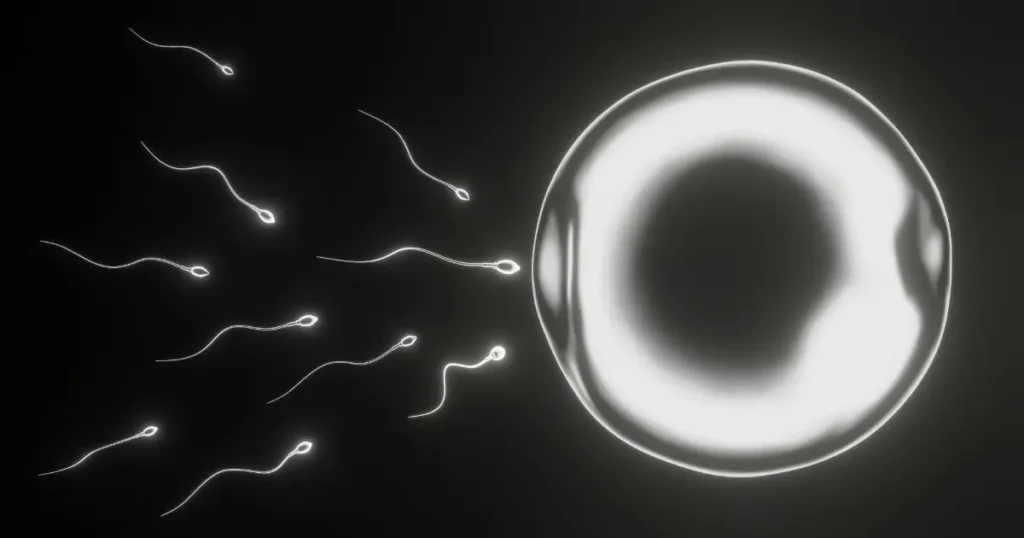
The biology here is straightforward. Sperm can wait inside the body. The egg cannot. At least one healthy, vigorous sperm must be waiting in the fallopian tube at the moment ovulation occurs and must be able to fertilize the egg within 12 to 24 hours of the egg being released from the ovary. That is why timing intercourse before ovulation, not just on the day of ovulation, gives the best odds.
Why Knowing Your Fertile Window Helps
Understanding your fertile window takes the guesswork out of conception. Research from the New England Journal of Medicine showed that the probability of conception ranged from 0.10 when intercourse occurred five days before ovulation to 0.33 when it occurred on the day of ovulation itself. That data alone tells you exactly where to focus your efforts.
For natural family planning, the same information works in reverse. Knowing which days carry the highest risk helps guide decisions without hormonal contraception.
Beyond fertility goals, tracking your fertile window builds deeper awareness of your cycle phases. You learn when estrogen peaks, when your energy and mood shift, and how your body changes week by week.
A Real-Life Context
Some weeks you feel fine and steady. Then one or two days arrive that feel subtly different. A bit more energy. A slight shift in your body. Maybe you feel more social or more in tune with yourself. That is often your fertile window opening. The body gives signals. You just need to learn the language.
When Does the Fertile Window Occur in Your Cycle
The fertile window does not always fall on day 14. That is one of the most common and frustrating myths in reproductive health.
Typical Timing in a 28-Day Cycle
For a 28-day cycle, ovulation typically happens around day 14. That puts the fertile window roughly between days 10 and 15. But this is only accurate if your cycle is consistently 28 days.
Research shows that only 16% of women have a 28-day cycle. Normal cycle lengths range from 21 to 38 days. That means most people’s fertile windows fall on completely different days than the standard calendar suggests.
How Cycle Length Changes the Window
The simple formula is: subtract 14 from your cycle length to estimate ovulation day. If your cycle is normally 21 days long, you likely ovulate around day 7. If your cycle is 35 days, ovulation happens around day 21. Also, If your cycle ranges between 26 and 28 days, ovulation happens between days 12 and 14 in any given cycle.
Shorter cycles mean the fertile window arrives earlier. Longer cycles push it later. This is why knowing your actual cycle length matters so much before relying on any calculator.
Irregular Cycles and Fertility Timing
Irregular cycles make this math harder. If your cycle length shifts by seven or more days from month to month, your fertile window shifts with it. No fixed formula works reliably in that case.
For irregular cycles, physical signs like cervical mucus changes and ovulation predictor kits (OPKs) become your most reliable tools. They respond to what your body is doing in real time, not what an average formula predicts.
Fertile Window Timeline
Here is a clear breakdown of fertility probability across a typical 28-day cycle. Use this as a general guide, not a precise calendar.
| Day Range | Fertility Level | What Is Happening | Pregnancy Chance |
|---|---|---|---|
| 1 to 7 | Very low | Menstrual phase, hormones low | Very low |
| 8 to 10 | Rising | Follicles developing, estrogen rising | Low to medium |
| 11 to 14 | High | Ovulation approaching or occurring | High |
| 14 to 15 | Peak | Egg released, fertile window peak | Very high |
| 16 onward | Dropping fast | Egg no longer viable | Low |
How Long Does the Fertile Window Last
It is shorter than most people expect. But the biology behind it is actually reassuring once you understand it.
Lifespan of Sperm
Sperm can live up to five days inside the female reproductive tract, according to ACOG. This is why having intercourse in the days before ovulation is effective. The sperm is already present and waiting when the egg is released.
Not all sperm survive that long, though. Sperm would have a five percent probability of surviving more than 4.4 days and a one percent probability of surviving more than 6.8 days. The strongest sperm reach the egg. The window is wide enough to work with if timing is close.
Lifespan of the Egg
The egg has a much shorter window. Once the egg is released, it lives for up to 24 hours in the reproductive system. After that, it dissolves and the chance of conception drops to nearly zero for that cycle.
This asymmetry is important. Sperm can wait for days. The egg cannot. Aim to have sperm present before ovulation, not only on the day of ovulation.
Why Timing Matters So Much
Missing the fertile window by just one or two days can make a significant difference. The chance of getting pregnant is highest when live sperm are in the fallopian tubes during ovulation. The closer to ovulation, the higher the probability of conception. Having intercourse every day or every other day during the six-day fertile window maximizes the odds.
Signs You Are in Your Fertile Window
Your body gives clear, real-time signals when the fertile window opens. Learning to read them costs nothing and adds a powerful layer of awareness to any tracking method.
Cervical Mucus Changes
This is the most reliable free signal your body provides. As ovulation approaches, estrogen causes a noticeable shift in cervical mucus. Of all the methods to self-detect ovulation, monitoring cervical mucus tends to be the most reliable. At this point in the cycle, you may notice a clear vaginal discharge that feels thin and stretchy.
The texture comparison most often used is raw egg whites. Clear, slippery, and stretchy. It stretches between two fingers without breaking. This quality of mucus also helps protect and transport sperm through the reproductive tract.
Start checking after your period ends. Check at the same time each day. Note the texture and amount. The pattern becomes very clear after two to three cycles of observation.
Basal Body Temperature Pattern
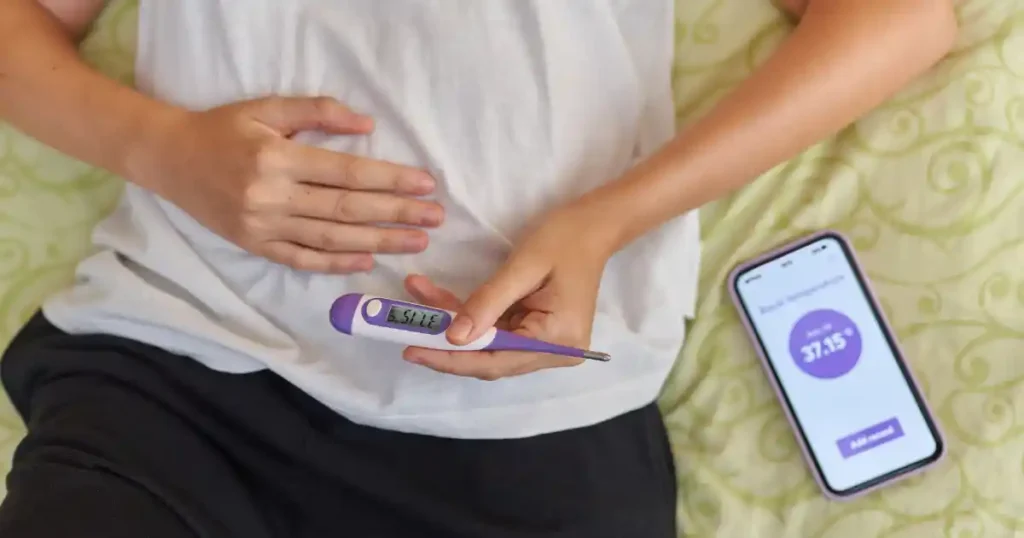
BBT is your resting temperature taken first thing in the morning before you get out of bed. After ovulation, progesterone causes a slight temperature rise of about 0.2 to 0.5 degrees Fahrenheit. Fertility is typically highest during the two to three days around the time that basal temperature rises.
The limitation here is that BBT confirms ovulation has already occurred. It does not predict it in advance. Use BBT to confirm your fertile window pattern over several cycles, then use that confirmed pattern to predict future timing.
Physical and Emotional Signs
Mild pelvic discomfort is common around ovulation. This is called mittelschmerz. It is a brief, one-sided ache or cramp that signals the egg is releasing. Not everyone feels it, but those who do find it a useful confirmation.
Studies indicate improved mood during the fertile window. Energy often peaks. Some people feel more social, more confident, or more motivated. These shifts are driven by the estrogen surge that accompanies ovulation.
Increased libido is also a very real and very common sign. It is not often discussed openly, but it is one of the body’s clearest biological signals that the fertile window is open. Estrogen and a slight rise in testosterone both peak near ovulation.
Best Tools to Track Your Fertile Window
There is a tool for every level of involvement. Start simple and add layers as you become more comfortable.
Fertile Window Calculators
Online calculators are a fast and beginner-friendly starting point. You enter your last period start date and average cycle length. The tool estimates your ovulation day and fertile window based on the subtract-14 formula.
These calculators work well for regular cycles. They are free, quick, and require no daily effort. They are best used as an estimate to guide when to start watching for physical signs or testing with OPKs.
Ovulation Predictor Kits (OPKs)
OPKs detect the LH surge in your urine. This surge triggers ovulation 24 to 48 hours later. A positive OPK result means your fertile window is open right now. It is one of the most actionable signals available at home.
Test at the same time each day. Midday or early evening tends to give the most accurate results. Start testing a few days before your estimated ovulation date based on your cycle length. Keep testing until you see a clear positive.
OPKs are widely available at pharmacies without a prescription. They are affordable and easy to use. For anyone trying to conceive, they are a practical first step up from calendar tracking.
Tracking Apps and Wearables
Apps like Clue, Flo, and Natural Cycles allow you to log your cycle data, symptoms, and test results in one place. They use that data to predict your fertile window each month. The more cycles you log, the more accurate the predictions become.
Smart wearables like the Oura Ring take this further. They track skin temperature, heart rate variability, and other physiological signals continuously. Combined with a cycle app, wearable data can help identify your fertile window with increasing precision over time.
Fertile Window Tracking Tools Comparison
Here is a quick comparison to help you choose the right combination for your needs.
| Tool Type | Accuracy | Ease of Use | Cost | Best For |
|---|---|---|---|---|
| Online Calculator | Medium | Very easy | Free | Beginners, regular cycles |
| OPK Test Strips | High | Easy | Low to medium | Trying to conceive, regular cycles |
| BBT Thermometer | High | Medium | Very low | Confirming ovulation, pattern tracking |
| Cervical Mucus Observation | Medium to high | Moderate | Free | All cycle types, daily awareness |
| Tracking Apps | Medium | Very easy | Free or paid | Daily logging, reminders |
| Hormone Fertility Monitor | Very high | Easy | High | Irregular cycles, PCOS, precision tracking |
How to Calculate Your Fertile Window Step by Step
You do not need complex math. Just simple tracking and a bit of patience over a few months.
Step 1: Track Your Cycle Length
Start by recording three to six months of cycle data. Write down the first day of each period. Count the days until the next period starts. That is your cycle length for that month.
After three to six months, find your average. Add all your cycle lengths together and divide by the number of cycles. This is your working average.
Step 2: Estimate Your Ovulation Day
Subtract 14 from your average cycle length. The result is the estimated day of ovulation counted from the first day of your period. For a 30-day cycle, that is around day 16. For a 26-day cycle, that is around day 12.
This is an estimate. Actual ovulation shifts from cycle to cycle based on lifestyle, stress, sleep, and other factors. Use this number as a starting point for testing and observation.
Step 3: Identify Your Fertile Days
Count back five days from your estimated ovulation day. That range, five days before ovulation through the day of ovulation, is your fertile window. Those are the days to focus on for conception or to be aware of for family planning purposes.
Using Online Fertile Window Calculators Effectively
Online tools are helpful. But they are not perfect, and knowing their limits helps you use them better.
What Inputs You Need
Every reliable calculator needs two things: the date your last period started and your average cycle length. Some also ask for typical period duration and luteal phase length if you know it.
Enter your actual average, not your ideal or desired cycle length. Use real data from the last three to six months. If your last cycle was unusual due to illness, stress, or travel, factor that out of your average.
How Tools Predict Fertility
Most calculators use the assumption that your luteal phase is consistently 14 days. They subtract 14 from your cycle length to estimate ovulation, then mark the five days before that as fertile.
This works reasonably well for regular cycles. The more consistent your cycle, the closer the prediction will be to your actual fertile window.
Limitations You Should Know
Calculators cannot account for cycle-to-cycle variation. They do not know if you are stressed this month, sleeping poorly, or traveling across time zones. All of those factors can shift ovulation by several days.
If you have highly irregular periods, trying to predict ovulation at home is not going to be worth your time or money. Highly irregular periods may be a sign you are not ovulating, and you may need medications that can help. In that case, a healthcare provider is a better starting point than a calculator.
Always combine calculator estimates with at least one physical sign. Cervical mucus changes or an OPK positive result give you real-time confirmation that the calculator cannot.
Expert Advice on Fertile Window Tracking
“The fertile window is small, but predictable with the right tracking methods,” says Dr. Natalie Crawford, a double board-certified OB-GYN and Reproductive Endocrinologist. Dr. Crawford is co-founder of Fora Fertility and a Clinical Assistant Professor of Women’s Health at the University of Texas Dell Medical School. She completed a fellowship in Reproductive Endocrinology and Infertility at the University of North Carolina while concurrently obtaining a Master of Science in Clinical Research. Her work focuses on empowering women with evidence-based reproductive health education, and her “As a Woman” podcast has surpassed five million downloads.
Her core message aligns with what the research consistently shows: no single method is enough on its own. Combining tools gives you a far more accurate and complete picture.
What Experts Recommend
The evidence supports a combined approach to fertile window tracking. For the best chance of getting pregnant, research suggests you should have sex every day or every other day during the six-day fertile window.
Track consistently for at least three cycles before drawing strong conclusions. One cycle of data is not enough. Two cycles can be coincidence. Three cycles start to reveal your actual pattern.
Avoid relying on one method alone. Calendar calculations give a starting estimate. Cervical mucus observation gives real-time feedback. OPKs give biochemical confirmation. BBT confirms the event happened. Each layer adds accuracy.
A Real-Life Tip
Some months feel very clear. The mucus pattern shows up exactly when expected. The OPK turns positive right on schedule. Other months feel confusing. The pattern is harder to spot. That is normal. Cycles are not machines. Patterns show up over time, not overnight. Keep logging, stay consistent, and trust that the data gets clearer with each month.
Common Mistakes When Tracking the Fertile Window
Small mistakes lead to big confusion. Avoiding them saves months of frustration.
Assuming Ovulation Is Always Day 14
This is the most widespread myth in cycle tracking. Ovulation on day 14 applies only to a perfectly regular 28-day cycle. Most people do not have that. By days 12 and 13, just over half of women were within their fertile days. But late ovulation did not occur often and was observed in all subgroups. Even women who regarded their cycles as regular had a one to six percent probability of being in their fertile window on the day their next menses was expected.
Ovulation can happen earlier or later than day 14 in any given cycle. Stress, illness, or disrupted sleep can push it back by several days. Assuming day 14 every month without confirmation is a reliable way to miss your actual window.
Ignoring Body Signals
Apps and calculators give predictions. Your body gives real-time data. Cervical mucus, libido changes, a slight mid-cycle pelvic twinge, increased energy. These are all physical signals that ovulation is near.
Many people have never been taught to notice these signs. Once you start looking, they become surprisingly obvious. They are free, always available, and respond to your actual biology rather than a formula.
Inconsistent Tracking
Skipping days creates gaps in your data. A BBT chart with missing readings is hard to interpret. Cervical mucus observations missed for three days mean you might miss the peak quality window entirely.
Pick a method you can stick to every single day. Keep your OPK strips and thermometer visible on your nightstand. Set a phone reminder if that helps. Consistency builds the pattern. The pattern reveals your window.
Factors That Can Affect Your Fertile Window
Your cycle responds to your life. Understanding what shifts it helps you interpret confusing data with less stress.
Lifestyle Factors
Stress is the most common disruptor. High cortisol suppresses the hormonal signals needed to trigger ovulation. A particularly stressful week at work or a major life event can delay ovulation by days or even weeks. If your fertile window seems to arrive later than usual during a hard month, stress is often the reason.
Sleep quality affects the same hormonal pathway. Even a few nights of poor sleep can shift ovulation timing. Consistent, adequate sleep supports the hormonal rhythm that governs the cycle. Take BBT after at least three hours of uninterrupted sleep for the most reliable readings.
Diet plays a role too. Extreme calorie restriction or a very low-fat diet can reduce estrogen levels enough to delay or suppress ovulation. A balanced diet with adequate healthy fats supports hormone production. Being significantly underweight or overweight can both disrupt cycle regularity.
Medical Conditions
PCOS is one of the most common conditions affecting fertile window timing. Irregular ovulation is a hallmark of PCOS, which means the fertile window shifts unpredictably month to month. OPKs can show false positives in PCOS because LH is often chronically elevated. Cervical mucus tracking and hormone monitors become more important in this case.
Thyroid conditions, both hypothyroidism and hyperthyroidism, can affect cycle length and ovulation timing. If your cycles have always been irregular and no lifestyle factor explains it, a thyroid panel is a sensible first step.
Hormonal imbalances more broadly, including elevated prolactin levels or low estrogen, can affect the fertile window directly. If three or more cycles of careful tracking show no clear fertile window pattern, see a gynecologist.
Environmental Factors
Travel across time zones disrupts the circadian rhythm that governs hormonal cycles. Many people notice their period arrives earlier or later after a long trip. The same disruption can shift ovulation timing. Note any major travel in your tracking log and account for it when interpreting that cycle’s data.
Hot, humid climates can slightly elevate baseline body temperature. If you live in a warm region or it is summer, your BBT readings may trend slightly higher overall. Focus on the relative shift in temperature from your personal baseline, not the absolute number.
Work schedule changes, particularly shift work or irregular hours, can also affect hormonal patterns over time. Consistent sleep and wake times help stabilize the cycle even in demanding schedules.
Fertile Window Common Questions
What Are the Most Fertile Days to Get Pregnant?
The two to three days just before ovulation are statistically the most fertile. For the best chance of getting pregnant, research suggests having sex every day or every other day during the six-day fertile window. The day of ovulation itself and the day before it carry the highest individual probability of conception.
Can I Get Pregnant Outside the Fertile Window?
It is very unlikely but not impossible. Sperm survival time and unexpected shifts in ovulation timing mean there is a very small chance of conception outside the usual window. Conception can occur from days 2 to 30 of the menstrual cycle, though the probability outside the core fertile window is very low. For practical purposes, conception is most likely during the six-day fertile window each cycle.
How Accurate Are Fertile Window Calculators?
They are good for estimates but not exact timing. Calculators work best for people with regular cycles who enter accurate average cycle length data. They improve in accuracy the more historical cycle data you have. For irregular cycles, they are much less reliable. Always pair a calculator estimate with physical signs for real-time confirmation.
How Do I Know My Fertile Window With Irregular Periods?
Use multiple methods together. Cervical mucus tracking responds to your actual estrogen levels in real time. OPKs detect the LH surge regardless of when in your cycle it happens. A hormone fertility monitor that measures quantitative hormone levels gives the most precise picture for irregular cycles.
Track every cycle even if the timing varies significantly. Over several months, even irregular cycles usually show a recognizable hormonal pattern that you can start to work with.
Does Age Affect the Fertile Window?
Yes. Fertility declines with age, and the fertile window becomes less predictable over time. Ovarian reserve decreases naturally from the mid-30s onward. The quality and number of eggs released can affect how clearly the fertile window presents itself through physical signs. Ovulation may occur less frequently in the years approaching perimenopause. If you are over 35 and have been tracking consistently without a clear fertile window pattern, speaking with a reproductive endocrinologist is a smart next step.
Practical Tips to Maximize Fertile Window Tracking
Small, consistent habits produce the clearest, most useful data over time.
Daily Habits
Check cervical mucus at the same time each day. Morning or evening works. Check before any sexual activity. Note the texture, color, and amount in your log. Even a simple emoji system in a notes app works if that is what you will actually do every day.
Take BBT immediately after waking. Before getting up, drinking anything, or even sitting up in bed. Keep your thermometer within arm’s reach of your pillow. Set a phone alarm at the same time each morning to anchor the habit.
Log everything, even small changes. A slight increase in mucus volume, a faint second line on an OPK, a 0.1-degree temperature dip before a rise. These details add up to a meaningful picture over three or more cycles.
Cycle-Based Planning
Plan physically and mentally demanding activities around your high-energy days. The fertile window often coincides with peak estrogen and energy. Use those days for challenging tasks, social commitments, or important decisions.
When your tracking data shows you are in the post-ovulatory luteal phase, honor your body’s slower pace. Cut back on intense exercise if needed. Prioritize rest and recovery. This is not weakness. It is smart cycle-based planning.
A Personal Reflection
Some mornings feel perfectly in sync. The data lines up. The signs match the calendar. Other days feel messy and hard to read. That is completely normal. Your cycle is not a machine running on a fixed program. It is a living system that responds to everything you are going through. Track it with curiosity rather than pressure, and the patterns will reveal themselves in time.
Understand Your Window, Reduce Stress
The fertile window is short. But it is also predictable once you learn your own pattern. No single tool gives you the full picture. Calendar estimates give a starting point. Physical signs give real-time feedback. OPKs give biochemical confirmation. Layering these methods together is where real accuracy lives.
Give yourself at least three months of consistent tracking before drawing conclusions. One confusing cycle does not mean something is wrong. It means your body had a different month. Stick with it. The data gets clearer, and so does your confidence.
Tracking your fertile window is not about pressure or perfection. It is about understanding the body you live in every single day. That understanding is genuinely empowering.
Final Recommendation
Knowing your fertile window is one of the most practical steps you can take for your reproductive health, whether you are trying to conceive or simply want to understand your cycle better. From my own experience, the biggest clarity comes after three months of consistent, combined tracking. Start with cervical mucus observation because it is free, real-time, and highly informative.
Add OPK test strips to get biochemical confirmation of the LH surge. Use a tracking app to log everything and let the pattern build over time. Avoid relying on a calculator alone, especially if your cycles are irregular, as the estimates will miss your actual window. If after three to six cycles of careful tracking you still cannot identify a clear fertile window pattern, book an appointment with a gynecologist or reproductive endocrinologist. Early evaluation opens more options and reduces unnecessary stress. Your fertile window is predictable. Consistent tracking is the way to find it.
FAQs
What is the fertile window?
The fertile window is the few days in your cycle when pregnancy is most likely. It includes the days before ovulation and the day it happens.
How long does the fertile window last?
The fertile window usually lasts about 5 to 6 days. This is because sperm can live for several days inside the body.
When does the fertile window occur?
It happens just before and during ovulation. In a regular cycle, it is often around the middle of the cycle.
How can I calculate my fertile window?
You can track your cycle length and ovulation date. Many people also use a fertile window calculator for quick estimates.
Can I get pregnant outside the fertile window?
It is less likely, but still possible. Cycle changes can shift ovulation, so timing may not always be exact.
What are signs of the fertile window?
Signs include clear, stretchy discharge and a slight rise in body temperature. Some people also feel mild cramps.
Why should I track my fertile window?
Tracking your fertile window helps with family planning. It gives better insight into your cycle and improves timing decisions.