Finding a reliable ovulation calculator for irregular periods was one of the most frustrating parts of my early fertility tracking journey. My cycles ranged from 24 days to 37 days within the same year. Standard calculators assumed a tidy 28-day average and confidently predicted my fertile window on the same days every month, regardless of what was actually happening in my body. After switching jobs and dealing with prolonged stress, my cycle shifted by almost a full week. My calculator had no idea. Once I understood how to adapt calculator tools for irregular cycles and layer in real-time tracking methods, everything changed. This guide shows you exactly how to do that in a practical, step-by-step way.
Understanding Irregular Periods
Not all cycles are textbook 28 days. Irregular periods are more common than most people realize, and understanding what causes them is the first step toward tracking them effectively.
Causes of Irregular Cycles
A menstrual cycle is considered irregular when its length varies by more than seven to nine days from month to month, or when cycles consistently fall outside the 21 to 35-day range. Irregular periods are when cycles are shorter than 21 days or longer than 35, when you miss three or more periods in a row, or when cycles vary by more than nine days in length.
The most common hormonal causes include PCOS, which directly affects the hormonal timing of ovulation, and thyroid dysfunction, both underactive and overactive, which disrupts the HPO axis signals that govern the cycle. Elevated prolactin levels from a pituitary condition or medication can suppress the hormonal cascade that leads to ovulation entirely.
Lifestyle factors matter too. Stress, significant travel, extreme changes in diet, major weight shifts, and very high-intensity exercise can all push ovulation earlier or later in a given cycle. Post-birth control cycles often take one to three months to reestablish regular patterns. Postpartum cycles are notoriously variable, especially during breastfeeding.
How Irregular Cycles Affect Ovulation
Irregular cycles make predicting ovulation genuinely harder. Ovulation does not happen on a fixed schedule across irregular cycles. It happens based on hormonal signals that vary month to month in response to everything from stress levels to sleep quality to illness. If your cycle ranged from 24 to 36 days in the past year, the midpoint of your actual ovulation day ranged from approximately day 10 to day 22. A single average estimate covers only part of that range accurately.
Calendar-based calculators alone may not be accurate for estimating fertile days. For irregular cycles, other methods may be more accurate for estimating when ovulation will occur.
A Real-Life Context
After switching to a demanding new job in Minneapolis, Minnesota, my cycle shifted by almost a full week in the months that followed. My ovulation calculator continued predicting the same window it always had. My OPK strips told a completely different story. The LH surge was arriving six to eight days later than the prediction during those high-stress months. Nobody had told me that a lifestyle change as common as a new job could shift ovulation that significantly. Once I understood why that happened and adjusted my testing strategy accordingly, the confusion cleared almost immediately.
How Ovulation Calculators Work for Irregular Cycles
Even if your cycle is not predictable, calculators can still be useful tools if you understand their limitations and adapt how you use them.
Custom Inputs for Irregular Cycles
Standard ovulation calculators use a single average cycle length to produce a single predicted window. For irregular cycles, a more useful approach is to input the range of your actual cycle lengths rather than one fixed average.
For a menstrual cycle of 26 to 30 days, calculate two fertile periods. One based on the shortest cycle, one based on the longest cycle, then combine these two cycles together. With a 26-day cycle, the conception period falls on days 9 to 14. With a 30-day cycle, it falls on days 13 to 18. Combining these two cycles, the conception window spans days 9 to 18, and ovulation falls on days 12 to 16.
That wider combined window gives you a more honest estimate of when to start watching for ovulation signs and testing with OPKs than a single midpoint calculation does. Some apps offer an irregular cycle mode that accepts a cycle length range and calculates this combined window automatically.
Accuracy Considerations
Even with range-based inputs, calculator predictions for irregular cycles typically have a margin of error of two to five days. Irregular cycles or cycles that are shorter than 21 days or longer than 35 days make calendar prediction of ovulation unreliable. That is Stanford Children’s Health’s direct guidance about the limits of calendar calculators for cycles outside the regular range.
For highly irregular cycles where cycle length varies by more than 10 days month to month, even the combined-window approach is often not sufficient on its own. It becomes a starting estimate to guide when to begin physical tracking, not a reliable prediction in itself.
Expert Advice on Irregular Cycle Calculators
“For irregular cycles, ovulation calculators are best used as guides, not guarantees,” says Dr. Jessica Shepherd, a Dallas, Texas-based board-certified OB-GYN and FACOG, founder of Sanctum Med and Wellness, Chief Medical Officer of Hers, and author of Generation M: Living Well in Perimenopause and Menopause. Dr. Shepherd completed her residency at Drexel University College of Medicine and a fellowship in Gynecologic Endoscopy and Minimally Invasive Surgery at the University of Louisville. She was previously Director of Minimally Invasive Gynecologic Surgery at the University of Illinois at Chicago, serves on the Advisory Board for Women’s Health Magazine and Women’s Health.org, and is a regular contributor on Good Morning America and The Today Show.
Her framing of calculators as guides rather than guarantees is the most practically useful orientation for anyone with irregular cycles. Use the calculator to set a starting framework. Use real-time methods to tell you what is actually happening in your body this month.
Step-by-Step Guide to Using an Ovulation Calculator with Irregular Cycles
This four-step process gives you the most accurate fertile window identification possible when your periods are unpredictable.
Step 1: Track Past Cycles
Before a calculator can give you useful output for irregular cycles, you need accurate input data. Record the start date of each period for at least three to six consecutive months. The more cycles you log, the more representative your data becomes.
Record your last 6 to 12 cycles, even if irregular. Note the start date, the length of bleeding, any notable symptoms, and any lifestyle factors that may have affected that cycle. Stress, illness, travel, and sleep disruption are all worth noting because they help explain variation in cycle length across your data.
Three cycles gives you a working baseline. Six cycles gives you a confident range. Twelve cycles is the gold standard for understanding your personal irregular cycle pattern fully.
Step 2: Input Data Thoughtfully
Enter both your shortest and longest recent cycle lengths into your calculator or app. Calculate what the fertile window looks like for each. Then combine those windows to create the full range of days when ovulation might realistically occur in any given month.
For example, with cycles ranging from 26 to 34 days, your combined fertile window spans approximately day 9 through day 20. That 11-day window is when you should be watching for physical signs of ovulation and testing with OPKs. That is a wider window than regular cycles require, but it honestly reflects your biological variation rather than pretending it does not exist.
Apps like Flo, Clue, and Ovia allow you to enter variable cycle lengths and access broader fertile window estimates that account for your personal range. Natural Cycles, which is FDA-cleared as a digital contraceptive, uses BBT data alongside cycle history to refine predictions for users with variable cycles.
Step 3: Identify Your Fertile Window
Your combined fertile window estimate from the calculator gives you the range of days when ovulation might occur. Within that window, start watching for two things: the physical signs that ovulation is approaching, and the biochemical signal from an OPK strip.
Look for patterns across multiple cycles. Even irregular cycles usually show some consistency in the relationship between cycle length and actual ovulation timing. If your 30-day cycles consistently show the LH surge on day 16 to 17 while your 26-day cycles show it on day 12 to 13, that personal pattern becomes your guide for future cycles once you have enough data to see it.
Step 4: Combine With Body Observations
The calculator’s predicted window tells you when to start watching. Physical observations tell you what is actually happening in your body right now.
Check cervical mucus every day after your period ends. The shift from dry or creamy to clear, stretchy, and egg-white-quality marks rising estrogen and the approach of ovulation. This signal responds to your actual hormone levels in real time, regardless of what day of the cycle it occurs.
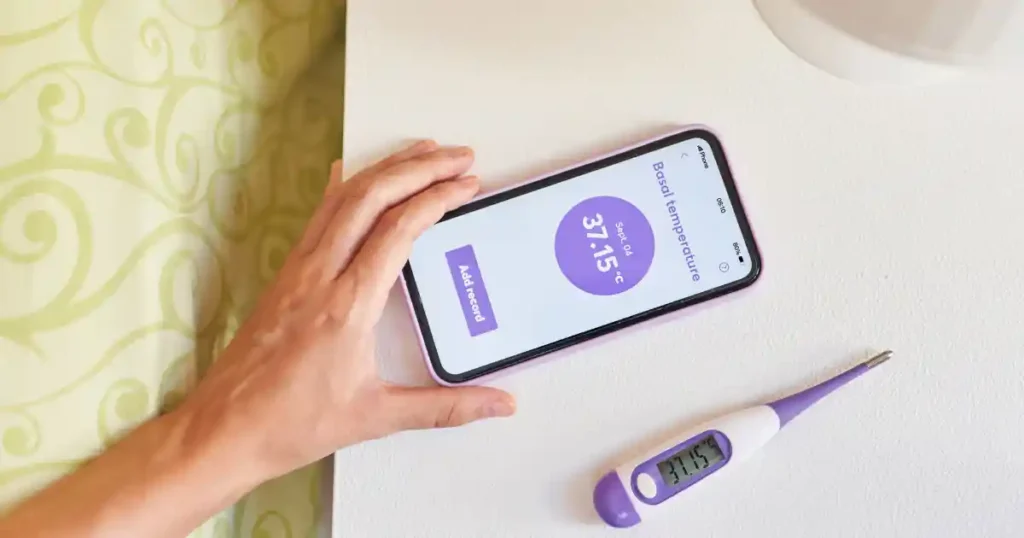
Track basal body temperature every morning before getting up. The post-ovulatory progesterone rise produces a sustained temperature increase that confirms ovulation occurred. Over two to three cycles, your personal BBT pattern becomes visible and helps anchor your fertile window timing more accurately than any calendar formula.
Use LH test strips during the combined fertile window to detect the biochemical surge. The OPK detects the LH surge regardless of when in the cycle it occurs. That real-time hormonal detection is the most direct confirmation tool available at home for irregular cycles.
Best Ovulation Calculators and Apps for Irregular Periods
Here is a practical comparison of leading tools with specific attention to their irregular cycle capabilities.
| Tool | Ease of Use | Accuracy for Irregular Cycles | Key Features |
|---|---|---|---|
| Clue | Very easy | Medium | Symptom logging, cycle pattern tracking, strong privacy |
| Flo | Easy | Medium | Irregular cycle mode, reminders, AI health assistant |
| Ovia Fertility | Medium | Medium to high | BBT entry, symptom logging, fertility insights |
| Natural Cycles | Medium | High | FDA-cleared digital contraceptive, BBT-based algorithm |
| Glow | Easy | Medium | Community support, cycle trend visualization |
Note: Accuracy improves significantly for all apps when BBT readings and OPK results are logged consistently alongside period dates.
Common Mistakes When Tracking Irregular Cycles
These errors are easy to make in the early months of tracking irregular cycles and just as easy to correct once identified.
Mistake 1: Assuming Exact Dates
The single most costly mistake for irregular cycle tracking is treating a calculator’s predicted ovulation date as a fixed, confirmed event rather than an estimate. For cycles that vary by five or more days month to month, the predicted date can miss your actual ovulation by four to seven days in any given cycle.
Read the calculator’s output as “this is approximately when to start watching for signs and testing,” not “this is when ovulation will happen.” The former uses the tool correctly. The latter leads to missed fertile windows.
Mistake 2: Not Tracking Multiple Cycles
Three or more cycles of consistent data are the minimum needed to see your personal irregular cycle patterns clearly. One cycle tells you what happened once. Three cycles show you whether that pattern is consistent or variable. Six cycles show you your full personal range and the factors that push cycles to their shorter or longer extremes.
Committing to logging every cycle start date consistently for three to six months is the single highest-impact investment you can make in the accuracy of your irregular cycle tracking. Everything else builds on that foundation.
Mistake 3: Ignoring Physical Signs
Cervical mucus observation and BBT tracking give you real-time data that no calculator can replicate. For irregular cycles specifically, these physical methods become more important, not less, because the calendar prediction is less reliable than it is for regular cycles. Your body is always generating the physical signs of the approaching fertile window. Learning to read them gives you a tracking layer that works regardless of cycle length variability.
Irregular Cycle Tracking Mistakes Reference Table
Here is a clear summary of the three most common irregular cycle tracking mistakes and how to correct each one.
| Mistake | Effect | How to Avoid |
|---|---|---|
| Treating the predicted date as exact | Missed fertile window in variable cycles | Use the predicted range as a starting point to begin testing |
| Using the calculator alone | Misses real-time hormonal variation | Add OPK strips and cervical mucus observation |
| Logging fewer than three cycles | Insufficient data for pattern recognition | Track consistently for 3 to 6 cycles before drawing conclusions |
Alternative Methods to Track Ovulation for Irregular Cycles
These methods compensate for what calendar-based calculators cannot provide.
Basal Body Temperature Tracking
BBT is your resting body temperature measured every morning before any activity. After ovulation, progesterone causes a sustained temperature rise of approximately 0.2 to 0.5 degrees Fahrenheit. That rise confirms ovulation occurred and helps you identify your luteal phase length, which tends to be more consistent than the follicular phase even in irregular cycles.
After two to three cycles of consistent BBT tracking, most people can see when their temperature rise occurs relative to their cycle day. That personalized data is far more useful for irregular cycle prediction than any formula applied to your average cycle length.
Cervical Mucus Observation
Before the onset of ovulation, the hormone estrogen changes the texture and consistency of cervical mucus, which helps sperm to survive better. The key signal is the shift to clear, stretchy, slippery discharge similar in consistency to raw egg whites. That change occurs in the days immediately before ovulation as estrogen peaks, regardless of what cycle day it falls on.
For irregular cycles, starting cervical mucus observation the day after your period ends and checking consistently each day means you will catch this change whenever it appears, even if it arrives on day 9 one month and day 18 the next.
LH Test Strips
If you have irregular periods, an ovulation test kit can help you work out when you are ovulating, but you will probably use more test strips. That is accurate and practical advice. With irregular cycles, you need to test for a wider window than regular cycle users. Starting earlier and running testing through a longer daily period ensures you catch the surge wherever it falls.
Start OPK testing around day seven or eight of your cycle for short-cycle months, and be prepared to test through day twenty or twenty-two for longer-cycle months. Daily testing at the same time each day, midday to early evening, gives the most consistent results across that wider window.
Fertility Wearables
Smart wearables like the Oura Ring and Ava Bracelet continuously track physiological signals including skin temperature, heart rate variability, and sleep patterns. These signals shift measurably across the menstrual cycle in response to changing hormone levels, and machine learning algorithms analyze those shifts to predict ovulation timing.
For irregular cycles specifically, wearable-based prediction outperforms calendar methods significantly. The physiology method demonstrated superior accuracy over the calendar method, with approximately three-fold improvement, and showed robust accuracy across various cycle lengths. For irregular cycles, the wearable responds to what your body is doing this cycle, not to what past cycles averaged.
Expert Tips for Irregular Cycles
Clinical guidance consistently emphasizes a layered, patient approach for anyone with unpredictable cycle lengths.
Combine Multiple Methods
The most reliable approach for irregular cycle fertility tracking combines calendar estimation with at least two real-time detection methods. Use the calculator’s combined fertile window estimate to set your testing start date. Use OPK strips to detect the actual LH surge within that window. Use cervical mucus observation as the free daily physical layer that gives you continuous real-time feedback. Add BBT to confirm the post-ovulatory shift and build your personal ovulation timing baseline across multiple cycles.
No single method tells the complete story for irregular cycles. Each answers a different question, and together they produce a picture that is genuinely reliable despite cycle-length variability.
Track Several Cycles
Two to three cycles of consistent multi-method tracking is the minimum. For highly variable cycles, three to six cycles gives a more robust picture. Do not draw strong conclusions from one unusual cycle. Patterns emerge across multiple cycles, and those patterns are what make future predictions meaningful.
Stay Flexible and Patient
Irregular cycles require a different mindset than regular cycle tracking. You cannot plan around a fixed ovulation date. You can only monitor a wider window and respond to what your body actually shows you. Accepting that flexibility as the reality rather than fighting against it reduces the frustration significantly.
After three months of consistent tracking, most people with irregular cycles find that even within the variability, their personal patterns become recognizable. A particular physical sign arrives before the LH surge. The BBT shift happens on a consistent cycle day for longer versus shorter cycles. That personal pattern insight is genuinely empowering once it becomes visible.
A Real-Life Insight
Initially, the tracking felt more overwhelming than helpful. Too many variables. Too much data. Too many months of confusing results. Then, after tracking consistently for three months, the calculator’s output started making sense in a new way. Not because it was suddenly more accurate, but because I had enough real OPK and BBT data to understand how my personal cycle diverged from its predictions and by roughly how much. That understanding transformed the calculator from a source of confusion into a useful starting framework. The tools stopped running me. I started running the tools.
QA About Ovulation Calculators for Irregular Cycles
Can Ovulation Calculators Really Work with Irregular Periods?
They provide useful estimates, but accuracy is reduced compared to regular cycles. An ovulation calculator estimates the optimum duration for your fertility based on the average length of your cycle. While it is more accurate for regular cycles, you can still use it by inputting a range of recent cycle lengths to find a general window. Combine that window with OPK testing and cervical mucus observation for the best results.
How Many Cycles Should I Track?
At least three to identify initial patterns. Six cycles gives you a reliable personal range. Record your last 6 to 12 cycles, even if irregular, to give yourself the most useful data foundation for prediction and to understand what factors in your life tend to push cycles to their longer or shorter extremes.
Can Lifestyle Changes Affect Calculator Predictions?
Yes, significantly. Stress, illness, travel, and sleep disruption all shift actual ovulation timing in ways a calendar calculator cannot account for. The calculator applies your historical average to a current cycle that may be affected by real-time factors. Physical tracking methods respond to what is happening right now. That difference is most consequential for irregular cycles where baseline variability already reduces prediction accuracy.
Are Apps Better Than Manual Tracking?
Apps simplify the logging and visualization of cycle data across months and make pattern recognition easier. Manual tracking with a paper calendar and a notebook works just as well for the underlying data. The choice depends on personal preference and whether you value the visual charting and reminder features that apps provide. What matters is consistency, not the format of the logging.
Practical Tips for Irregular Cycle Tracking
Simple, consistent habits build the foundation for accurate irregular cycle fertility tracking.
Track Consistently Every Day
Log every period start date immediately when it arrives. Test OPKs daily at the same time within your extended fertile window. Check cervical mucus at the same time each day. Take BBT every morning before any activity. Consistency in the face of irregular timing is what transforms unreliable calendar predictions into personalized, accurate fertility awareness.
Combine Methods for Accuracy
Calculator plus OPK strips plus cervical mucus observation covers prediction, biochemical detection, and physical confirmation in a single cycle. Adding BBT over two to three cycles builds your personalized ovulation timing baseline. Each layer compensates for the limitations of the others. For irregular cycles, that compensation is especially important.
Be Patient With Small Shifts
Not every cycle that deviates from your current average is cause for concern. Occasional one-cycle deviations due to stress, illness, or travel are expected and self-resolving. Consistent deviation across three or more cycles in the same direction may indicate a hormonal or lifestyle factor worth investigating. That distinction between noise and signal is what multiple cycles of consistent data helps you make clearly.
A Personal Reflection
Tracking my irregular cycles taught me something I did not expect. The variability itself was informative. The cycles that ran long were almost always the ones where I had been under high stress. The short cycles often followed disrupted sleep weeks. Once I could see those connections in my data, my cycle stopped feeling chaotic. It started feeling like a responsive system giving me real information about how my body was handling what life was throwing at it. That shift in perspective made tracking feel meaningful rather than frustrating.
Thoughts on Using Ovulation Calculators with Irregular Cycles
Ovulation calculators for irregular periods are valuable starting tools that work best when you understand their limits and layer in real-time tracking methods alongside them. They are not precise enough on their own for unpredictable cycles, but they are useful guides that help you know when to start testing and observing.
Combine the calculator with OPK strips, cervical mucus observation, and BBT tracking. Track consistently for three to six cycles. Stay flexible. Let the data teach you about your personal pattern. That combination produces genuinely reliable fertile window identification even when cycle timing is unpredictable month to month.
Final Recommendation
Using an ovulation calculator for irregular periods is a practical starting point that becomes genuinely reliable when combined with the right real-time tracking methods. From personal experience and from studying the research carefully, the clearest advice is this: log your last six cycle lengths and use both your shortest and longest cycle as inputs to calculate a combined fertile window range rather than relying on a single average.
Start OPK testing from the earliest day of that combined window and test daily at the same time until you see a clear positive. Watch for cervical mucus changes every day from the end of your period onward as your free real-time estrogen signal. Add BBT tracking across two to three cycles to build your personalized post-ovulatory temperature pattern. Log every data point in a tracking app so the pattern becomes visible over time.
If after six months of consistent combined tracking you still cannot identify a clear LH surge, your cycles remain absent for three or more months, or you are trying to conceive without success, book an appointment with a gynecologist or reproductive endocrinologist. Your six months of organized tracking data gives that conversation an immediately useful and well-documented starting point. Your irregular cycles are not an obstacle to understanding your fertility. They are the specific challenge that the right combination of tools helps you navigate clearly.
FAQs
What is an ovulation calculator for irregular periods?
An ovulation calculator for irregular periods estimates fertile days using past cycle data. It gives a rough window, since irregular cycles can change timing often.
How accurate is an ovulation calculator for irregular periods?
Accuracy is limited for irregular cycles. An ovulation calculator for irregular periods provides estimates only, so results may shift each month based on cycle changes.
Can I rely on an ovulation calculator for irregular periods to conceive?
You can use it as a guide, but not as a sole method. An ovulation calculator for irregular periods works better when combined with other tracking methods.
How do I use an ovulation calculator for irregular periods?
Enter your last period start date and average cycle range. The ovulation calculator for irregular periods then shows a wider fertile window for flexibility.
Why do irregular periods affect ovulation calculator results?
Irregular cycles make ovulation timing unpredictable. An ovulation calculator for irregular periods depends on patterns, so shifting cycles reduce precision.
What improves results when using an ovulation calculator for irregular periods?
Track symptoms, basal body temperature, or use ovulation kits. These add detail to an ovulation calculator for irregular periods and improve timing estimates.
When should I see a doctor if using an ovulation calculator for irregular periods?
If cycles stay very irregular or unpredictable, consult a doctor. An ovulation calculator for irregular periods helps tracking, but medical advice may be needed for clarity.