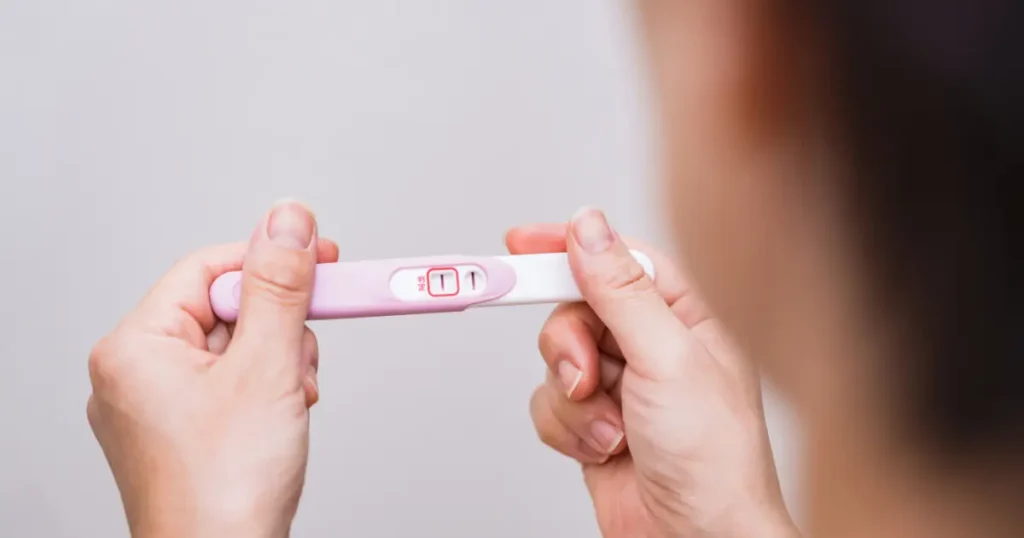

Using an ovulation calculator for trying to conceive was the tool that finally gave me a practical starting point when my partner and I began our conception journey. Before I understood my fertile window, I assumed timing intercourse was straightforward. It is not. The biology involves a very short egg viability window, a specific hormonal sequence, and enough natural cycle variation that the general advice to “have sex around day 14” misses the actual fertile window for most people. This guide covers everything you need to know about using an ovulation calculator for TTC effectively, what its limits are, and how to layer in real-time tracking methods that actually maximize your conception chances.
Understanding Ovulation and Fertility When Trying to Conceive
Knowing when you ovulate is the most important single factor in timing conception. The biology is specific, and understanding it changes how you approach tracking.
What Is Ovulation
Ovulation is the release of a mature egg from one of the ovaries. It happens once per cycle. Ovulation typically happens about 14 days before your next period, though it can vary. This means in a 28-day cycle, ovulation falls around day 14. In a 32-day cycle, it falls around day 18. In a 24-day cycle, it falls around day 10.
The egg survives for just 12 to 24 hours after it is released. That very short window is why understanding the days leading up to ovulation matters so much. Sperm do the waiting. The egg cannot.
Why Timing Matters for Trying to Conceive
The fertile window spans the six days ending on the day of ovulation. This is because sperm can live in the female reproductive tract for as long as five days, while an egg can survive for about 12 to 24 hours after ovulation. That combination creates a six-day window when pregnancy is biologically possible.
Among those six days, not all are equal. The probability of conception rises from day eight, reaching its maximum on day 13 and decreasing to zero by day 30. Research from a landmark New England Journal of Medicine study of 625 menstrual cycles found that nearly all pregnancies were attributed to intercourse during the six-day period ending on the day of ovulation. The two to three days immediately before ovulation consistently produced the highest conception rates.
If she has sex on the day of ovulation, or the two days before, the chance of getting pregnant is around 30 percent. This figure matters because it shows that even perfectly timed intercourse in the highest-probability window produces conception in roughly one-third of cycles, not every cycle. That context is important for managing expectations during the TTC journey.
A Real-Life Context
After two months of trying in San Diego, California, I realized my cycle had been shifting with work stress. My ovulation calculator continued predicting the same fertile window it always had. But my OPK strips were turning positive four days later than predicted during those demanding months at a new job. The calculator helped me know when to start watching. But it was not perfect. That realization was the turning point that led me to combine calculator estimates with real-time tracking, and everything became much clearer.
How Ovulation Calculators Work for TTC
Ovulation calculators help estimate your fertile window for conception planning. Their accuracy improves significantly when you understand what data they need and how to supplement their predictions.
Inputs Needed for Accurate Prediction
Every ovulation calculator needs at minimum two inputs: the first day of your last menstrual period and your average cycle length. The more accurate those inputs, the closer the output will be to your actual fertile window.
For the most useful results, average your last three to six actual cycle lengths rather than using an assumed 28-day default. If your cycles have ranged from 27 to 31 days over the past six months, your working average is 29 days, which puts your estimated ovulation on day 15. Using 28 by default would predict day 14, a one-day difference that compounds over multiple cycles of missed timing.
For irregular cycles, enter both the shortest and longest recent cycle lengths, then use the overlapping combined window as your testing range as covered in the irregular periods guide earlier in this series.
Limitations to Keep in Mind
Calculators apply a formula to past data. They cannot detect real-time hormonal events. In only about 30 percent of women is the fertile window entirely within the days identified by clinical guidelines, which is between days 10 and 17. Most women reach their fertile window earlier or later, even with regular cycles.
Stress, illness, travel, significant sleep disruption, and lifestyle changes can all shift ovulation in any given cycle. The calculator does not know any of that happened. This is the core reason that ovulation calculators for TTC are most effective as a starting tool that guides when to begin OPK testing, not as a standalone prediction.
A Real-Life Context
Working night shifts changed everything about when I ovulated. The calculator had no way to know that. My OPK strips, tested daily at the same midday window, caught the actual surge reliably. The calculator told me when to start watching. The strips told me when the moment had actually arrived.
Step-by-Step Guide to Using an Ovulation Calculator for TTC
This four-step process gives couples trying to conceive the most complete and accurate approach to using calculator tools alongside physical tracking.
Step 1: Track Your Menstrual Cycles
Before relying on any calculator output, build a foundation of accurate personal data. Record your period start date every month for at least three cycles. Note period duration, any spotting, and significant symptoms or lifestyle factors that may have affected that cycle.
You should do this for at least six months to get good data. Your menstrual cycle length is the number of days between the first day of consecutive periods. Counting from day one of bleeding to the day before the next period starts gives your cycle length for that month.
Three cycles gives a working average. Six gives a reliable pattern. For TTC specifically, starting to track before you begin trying to conceive so you already have baseline data when you need it is ideal timing.
Step 2: Enter Accurate Data
Use your actual tracked cycle length average, not an assumed number. Check that you are entering the first day of your last period, not the last day of bleeding or the middle of your period.
Double-check inputs each cycle before relying on the prediction. Your cycle length can shift slightly from month to month, and entering an accurate current average each time produces more reliable output than setting it once and never updating it.
Step 3: Identify Your Fertile Window
Your calculator will return a predicted fertile window, typically spanning five to six days. The best chance of getting pregnant for TTC couples is to have sex every day or every other day during this six-day window, according to research cited by ACOG.
For the best chance of getting pregnant, research suggests you should have sex every day or every other day during the six-day window. If having daily intercourse feels too pressured or is not practical, every two to three days within the window still produces good conception rates for most couples.
The days with the highest individual probability of conception are the two to three days immediately before the predicted ovulation day. Timing intercourse primarily around these days, rather than the day of ovulation itself, is consistent with the biological evidence.
Step 4: Combine With Other Methods
The final and most important step is adding at least one real-time tracking method alongside your calculator prediction. The basal body temperature method is not ideal for predicting ovulation when trying to conceive because once you identify the rise, you have already ovulated. However, this method is a good tool to monitor your pattern of ovulation over multiple cycles.
That Johns Hopkins Medicine guidance captures exactly how to use BBT for TTC: use it across two to three cycles to confirm and personalize your ovulation timing pattern, then use that confirmed pattern alongside OPK testing for real-time detection in subsequent cycles.
Recommended Ovulation Calculators and Apps for TTC
Here is a practical comparison of the most widely used tools for couples trying to conceive.
| Tool | Ease of Use | Accuracy | Key Features |
|---|---|---|---|
| Clue | Very easy | Medium | Cycle tracking, symptom logging, strong privacy policy |
| Flo | Easy | Medium | Predictive analytics, fertility tips, AI health assistant |
| Ovia Fertility | Medium | Medium to high | BBT tracking, ovulation alerts, detailed fertility log |
| Natural Cycles | Medium | High | FDA-cleared digital contraceptive with TTC mode, BBT-based |
| Glow | Easy | Medium | Community support, detailed cycle insights, partner sharing |
Note: All apps improve accuracy when BBT data and OPK results are logged consistently alongside period dates. Multi-signal input is significantly more accurate than period dates alone.
Common Mistakes When Using Ovulation Calculators for TTC
These errors directly cost couples conception opportunities. Knowing them prevents them.
Mistake 1: Relying Solely on the Calculator
The fertile window is an estimate, not a confirmed event. A calculator prediction that places your fertile window on days 11 to 16 says nothing about whether your body is currently producing fertile cervical mucus, whether your LH surge has actually occurred, or whether stress this month has pushed ovulation back to day 20.
Physical signs provide the real-time insight that no algorithm can. Cervical mucus becoming clear and stretchy tells you estrogen is rising and ovulation is approaching right now. An OPK positive tells you the LH surge is present right now. Those signals are what convert a calculator estimate into confirmed fertility action.
Mistake 2: Ignoring Irregularities in Your Cycle
If your cycle varies by more than seven days month to month, a single average cycle length is already reducing your calculator’s accuracy significantly. Recording and accounting for that variation by extending your OPK testing window compensates for the predictive gap that variability creates.
Note any cycle that deviates significantly from your recent average and log the likely cause, whether stress, illness, travel, or lifestyle change. That contextual data makes confusing cycles interpretable and prevents the cycle irregularity from appearing alarming.
Mistake 3: Skipping Complementary Methods
Using an ovulation calculator alone without OPK confirmation is one of the most common TTC mistakes. Of all the methods to self-detect ovulation, monitoring cervical mucus tends to be the most reliable early signal. Combining it with OPK strips gives you both the physical early warning and the biochemical confirmation before the egg is released.
For TTC specifically, having that two-day advance notice from an OPK is especially important because the highest conception probability days are before ovulation, not on the day of. Waiting for BBT confirmation means waiting until after ovulation, when the window has already largely closed.
TTC Calculator Mistakes Reference Table
Here is a clear summary of the three most critical TTC calculator mistakes and how to address each one.
| Mistake | Effect on TTC | How to Fix |
|---|---|---|
| Using calculator alone | Missed fertile days due to real-time cycle shifts | Add daily OPK testing and cervical mucus observation |
| Ignoring cycle length variability | Predicted window misses actual fertile days | Enter updated actual average each cycle; extend OPK window |
| Timing only on or after ovulation day | Missing highest-probability pre-ovulatory days | Plan intercourse starting 3 to 4 days before predicted ovulation |
Alternative and Complementary Methods to Track Ovulation for TTC
These methods give TTC couples the real-time confirmation that calculator predictions alone cannot provide.
Basal Body Temperature Tracking
BBT tracking confirms ovulation has occurred by detecting the post-ovulatory progesterone-driven temperature rise. For TTC purposes, its primary value is in building your personal ovulation timing baseline across two to three cycles. Knowing that your BBT consistently rises on cycle day 16 rather than day 14 tells you your actual ovulation timing, which you can then use to time intercourse more accurately in future cycles.
Fertility is typically highest during the two to three days around the time that basal temperature rises, according to Mayo Clinic. But since the temperature rise occurs after ovulation, the practical application for TTC is using two to three months of confirmed BBT data to anticipate when ovulation will occur in future cycles, rather than to time the current one.
Cervical Mucus Monitoring
A few days before ovulation, you may notice your vaginal mucus becomes clear, slick, and slippery, similar in texture to raw egg whites. This is a sign that ovulation is about to happen. It is the best time to have sex, as sperm travel more easily in this kind of mucus.
Cervical mucus is the earliest physical signal of the approaching fertile window. It appears one to three days before the LH surge, giving TTC couples the maximum lead time for timing intercourse. Observing mucus daily from the end of the period onward means you will catch this change before the calculator’s predicted window even opens.
LH Test Strips for TTC
If you start testing your urine a few days before the day you next expect to ovulate, a positive result means you are going to ovulate within the next 24 to 36 hours. That is a direct, actionable signal for TTC timing.
A positive OPK means start or continue having intercourse immediately. The next 24 to 48 hours are the highest-probability conception window of the cycle. An OPK positive two days before predicted ovulation gives you the best combination of advance timing and peak fertility overlap.
Wearable Fertility Devices for TTC
Smart wearables including the Oura Ring and Ava Bracelet track physiological signals continuously through the night and use machine learning to predict ovulation timing. These devices remove the daily manual burden of OPK testing and BBT charting while providing comparable accuracy once calibrated over two to three cycles.
These tools can help you track and notice trends in your menstrual cycle and are especially useful if you and your partner only have sex once or twice a month, in which case you really need to pinpoint the best time to get pregnant. For TTC couples who have less frequent intercourse opportunities, the precision that wearables offer is particularly valuable.
Expert Tips for Maximizing Conception Using Ovulation Calculators
Clinical guidance on TTC consistently supports combining ovulation calculators with real-time physical tracking methods.
Combine Methods for Accuracy
For TTC, the most effective daily tracking combination is: cervical mucus observation as the early physical warning, OPK test strips for biochemical LH surge confirmation, and calculator prediction as the timing framework for when to start testing. Add BBT over two to three cycles to build your personalized ovulation timing baseline.
“Ovulation apps can be useful, but users should combine them with LH tests, basal body temperature tracking, or medical guidance for reliability,” says Dr. Jessica Shepherd, a Dallas, Texas-based board-certified OB-GYN and FACOG, founder of Sanctum Med and Wellness, Chief Medical Officer of Hers, and author of Generation M: Living Well in Perimenopause and Menopause. Dr. Shepherd completed her residency at Drexel University College of Medicine and a fellowship in Gynecologic Endoscopy and Minimally Invasive Surgery at the University of Louisville. She was previously Director of Minimally Invasive Gynecologic Surgery at the University of Illinois at Chicago, serves on the Advisory Board for Women’s Health Magazine and Women’s Health.org, and is a regular contributor on Good Morning America and The Today Show.
Track Multiple Cycles
Patterns emerge clearly after two to three cycles of consistent multi-method tracking. One cycle gives you one reference point. Three give you a reliable personal fertile window range and an understanding of the factors that shift your ovulation timing.
For TTC specifically, three cycles of tracked data is also often the minimum needed to identify whether any medical evaluation is warranted before the standard 12-month guideline applies.
Stay Patient and Observant
Stress affects TTC outcomes through two separate mechanisms: it can delay ovulation in the cycle it occurs, and the psychological pressure of TTC itself can create a feedback loop that affects subsequent cycles. While research is not conclusive that stress itself reduces fertility, reducing unnecessary pressure is practically useful for both biological and emotional reasons.
Minor shifts in ovulation timing from month to month are normal. Track trends across multiple cycles, not single data points. One unusual cycle is not evidence of a fertility problem.
A Real-Life Insight
After tracking three cycles carefully with both a calculator and OPK strips, the pattern became clear. My predicted ovulation day and my actual OPK positive consistently diverged by two days, with the actual surge arriving later than the prediction. Once I understood that personal offset, I adjusted my intercourse timing accordingly. The combination of tools, not any single one, made the difference.
QA About Ovulation Calculators for TTC
Can I Conceive Using Only an Ovulation Calculator?
Conception is possible relying only on a calculator, but your chances improve significantly when you add real-time confirmation methods. There is no foolproof way to calculate your fertile days, and calculators function as estimates rather than confirmed predictions. Adding OPK strips and cervical mucus observation gives you the highest precision available at home without a medical test.
How Long Should I Track Cycles Before Relying on a Calculator?
A minimum of two to three cycles gives you a working foundation. Six cycles provides a reliable personal average that meaningfully improves prediction accuracy. For TTC, tracking cycle data for a few months before actively trying to conceive means you arrive at the first month of trying with useful baseline data rather than building it from scratch.
Can Lifestyle Changes Affect Calculator Predictions?
Yes, significantly. Stress, travel, illness, sleep disruption, and diet changes can all shift actual ovulation timing in ways a calendar formula cannot account for. The calculator applies historical averages. Your body responds to current conditions. Physical tracking methods adapt to what is happening in real time. That difference is most important for TTC, where a single missed cycle represents a real cost.
Are Apps More Accurate Than Manual Calculation?
Apps simplify the calculation and provide visual calendar displays that make fertile window timing easier to read at a glance. The underlying accuracy of the prediction depends on the quality of your input data and the algorithm, not on whether you used an app or a paper calendar. Apps that integrate BBT and OPK data produce meaningfully better predictions than period-date-only apps.
Practical Tips for TTC Couples Starting Out
Simple, consistent habits produce the best TTC outcomes over time.
Be Consistent With Tracking
Log every period start date immediately. Test OPKs daily at the same midday to early evening time during the predicted window. Check cervical mucus every day from the end of your period onward. Consistency in data logging is what makes patterns visible and predictions reliable.
Observe Physical Signs
Cervical mucus, basal body temperature changes, and occasionally mild mid-cycle pelvic twinges are all physical signals your body produces around ovulation. Noticing them does not require clinical training. It requires consistent daily attention and two to three cycles of practice. The physical signs add a layer of real-time biological context that no digital tool can replicate.
Stay Relaxed About the Process
The practical goal is accurate fertile window identification without turning every cycle into a clinical event. If tracking feels overwhelming, simplify. Start with just the calculator and one OPK strip per day during the window. Add cervical mucus observation in the second cycle. The tools are there to support you, not create pressure.
A Real-Life Reflection
Once I stopped treating tracking as a test I could pass or fail and started seeing it as information gathering, everything shifted. The data stopped feeling like a verdict on that cycle and started feeling like preparation for the next one. Subtle body signals I had never noticed before, a slight change in mucus texture, a small midday energy spike, became genuinely interesting rather than anxious. That shift from pressure to curiosity is what made the process sustainable over multiple cycles.
Using Ovulation Calculators for TTC
Ovulation calculators for trying to conceive are excellent entry tools that become significantly more useful when combined with real-time physical and biochemical tracking. The calculator sets your testing window. OPK strips confirm the hormonal surge. Cervical mucus gives the early physical warning. BBT builds your personalized baseline. Together, they give you the most complete, most actionable fertile window identification available outside a clinical setting.
Patience, consistency, and a willingness to combine tools are the three qualities that produce the best TTC outcomes over time.
Final Recommendation
Using an ovulation calculator for trying to conceive is one of the clearest and most practical first steps any couple can take toward maximizing conception timing. Based on the research and personal experience, the most effective TTC approach is this: log your actual cycle lengths for at least three months, use both the shortest and longest recent cycles to calculate your combined fertile window, and start daily OPK testing from a few days before the earliest point of that window.
Observe cervical mucus every day from the end of your period onward as your free, real-time physical signal. Plan intercourse starting three to four days before your predicted ovulation day, continuing through the day after your OPK positive, for the highest probability overlap with the pre-ovulatory conception window. Add BBT tracking over two to three cycles to confirm your personal ovulation timing and build a baseline that improves future cycle predictions.
If after 12 months of consistent timed intercourse you have not conceived, or after 6 months if you are over 35, seek a fertility evaluation promptly. Bring your cycle tracking data, including your charted OPK results, BBT records, and cycle lengths. That organized documentation gives your reproductive endocrinologist or OB-GYN an immediately useful, evidence-based starting point for evaluation and next steps.
FAQs
What is an ovulation calculator for trying to conceive?
An ovulation calculator for trying to conceive estimates your fertile window. It uses cycle dates to help you time intercourse during days when pregnancy chances are higher.
How do I use an ovulation calculator for trying to conceive?
Enter your last period start date and cycle length. The ovulation calculator for trying to conceive then shows your likely ovulation day and fertile window.
Is an ovulation calculator for trying to conceive accurate?
It gives a helpful estimate, not an exact date. An ovulation calculator for trying to conceive works best with regular cycles, but timing can still vary slightly.
When is the best time to use an ovulation calculator for trying to conceive?
Use it daily during your cycle. The ovulation calculator for trying to conceive helps you track fertile days and plan ahead for better timing.
Can an ovulation calculator for trying to conceive improve pregnancy chances?
Yes, it helps you focus on fertile days. An ovulation calculator for trying to conceive supports timing, which can improve chances when used with other tracking methods.
Should I combine tools with an ovulation calculator for trying to conceive?
Yes, combining with ovulation test kits or body signs can help. An ovulation calculator for trying to conceive alone may miss small cycle changes.
What if my cycle is irregular when using an ovulation calculator for trying to conceive?
Irregular cycles can affect accuracy. The ovulation calculator for trying to conceive still helps, but tracking symptoms or using tests may improve results.