Trying to decide between ovulation test kits vs apps is one of the first real decisions many people make when they start tracking their fertility. Both tools promise to tell you when you are most likely to conceive. Both are widely available. But they work in completely different ways, answer slightly different questions, and each has a genuine place in a well-rounded tracking strategy. After going deep into the research and working through both approaches personally, the answer that holds up consistently is this: you do not have to choose one. Used together, ovulation test kits and tracking apps give you a far more complete fertility picture than either can produce alone. This guide explains exactly how, and helps you understand what to expect from each tool.
Understanding Ovulation Tracking Tools
Tracking ovulation is easier than ever. But choosing the right tool, or knowing how to combine them, can feel overwhelming when you are just starting out.
What Are Ovulation Test Kits
Ovulation test kits, commonly called OPKs (ovulation predictor kits), are urine-based home tests that detect the surge of luteinizing hormone (LH) that triggers ovulation. They are available as simple test strips, which require visual comparison of two lines, and as digital sticks that display a clear symbol.
Detection of the LH surge in urine is very sensitive and specific for ovulation and provides great accuracy for determining conception capacity. The mean time from a positive urinary LH test to follicular rupture is approximately 20 hours, meaning a positive OPK gives you roughly one to two days of advance notice that ovulation is imminent.
Highly sensitive urinary LH kits detect concentrations as low as 22 mIU/mL. The natural LH surge concentration in urine ranges from 20 to 100 mIU/mL. Most standard OPK strips use a threshold of around 25 to 40 mIU/mL, which reliably captures the surge in the majority of cycles.
What Are Ovulation Tracking Apps
Ovulation tracking apps use menstrual cycle history, and in some cases additional data inputs, to predict the fertile window through algorithms. The most basic apps need only your period start dates and calculate an estimated ovulation day based on cycle length averages.
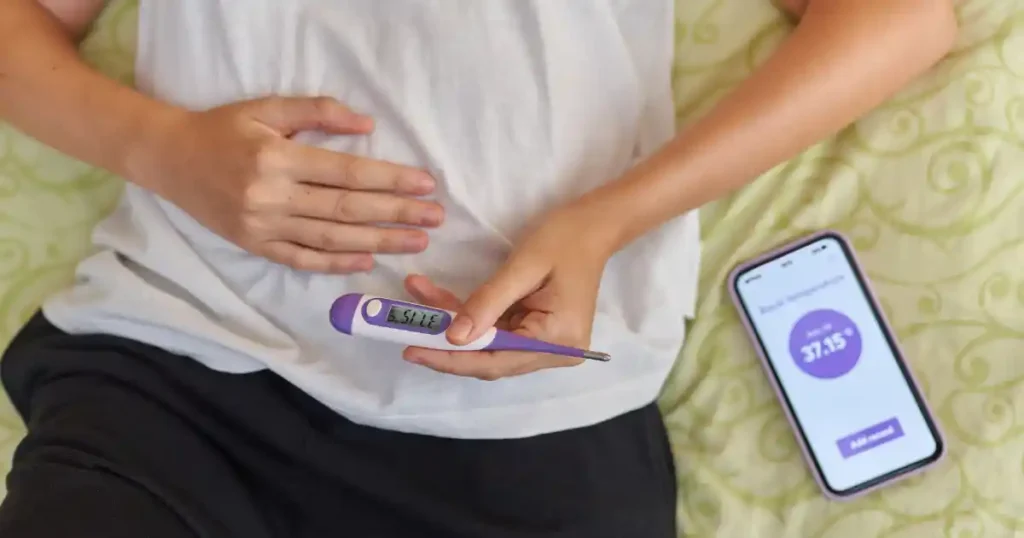
More sophisticated apps integrate multiple data streams. Users can log basal body temperature (BBT), cervical mucus observations, OPK results, and symptoms. Some apps connect via Bluetooth to wearable devices or smart thermometers to automate data collection. Machine learning-based apps, like Natural Cycles and Clue, continuously refine their predictions as more personal cycle data accumulates.
Traditional period apps simply log dates and predict ovulation by averaging past cycles. This yields highly variable accuracy. Studies show simple calendar methods have ovulation prediction accuracy anywhere from 17 percent to 89 percent. Apps that integrate multiple physiological signals dramatically improve on that baseline.
A Real-Life Context
The first time I used both tools together was in Phoenix, Arizona. I had been using a cycle tracking app for three months and felt reasonably confident in its fertile window predictions. Then I added OPK strips. The first month, the app predicted ovulation on day 14. The OPK turned positive on day 16. Stress at work had pushed my ovulation back two days that cycle, and my app had no way of knowing. The strip caught it. That two-day gap changed how I timed everything that month. That one experience showed me very clearly why both tools matter.
How Ovulation Test Kits Work
Ovulation test kits give you direct biological signal data. But timing and technique determine whether that signal is useful.
LH Surge Detection
The LH surge is the hormonal event that triggers ovulation. When LH rises sharply, it signals the dominant follicle to rupture and release the egg. Ovulation typically follows within 24 to 36 hours of the start of the surge and within 10 to 12 hours of the surge peak.
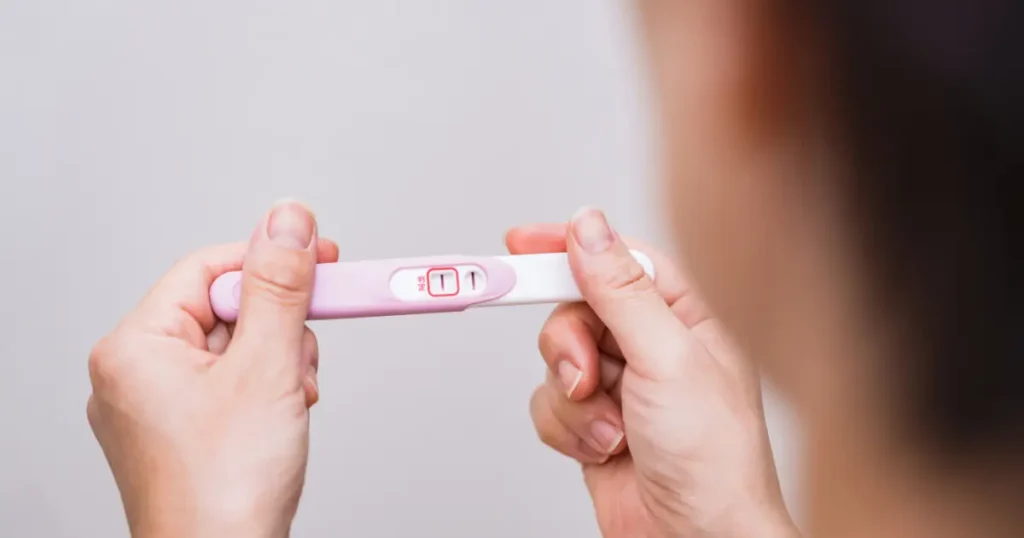
OPK strips detect LH in urine. A positive result is read when the test line is as dark as or darker than the control line. This visual comparison is where most user error occurs. Strip lines vary in darkness across the cycle. A clearly lighter-than-control line is not positive. Only a line that matches or exceeds the control line indicates a true surge result.
Digital OPKs eliminate this ambiguity entirely. They display a clear symbol (most commonly a smiley face for positive) regardless of line intensity. This is particularly helpful for first-time users or those whose LH surge tends to be relatively brief or less pronounced.
When to Test
Start testing a few days before your estimated ovulation date. For a 28-day cycle, begin around day ten. For a longer cycle, start around five to six days before your estimated ovulation date based on your average cycle length.
Test at the same time each day. Midday to early evening tends to give the most reliable results because LH is produced in the morning and takes several hours to concentrate in urine. Avoid testing with diluted urine from excessive fluid intake. Drinking large amounts of water before testing can lower urinary LH concentration below detection threshold.
Continue testing daily until you see a clear positive result, then test once more the following day to confirm the surge has peaked. Stop testing after two consecutive days at peak to avoid confusing the post-surge drop with a second surge.
Strengths and Limitations of OPK Test Kits
The primary strength of OPKs is biochemical directness. They measure an actual hormone in your body at the time of testing. No algorithm. No prediction. A positive result reflects your current LH level, not a population average.
The U.S. National Academy of Clinical Biochemistry Laboratory Medicine practical guidelines recommend using the urinary LH test because a positive result predicts ovulation within 48 hours. That clinical endorsement speaks to how reliably OPKs perform when used correctly.
The limitations matter too. It is possible to ovulate without a detectable LH surge, or to detect an LH surge that does not result in ovulation. Therefore, use of a corroborating method such as cervical mucus or estrogen testing increases accuracy of LH testing, and confirmation of ovulation by BBT or PdG testing is generally recommended.
Hydration significantly affects results. Certain medications, particularly fertility drugs that contain LH or hCG, can interfere with readings. PCOS, where LH is chronically elevated, can produce confusing multi-day positive results that do not represent the true surge peak.
How Ovulation Apps Work
Apps rely on data and prediction rather than direct hormone measurement. That distinction defines both their strengths and their limits.
Data Inputs
The simplest apps need only your period start dates. Every additional data point you enter improves prediction accuracy. BBT readings show the post-ovulatory thermal shift that confirms ovulation. Cervical mucus observations provide a real-time estrogen signal before ovulation. OPK results add the biochemical LH detection event. Sleep quality, energy, and symptom logs give supplementary context.
Clinical-grade apps ideally use machine learning or statistical methods trained on large datasets. The algorithm must update as the user’s pattern changes. Apps like Dot have shown that adjusting predictions based on each person’s cycle variability greatly improves accuracy over population-average models.
Wearables and smart thermometers can automate data collection, removing the need for manual daily entry. The Oura Ring, Tempdrop, and Ava Bracelet all integrate with cycle apps to feed continuous physiological data directly into the prediction algorithm.
Prediction Methods
Most apps use one of two core prediction approaches. Simple calendar apps apply the standard formula: subtract 14 days from cycle length to estimate ovulation. These work reasonably well for people with consistent cycles. They fail for anyone whose cycle varies by more than a few days.
Advanced apps with BBT or wearable integration use the post-ovulatory temperature rise to confirm ovulation and anchor the fertile window prediction more accurately. Natural Cycles, for example, uses a registered algorithm based on BBT data that has received FDA clearance as a contraceptive app for users with regular cycles.
AI-enhanced apps like Flo learn individual cycle patterns over time. The more cycles logged, the more personalized and accurate the prediction becomes for a specific user.
Strengths and Limitations of Tracking Apps
Apps provide a long-view perspective that individual test strips cannot. They track cycle patterns across months and years. They identify trends in cycle length, fertile window timing, and symptom patterns. Also, They send reminders when to start testing and can log and visualize your entire cycle history in one place.
The limitation is clear: apps predict based on historical data and averages. An app cannot know if ovulation shifted this cycle because of illness, disrupted sleep, or unusual stress. It applies the formula to the available data. If that data does not reflect the current cycle’s reality, the prediction misses the mark.
Almost half of menstrual cycles in studies of app-based tracking lacked sufficient temperature data to determine ovulation, and missing inputs were often due to user fatigue or illness. Consistency is the non-negotiable requirement for app accuracy.
Ovulation Test Kits vs Apps Expert Comparison
Here is a clear side-by-side comparison of both tool categories across all the dimensions that matter most for practical use.
| Feature | Ovulation Test Kits (OPKs) | Tracking Apps |
|---|---|---|
| Detection type | Biochemical, measures actual urinary LH | Algorithmic, predicts from cycle history and inputs |
| Accuracy type | Direct, real-time hormonal measurement | Predictive, based on historical averages |
| Accuracy for regular cycles | High with correct use | Medium to high |
| Accuracy for irregular cycles | High, detects LH regardless of cycle timing | Low to medium without extra data inputs |
| Ease of use | Medium, requires daily testing | Very easy, minimal daily effort |
| Cost | Low to medium for bulk strips | Free to subscription-based |
| Adapts to current cycle | Yes, measures what is happening now | No, applies historical patterns |
| Improves over time | Not inherently | Yes, significantly with more cycles |
| Best for | Confirming fertile window in real time | Cycle pattern awareness, reminders, history |
Accuracy of Ovulation Test Kits
Direct hormone detection is powerful. But only if you follow the protocol correctly.
Factors That Affect OPK Accuracy
Time of day is the most practical variable. Testing in the afternoon or early evening captures LH that has been building since the early-morning production peak. First morning urine testing can miss the start of a surge or give an artificially elevated baseline reading.
Hydration is the second most significant factor. Water consumption and other factors may affect urine dilution, making the most accurate approach to use a standard urine volume or avoid excessive fluid intake before testing.
Medications matter. Fertility drugs containing hCG, such as Ovidrel, can produce false OPK positives because hCG cross-reacts with LH antibodies. Certain anticonvulsants and antipsychotics can also affect results. If you are on any prescription medication, check with your prescriber about potential effects on OPK readings.
Elevated baseline LH in PCOS means standard OPK strips may show chronic low positives or confusing multi-day positive streaks without a genuine surge peak. This is where quantitative LH monitors, which measure actual concentration rather than a simple threshold, provide meaningfully better data.
Real-Life Insight
Some months, the OPK result feels unmistakably clear. A dark, confident line that leaves no room for interpretation. Other months, the lines look similar for two or three days, the surge is brief, and you wonder if you missed it or read it wrong. Human error is a real factor. The strip does not tell you what it means. You have to know what a positive looks like, and that understanding sharpens significantly after two to three cycles of consistent testing.
Accuracy of Ovulation Apps
Apps can be highly convenient. But their accuracy depends entirely on what you put into them.
Factors That Affect App Accuracy
Irregular cycles are the single biggest accuracy limiter for calendar-based apps. If your cycle varies by more than seven days from month to month, a simple calendar algorithm produces predictions that can miss your actual ovulation by a week or more.
Incomplete input degrades accuracy rapidly. An app without recent BBT data, without OPK results, and with only occasional symptom logging is predicting from minimal information. The predictions feel confident. The confidence is not warranted.
Algorithm limitations matter even for well-designed apps. Apps are excellent for pattern spotting, but they cannot replace hormone measurement. An app that predicts your fertile window on days 11 to 16 cannot know that this specific month your surge happened on day 18 because of travel stress.
Expert Insight on App Accuracy
Apps are excellent for pattern spotting, but they cannot replace hormone measurement, says Dr. Sheeva Talebian, a New York City-based board-certified Reproductive Endocrinologist, Infertility Specialist, and Director of Third-Party Reproduction at CCRM Fertility of New York. Her clinical perspective reflects what the research consistently shows: apps provide long-range cycle awareness; OPKs provide real-time biochemical confirmation. Each serves a distinct role in the same tracking strategy.
Combining Test Kits and Apps: Best Results
For best results, use both tools together. This is the approach supported by both clinical evidence and real-world tracking experience.
How They Complement Each Other
Apps and OPKs answer different questions. Apps tell you when your cycle history suggests your fertile window is likely to open. OPKs tell you whether the LH surge is actually happening right now.
A randomized controlled trial found that use of an app-connected ovulation test system measuring urinary LH and estrogen metabolite was associated with a significantly higher rate of pregnancy after one and two cycles compared with no use of ovulation tests. The combination of app-tracked cycle data with real-time hormonal testing produced better conception outcomes than either element alone.
The complementary approach works like this: use the app to predict when to start OPK testing. Start testing a few days before the app’s predicted ovulation date. Let the OPK confirm the actual LH surge. Log the confirmed surge back into the app to improve its future predictions. This cycle of prediction and confirmation refines both tools simultaneously.
A Real-Life Tip
The most efficient approach I found was using the app to narrow my testing window and test strips to confirm. Instead of testing OPKs from day eight through day seventeen every single month, the app prediction told me when to start watching. I tested for five to seven days at most each cycle rather than ten or more. That reduced the number of strips used per cycle, cut costs significantly, and still gave me a confirmed positive through the biochemical data the app could never provide on its own.
Best Ovulation Tools Available
There is no shortage of options. Here is a practical guide to what is currently available and where each category excels.
Popular Test Kits
Strip-based OPKs are available in bulk packs of 50 or more. Easy@Home and Wondfo are consistently among the best performers in independent clinical testing. A 2024 study from Brigham and Women’s Hospital found that OPK surge detection accuracy compared with blood LH surge was similar across the five tested kits: Easy@Home at 95.88 percent, Pregmate at 96.90 percent, Wondfo at 94.85 percent, Clearblue at 91.75 percent, and Clinical Guard at 91.75 percent. All five tested-at-home one-step OPKs were highly accurate and performed similarly despite variations in price.
Digital OPKs like the Clearblue Advanced Digital provide symbol-based results that eliminate line-reading ambiguity. The Clearblue Advanced additionally detects both estrogen (E3G) and LH, reporting “High” fertility days before the LH peak and “Peak” fertility on the surge day. This dual-hormone detection widens the identified fertile window and reduces the chance of missing it.
Quantitative hormone monitors like the Mira Fertility Tracker go further by reporting actual LH concentration in mIU/mL rather than a simple positive or negative. This is particularly valuable for PCOS, where distinguishing a true surge peak from elevated baseline LH requires concentration data.
Popular Apps
Apps that track dates only, like simple period calendars, provide basic cycle awareness at no cost. These are a reasonable starting point but should be paired with OPKs rather than relied on alone.
Apps integrating wearable or BBT data, including Natural Cycles, Flo with connected thermometer features, and Clue, provide meaningfully better predictions. Natural Cycles is FDA-cleared for use as a contraceptive in women with regular cycles, a regulatory status that reflects its clinical validation.
Subscription apps like Ovia and Glow incorporate detailed symptom tracking, OPK logging, and fertility charting across multiple data streams. These apps provide the deepest long-range view of cycle health for users willing to invest in consistent daily input.
Combined Approach Recommendations
Use a tracking app as your baseline layer. Log every cycle start date. Add BBT or connect a wearable if that level of detail suits your lifestyle. Then use OPK strips in the five to seven days centered on the app’s predicted ovulation date to get biochemical confirmation each month.
If your cycles are irregular, extend your OPK testing window and consider a quantitative LH monitor. If you want post-ovulation confirmation that the luteal phase is hormonally adequate, PdG (progesterone metabolite) test strips used after your positive OPK provide a level of cycle health data that no app algorithm can currently replicate.
Ovulation Tools Accuracy Comparison
Here is a quick snapshot of how each tool category performs across common tracking scenarios.
| Tool Type | Accuracy | Ease of Use | Cost | Best For |
|---|---|---|---|---|
| LH test strips | High when used correctly | Medium, requires line reading | Low | Direct daily hormone detection |
| Digital LH tests | Very high, easy to read | Easy, clear symbol result | Medium | Eliminating line-reading error |
| Apps using dates only | Low to medium | Very easy | Free | Basic cycle awareness, reminders |
| Apps plus wearable data | Medium to high | Easy | Medium | Pattern tracking, irregular cycles |
| Quantitative LH monitor | Very high, measures concentration | Easy | High | PCOS, elevated baseline LH |
Common Mistakes When Using Ovulation Tools
These mistakes are easy to make and just as easy to correct once you know what to watch for.
Misinterpreting Test Kit Results
The most common OPK mistake is reading a faint test line as positive. Any line lighter than the control line is not a positive result. A positive requires the test line to be as dark as or darker than the control line. This single misunderstanding leads many people to believe they are detecting a surge on day ten when their actual surge does not arrive until day fourteen.
Testing at inconsistent times compounds this error. If you test at 7 AM one day and 4 PM the next, you are measuring different phases of the daily LH concentration curve. Pick a time and stick to it across the entire testing window.
Relying Solely on Apps
Skipping OPK confirmation and trusting an app prediction alone works only if your cycle is highly consistent and the app has several months of your personal data. For most people, especially in the first few cycles of tracking, this approach misses real-time cycle variations that the app has no way to detect.
Expecting an app to identify your exact ovulation day is also a common overestimation of what calendar algorithms can deliver. Apps identify a fertile window range, typically four to six days. They are not designed to narrow it to a single hour. OPKs narrow it. BBT temperature shift confirms it.
Combining Data Incorrectly
When your app predicts ovulation on day 13 but your OPK does not turn positive until day 16, which one should you trust? The OPK, in almost every case. It is measuring your actual LH level. The app is applying a historical average. Note the discrepancy in your log, and use the OPK result as the primary fertile window indicator for that cycle. Feed the corrected date back into your app so future predictions incorporate the actual timing.
Expert Advice on Ovulation Tracking
“Ovulation tracking is most accurate when you combine prediction tools with biological confirmation,” says Dr. Jessica Shepherd, a Dallas, Texas-based board-certified OB-GYN, FACOG, founder of Sanctum Med and Wellness, Chief Medical Officer of Hers, and author of Generation M: Living Well in Perimenopause and Menopause. Dr. Shepherd completed her residency at Drexel University College of Medicine and a fellowship in Gynecologic Endoscopy and Minimally Invasive Surgery at the University of Louisville. She serves on the Advisory Board for Women’s Health Magazine and Women’s Health.org, and is a regular contributor on Good Morning America and The Today Show.
Her recommendation directly mirrors what the research shows: no single tool provides the full picture. Prediction plus biological confirmation is the most evidence-supported approach to fertility tracking available at home.
Key Recommendations
Track cycles consistently from the very first month. Even imperfect data entered daily is more useful than perfect data entered occasionally. Consistency is what enables algorithms to learn your personal patterns.
Use apps to narrow your testing window to five to seven days per cycle rather than testing from day eight through day twenty. This focused approach reduces per-cycle OPK cost while ensuring you test in the right window.
Confirm with LH test strips every cycle regardless of how confident the app prediction feels. Your body varies from month to month. The app does not know about this month’s stress, illness, or travel. The strip does.
A Real-Life Tip
Some days it genuinely feels like guesswork. The lines look the same for three days in a row. The app says one thing. Your physical signs say another. That uncertainty is frustrating in the moment. Then one day the pattern clicks. You recognize your pre-surge mucus. You know what your personal positive strip looks like. The app’s predicted window lines up with the physical signs. The strip confirms it. That moment of synchronized data feels like genuine clarity after months of uncertainty. Patience pays off every time.
QA About Ovulation Test Kits vs Apps
Can Apps Replace Test Kits?
Not fully. Apps provide cycle-level prediction based on historical data. They are excellent for identifying when to start testing. But they cannot directly measure LH, confirm ovulation in real time, or detect a cycle where ovulation shifted significantly from the historical pattern. Test kits and apps serve different roles. Both together provide the most reliable fertile window identification available at home.
Are Apps Accurate for Irregular Cycles?
Less accurate than for regular cycles, especially if the app relies only on cycle dates. Adding BBT data, OPK results, and cervical mucus observations to your app input significantly improves prediction quality for irregular cycles. For highly irregular cycles, OPK testing remains the most reliable real-time indicator because it detects the LH surge regardless of when in the cycle it occurs.
How Many Days Should I Test for Ovulation?
Typically three to five days in the predicted fertile window, starting two to three days before the app’s estimated ovulation date. For irregular cycles, extend the testing window to five to seven days or more. Testing daily at the same time within that window maximizes the chance of catching the LH surge.
Which Tool Is More Cost-Effective?
Apps are lower cost. Basic tracking apps are free. OPK strips purchased in bulk cost roughly 25 to 50 cents per strip. The total per-cycle cost for five to seven OPKs ranges from one to four dollars. Using both tools together costs very little compared to the value of the combined accuracy they deliver.
Can I Use Both Tools in One Cycle?
Yes. This is the recommended approach for anyone actively trying to conceive or closely monitoring their fertile window. Use the app throughout the cycle for pattern tracking and timing guidance. Use OPKs during the predicted fertile window for biochemical confirmation. Log the OPK results back into the app to improve future predictions. This integrated approach is what the research consistently supports as the most effective home-based fertility tracking strategy.
Practical Tips for Using Ovulation Tools Effectively
Consistency and simplicity are the foundation of accurate tracking over time.
Track Consistently
Test with OPKs at the same time each day during your testing window. Set a phone reminder so it becomes automatic. Keep your strips visible, perhaps on your nightstand or bathroom counter, so the habit stays friction-free.
Input app data every day, even if the entry is brief. A one-sentence symptom note and a temperature reading takes under 60 seconds. That daily investment builds the cumulative data that makes app predictions meaningful.
Combine Tools for Best Accuracy
Let the app set the prediction. Let the OPK confirm the surge. Also, Let BBT shift confirm that ovulation occurred afterward. Physical signs, especially cervical mucus, add a free real-time layer to both.
Each tool in that combination answers one question. The app says when. The OPK says whether the surge is happening. BBT says whether ovulation followed. Physical signs give moment-to-moment context throughout. Together they provide the most complete home-based fertile window identification currently possible.
A Personal Reflection
It feels like juggling two systems at first. Check the app in the morning. Take a strip in the afternoon. Log the result. Note the mucus. Write it all down. Then after two or three cycles, something shifts. The routine becomes second nature. You stop feeling like you are managing data and start feeling like you genuinely understand your cycle. That transition from data management to cycle literacy is what makes the effort worth it.
Thoughts on Ovulation Test Kits vs Apps
Both tools have clear, distinct strengths. Kits measure hormones directly and in real time. Apps track patterns across months and provide predictions and reminders based on your cycle history. Neither is complete without the other.
Used together, ovulation test kits and tracking apps give you the hormonal data and the cycle-level context needed to identify your fertile window accurately in each cycle, regardless of whether that cycle follows your personal average or deviates from it.
Final Recommendation
The most practical answer to the ovulation test kits vs apps question is not to choose one. Use both in a clearly defined combined strategy. From personal experience and from studying the clinical evidence, the clearest approach is this: start with a free cycle tracking app and log at least two to three months of period start dates to build your baseline.
Then add OPK test strips during your predicted fertile window, testing daily at the same time from three to four days before the predicted ovulation date. Log every OPK result back into your app so the algorithm learns your actual LH surge timing over time. If you find that your app predictions consistently miss your actual LH surge by several days, or if your cycles are irregular, consider upgrading to a quantitative LH monitor that measures hormone concentration rather than a simple positive or negative threshold.
For post-ovulation confirmation that ovulation actually occurred, add PdG test strips seven days after your positive OPK. If after three to six months of combined tracking you still cannot identify a consistent LH surge or your cycles remain severely irregular, book an appointment with a reproductive endocrinologist. Your tracking data gives that conversation a well-documented and immediately useful starting point.
FAQs
What is the difference between ovulation test kits vs apps?
Ovulation test kits vs apps differ in method. Kits detect LH hormone, while apps estimate ovulation using cycle data and patterns.
Which is more accurate: ovulation test kits vs apps?
Ovulation test kits are usually more accurate for detecting LH surge. Apps give estimates but depend on the data you enter.
How do ovulation test kits vs apps track fertility?
Ovulation test kits vs apps use different inputs. Kits use urine tests, while apps use dates, symptoms, and past cycle history.
Can ovulation apps replace test kits?
Ovulation apps cannot fully replace test kits. Apps help predict, but kits confirm ovulation more directly with hormone detection.
Should I use ovulation test kits vs apps together?
Yes, using both can improve tracking. Apps guide timing, while kits confirm the fertile window for better accuracy.
Are ovulation apps reliable for irregular cycles?
Ovulation apps may be less reliable with irregular cycles. Test kits can help provide more precise ovulation signals.
Do ovulation test kits vs apps cost the same?
No. Apps are often low-cost or free. Ovulation test kits require repeated purchases for each cycle, which adds up over time.