Nobody explained ovulation signs and symptoms of ovulation to me until I was well into adulthood. I just assumed my body was doing random things every month. The day I started paying close attention, everything shifted. Suddenly I could connect the dots between how I felt and what my hormones were doing. If you have ever wondered why some days feel sharper, more energetic, or subtly different from the rest of the month, this guide is going to answer that question clearly and completely. Learning to read your body’s ovulation signals is one of the most practical skills you can build for your reproductive health.
What Is Ovulation and Why Its Signs Matter
Ovulation is not just a footnote in the menstrual cycle. It is the central event the entire cycle builds toward. Understanding it changes how you see your body every single day.
Simple Explanation of Ovulation
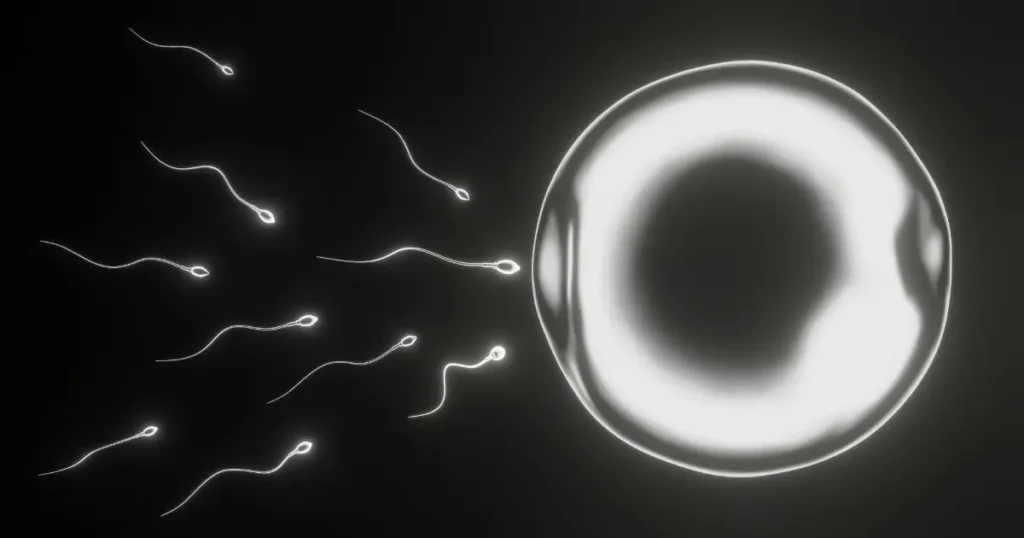
Ovulation is the release of a mature egg from one of the ovaries. It happens once per cycle. After the egg is released, it survives for only 12 to 24 hours. That short window is why recognizing ovulation signs matters so much.
The process begins with a surge of luteinizing hormone (LH). That LH surge triggers the dominant follicle to rupture and release the egg. The egg then travels down the fallopian tube, where it can be fertilized by sperm. If fertilization does not happen within that short window, the egg dissolves and the cycle moves toward menstruation.
Research from Clue, a cycle tracking platform, indicates that ovulation occurs around 500 times in a typical person’s reproductive lifetime. It is a recurring, significant event, and yet most people are never taught to notice the signs it produces.
Why Recognizing Ovulation Signs Is Important
Identifying ovulation signs helps you pinpoint your fertile window with far more accuracy than calendar math alone. The fertile window spans roughly six days per cycle. Recognizing the physical signs helps you know exactly when that window opens and closes.
For conception planning, this knowledge is directly practical. For natural family planning, the same awareness helps guide decisions without hormonal methods. And even outside of fertility goals, knowing your ovulation signs supports overall cycle awareness. It connects you to your body’s natural rhythm in a way that improves how you plan your week, your workouts, and your rest.
A Real-Life Context
Some random afternoon midway through your month, something shifts. You feel a little sharper. Your energy picks up without any obvious reason. Maybe you feel more social or more motivated. There is no coffee or extra sleep to explain it. That is often your hormones talking. Rising estrogen and the approach of ovulation drive those subtle but very real changes. Once you know what to look for, those days start to feel less random and a lot more meaningful.
When Do Ovulation Symptoms Usually Appear
Timing is not the same for everyone. But there is a recognizable pattern that most people follow.
Before Ovulation During Fertile Days
Ovulation symptoms begin three to five days before the egg is released. This is when estrogen surges and the body prepares for ovulation. Cervical mucus starts to change. Energy rises. Libido tends to pick up. These are not coincidences. They are driven by the hormonal climb toward peak fertility.
The LH surge occurs approximately 24 to 36 hours before ovulation, according to the Cleveland Clinic. This is the biochemical signal that triggers the final stage of egg release. OPK test strips detect this surge, giving you a real-time alert that ovulation is imminent.
During Ovulation on Peak Day
Ovulation day itself often brings the clearest physical signals. Cervical mucus reaches peak quality. Some people feel a brief, one-sided pelvic twinge. Libido and energy tend to peak. These signs cluster around the same 24-hour window, making peak day one of the more recognizable points in the entire cycle once you have tracked it for a few months.
Not everyone feels strong symptoms on ovulation day. Some people experience nothing notable at all. That is completely normal. The absence of symptoms does not mean ovulation did not occur. It simply means your body expresses it more quietly.
After Ovulation When Symptoms Shift
After the egg is released, the hormonal environment changes quickly. Progesterone rises, replacing estrogen as the dominant hormone. Cervical mucus becomes thick and sticky. Body temperature rises slightly and stays elevated. Energy often softens. Mood tends to settle or shift toward the calmer, more inward feeling of the early luteal phase.
These post-ovulation signs confirm that ovulation has already happened. They are retrospective signals. Useful for confirmation, but not for prediction.
Ovulation Symptoms Timeline
Here is a clear summary of how symptoms map to timing across the ovulatory window.
| Phase | Timing | Common Symptoms | Fertility Level |
|---|---|---|---|
| Pre-ovulation | 3 to 5 days before | Wet stretchy mucus, rising energy, increased libido | High |
| Ovulation day | Peak day | Clear egg-white mucus, mild pelvic pain, peak libido | Very high |
| Post-ovulation | 1 to 2 days after | Temperature rise, mucus thickens, calmer mood | Low and dropping |
Most Common Signs of Ovulation
Some signs are strong and consistent. Others are subtle and easy to miss. You may notice one of these or several together each cycle.
Cervical Mucus Changes
Cervical mucus is the most reliable and accessible physical sign of ovulation. Also, Cervical mucus peak characteristics were identified 78 percent of the time within one day, and 91 percent of the time within two days of the LH surge indicating ovulation. That is impressive accuracy for a free, no-equipment method.
As ovulation approaches, rising estrogen causes mucus to become clear, slippery, and stretchy. The classic comparison is raw egg whites. It stretches between two fingers without breaking. This quality of mucus also serves a biological purpose: it helps sperm travel through the cervix toward the egg.
Check cervical mucus daily after your period ends. Check at the same time each day, before any sexual activity. Note the texture, color, and amount in a simple daily log. The shift from dry or creamy to clear and stretchy is your most actionable ovulation signal.
Basal Body Temperature Increase
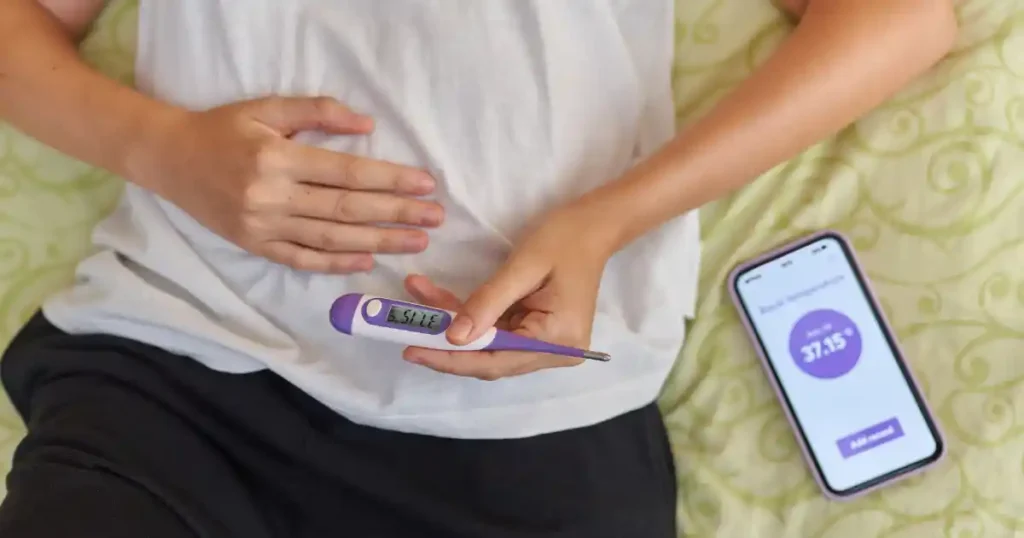
BBT is your resting body temperature, taken first thing every morning before getting out of bed. At the beginning of your cycle, basal body temperature remains fairly consistent and averages between 97 to 98 degrees Fahrenheit. As you get closer to ovulation, you’ll experience a slight dip in basal body temperature followed by a sharp increase, typically of about 0.4 to 1.0 degrees, just after ovulation.
BBT is a confirmation tool, not a predictor. The temperature rise happens after the egg has already been released. Use it over two to three cycles to recognize your personal ovulation day pattern. Once you see your temperature rising on the same days month after month, you can use that pattern to anticipate future cycles.
Take BBT with a digital basal thermometer that measures to at least one-tenth of a degree. Set an alarm for the same time every morning. Keep the thermometer on your nightstand. Even sitting up for a minute before measuring can throw off the reading, so check it immediately after waking.
Ovulation Pain Called Mittelschmerz
About 40% of women feel a mild ache on one side of their lower abdomen, known as mittelschmerz, around ovulation time. The name comes from the German words for “middle pain.” It is a secondary sign, but a useful one for those who experience it.
Ovulation pain, also called mittelschmerz, is either described as a quick sharp pain on one side of the lower abdomen or a dull ache that may last from a few hours to a few days. The pain comes from the follicle rupturing to release the egg. Fluid from the follicle can briefly irritate the abdominal lining, adding to the sensation.
Mittelschmerz is harmless. It does not require treatment. If it is brief and mild, it is a helpful confirmation signal. If it is severe or prolonged, that is worth discussing with a doctor to rule out other causes.
Increased Libido
Higher libido around ovulation is one of the most common yet least openly discussed ovulation signs. Estrogen peaks just before ovulation. Testosterone also rises slightly at the same time. Both hormones drive a natural increase in sexual desire.
This is not random. It is biology. The body increases libido precisely when the fertile window opens, which makes sense from a reproductive standpoint. If you notice your interest in sex peaks in the middle of your cycle consistently, that pattern is a meaningful fertility signal.
Less Common But Real Ovulation Symptoms
Not everyone talks about these signs. But they are well-documented and experienced by many people every cycle.
Breast Tenderness
Some people experience breast soreness or tender nipples around the time of ovulation. This is driven by the estrogen surge and is similar in mechanism to the breast tenderness that occurs in the luteal phase, though typically milder. It does not occur for everyone or in every cycle, which is why it is considered a secondary rather than primary sign.
Light Spotting
Light spotting at mid-cycle is less common but real. Mid-cycle or ovulatory bleeding is thought to result from the sudden drop in estrogen that occurs just before ovulation. This drop in hormones can trigger withdrawal bleeding in the same way that switching from active to placebo birth control pills does.
Ovulation spotting is typically very light, pink or light brown in color, and mixed with fertile cervical mucus. It is much lighter than period bleeding and lasts only a day or two. If spotting occurs regularly at mid-cycle and is very light, it is usually a normal sign of the hormonal transition around ovulation.
Heightened Senses
Some people report increased sensitivity to smell, taste, or emotional cues around ovulation. Research has found that sensitivity to smell may peak near ovulation, potentially related to the estrogen surge. Others notice a heightened emotional awareness or social perceptiveness. These signs are subtler and vary widely between individuals, but they reflect the real neurological effects of peak estrogen on the brain.
Cervix Position Changes
The cervix also changes throughout the cycle, and checking it daily can reveal where you are in your fertile window. Before ovulation, the cervix sits higher in the vaginal canal and feels firmer, similar to the tip of your nose. During ovulation, the cervix moves lower, becomes softer, more like your lips, and opens slightly to allow sperm passage. After ovulation, the cervix returns to its pre-ovulation state, firmer, higher, and more closed.
Cervical position checking requires some practice and comfort with your own body. It is not essential for most people, but for those who want a complete picture of their fertility signs, it adds a useful layer of confirmation.
Ovulation Signs Comparison Table
Not all signs carry the same reliability. Here is a quick reference to help you prioritize your tracking focus.
| Symptom | Reliability | When It Appears | Easy to Track |
|---|---|---|---|
| Cervical mucus changes | High | 2 to 5 days before ovulation | Yes, daily check |
| BBT temperature rise | Medium, confirms after | Day after ovulation | Medium, requires thermometer |
| LH surge via OPK | High, predicts | 24 to 48 hours before | Yes, test strips |
| Ovulation pain (mittelschmerz) | Low to medium | During ovulation | Yes, when present |
| Increased libido | Low as standalone | Days before ovulation | Subjective |
| Breast tenderness | Low as standalone | Around ovulation | Yes |
| Light spotting | Low as standalone | Around ovulation day | Yes |
How to Track Ovulation Symptoms Effectively
Tracking turns random body signals into clear, useful patterns.
Daily Symptom Tracking
The most effective tracking habit is simple and consistent. Check cervical mucus every day. Note the texture and color. Take BBT every morning before getting up. Log your energy level and mood on a simple scale. Note any physical symptoms like breast tenderness, pelvic twinges, or spotting.
You do not need a formal system. A notes app on your phone works perfectly. Some people use a small notebook. What matters is that you check and log at the same time each day without skipping.
After two to three cycles of this, you will see patterns emerge. You will know which days your energy peaks, when your mucus becomes fertile quality, and when your temperature rises. Those patterns are your personal ovulation map.
Combining Multiple Signs
No single sign gives the complete picture. The most accurate approach combines two or more methods. In conjunction, LH monitors and cervical mucus can give the best indication of fertility and ovulation timing.
A practical combined approach looks like this: Start with cervical mucus observation daily from the end of your period. Add OPK testing from a few days before your estimated ovulation date. Use BBT daily to confirm the post-ovulation temperature rise. Together, these three layers cover prediction, real-time detection, and confirmation of ovulation in a single cycle.
Using Tracking Tools
Apps like Clue and Flo allow you to log multiple signs at once and track them over time. They use your data to improve ovulation predictions. Smart thermometers like the Tempdrop record BBT automatically during sleep, removing the need for strict morning timing. Hormone fertility monitors measure actual LH and progesterone concentrations, giving you biochemical data beyond a simple positive or negative strip result.
Best Tools to Detect Ovulation Symptoms
Tools make tracking easier and more accurate, especially if your cycle is not predictable.
Ovulation Predictor Kits
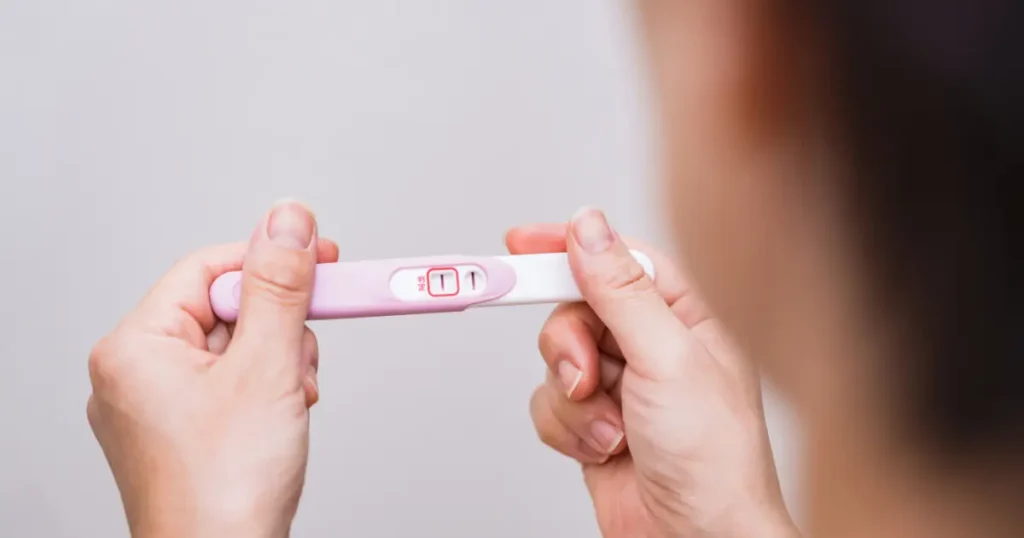
OPKs detect the LH surge in urine. Urine LH as assessed by home monitoring systems indicated ovulation 91 percent of the time during the 2 days of peak fertility on the monitor and 97 percent during the 2 peak days plus one. That is high accuracy for an affordable, easy-to-use home test.
Test at the same time every day. Start testing a few days before your estimated ovulation window based on your cycle length. Continue testing until you see a clear positive result. A positive means the LH surge is present and ovulation is likely within 24 to 48 hours.
Basal Thermometers
A standard oral thermometer is not precise enough for BBT tracking. Use a digital basal thermometer that measures to at least one-tenth of a degree. These are widely available at pharmacies and are inexpensive. The Femometer and Easy@Home are two popular, affordable options.
Track BBT for at least two to three full cycles before using it as a predictive tool. The first cycle gives you baseline data. The second and third cycles reveal your personal pattern.
Digital Apps and Wearables
Apps like Natural Cycles, Clue, and Flo are designed specifically for cycle and ovulation tracking. Natural Cycles is FDA-cleared as a form of birth control when used as directed, which reflects its clinical validation.
Wearables like the Oura Ring and the Tempdrop continuously track physiological data including skin temperature and heart rate variability. Combined with a cycle app, wearable data can help identify ovulation with increasing accuracy over time.
Expert Advice on Ovulation Signs
“Cervical mucus is one of the earliest and most reliable indicators of ovulation,” says Dr. Aimee Eyvazzadeh, a San Ramon, California-based board-certified OB-GYN and Reproductive Endocrinologist. Dr. Eyvazzadeh completed residency in Obstetrics and Gynecology at Harvard Medical School and her Master’s in Public Health at the University of Michigan. As a Bay Area-based fertility doctor, her mission is fertility awareness: empowering women at an early age, making them more aware of their own personal fertility levels and allowing them to be better educated about their options. Her research, published in Seminars in Reproductive Medicine in 2024, covers current ovulation and luteal phase tracking methods and technologies for fertility and family planning.
Her clinical emphasis on cervical mucus aligns directly with what the peer-reviewed literature consistently shows: mucus observation is one of the most accessible and reliable physical ovulation signs available to anyone, at no cost, starting today.
What Experts Recommend
Current clinical guidance points to a combined approach. Track cervical mucus daily. Add an OPK for biochemical confirmation. Observe for at least three full cycles before drawing conclusions from your data.
Dr. Eyvazzadeh’s research emphasizes that quantitative hormone monitoring, which measures actual LH, estrogen, and progesterone concentrations rather than simple positive or negative results, offers the most complete picture of ovulation and luteal phase health. For most people, a combination of cervical mucus observation and OPK testing is a strong, practical starting point.
A Real-Life Tip
Some days you check cervical mucus and see nothing notable. Other days it is unmistakably different. That contrast is actually useful data. The days with clearly fertile mucus stand out precisely because the other days are dry or creamy. You need both ends of the spectrum to read the pattern well. Keep checking even on the days that seem unremarkable.
Common Mistakes When Reading Ovulation Signs
Small misunderstandings lead to wrong timing. Here are the most common errors and how to avoid them.
Ignoring Subtle Symptoms
Not all ovulation signs are dramatic. Many people expect to feel something obvious. When nothing dramatic happens, they assume they did not ovulate. That conclusion is often wrong.
Subtle signs matter just as much as clear ones. A very slight increase in mucus. A faint second line on an OPK. A 0.2-degree temperature shift. These small signals add up to a consistent pattern over time. Train yourself to notice them rather than dismiss them.
Relying on One Sign Only
No single sign confirms ovulation on its own. An OPK positive tells you the LH surge is present but does not confirm the egg was actually released. A BBT rise confirms ovulation happened but does not tell you when it is coming. Cervical mucus changes signal fertility is approaching but do not give a precise timing.
Each sign answers a different question. Use them together and the full picture emerges clearly. Combining cervical mucus with OPK testing and BBT gives you prediction, confirmation, and retrospective verification all in one cycle.
Inconsistent Tracking
Skipping days breaks patterns. A BBT chart with three gaps in a row is hard to interpret. Missing two days of mucus checking could mean missing the peak quality window entirely.
Pick the simplest possible version of tracking that you can do every single day. Even two daily data points, mucus and a one-word energy rating, create a useful pattern over time. Consistency beats complexity every time.
Factors That Affect Ovulation Symptoms
Your body does not always follow a textbook pattern. Understanding what disrupts it helps you interpret your data without unnecessary worry.
Lifestyle Factors
Stress is the most consistent disruptor of ovulation timing. High cortisol suppresses the hormonal signals that trigger ovulation. A stressful work deadline, a difficult personal event, or even intense physical training can delay ovulation by several days. When ovulation shifts, all the physical signs shift with it.
Poor sleep affects the same hormonal axis. Even a few nights of disrupted sleep can alter BBT readings and delay the LH surge. Take BBT after at least three hours of uninterrupted sleep for the most reliable results.
Diet changes affect ovulation symptoms too. Very low calorie intake or very low dietary fat can reduce estrogen production enough to change mucus quality or delay ovulation altogether. A balanced diet that includes healthy fats supports the estrogen levels needed for clear, recognizable ovulation signs.
Health Conditions
PCOS creates particular challenges for ovulation tracking. LH levels are often chronically elevated in PCOS, which can cause OPKs to show positive results repeatedly without an actual LH surge or ovulation occurring. Cervical mucus tracking and quantitative hormone monitors become more important for accurate detection in this case.
Thyroid imbalance, both hypothyroidism and hyperthyroidism, can alter cycle length, hormone levels, and ovulation timing. If your cycles are consistently irregular and your tracking data never shows a clear ovulatory pattern, a thyroid blood test is a sensible first step.
Hormonal imbalances more broadly, including high prolactin or low estrogen, can affect mucus quality, BBT patterns, and LH surge timing. If three or more cycles of careful tracking show no clear ovulation signs, speak with a gynecologist.
Environmental Context
Hot and humid climates can slightly elevate baseline BBT. If you live in a warm region, your readings may trend slightly higher overall. Focus on the relative shift from your personal baseline rather than comparing to published standard ranges.
Travel across time zones disrupts the circadian rhythm that governs hormone cycles. Many people notice their ovulation signs arrive later than expected in cycles that include long-distance travel. Log travel in your tracking app and factor it in when interpreting that cycle’s data.
Work schedule changes, particularly shift work or significant changes in daily routine, can also shift when ovulation signs appear. The pattern usually restores itself within one to two cycles of returning to a consistent schedule.
Signs You May Not Be Ovulating
Sometimes the signs are simply absent. That matters and deserves attention.
Common Warning Signs
Three or more cycles with no visible cervical mucus change, no BBT rise, and no OPK positive are meaningful signals that ovulation may not be occurring regularly. Irregular or absent periods are also a sign that ovulation may be inconsistent.
A flat BBT chart with no sustained rise is one of the clearest retrospective indicators of anovulation. Consistently negative OPK results over an extended testing window in a long cycle also point in that direction.
It is important to note that anovulation, cycles without ovulation, can occur occasionally in otherwise healthy people due to stress, illness, or travel. Occasional anovulatory cycles are not inherently a medical problem. Consistent anovulation over multiple cycles is.
When to Seek Medical Advice
If you have been trying to conceive for 12 months with regular unprotected intercourse and no success, seek a fertility evaluation. If you are over 35, that timeline shortens to six months. Also, If your cycles are severely irregular or absent, do not wait for either of those timelines. See a gynecologist sooner.
Conditions like PCOS, hypothalamic amenorrhea, premature ovarian insufficiency, and thyroid disorders are all treatable. The sooner they are identified, the more treatment options are available.
Ovulation Symptoms Common Questions
What Are the Main Signs of Ovulation?
The three most reliable physical signs are cervical mucus changes, basal body temperature rise, and a detected LH surge via OPK. Secondary signs include mild pelvic pain (mittelschmerz), increased libido, light mid-cycle spotting, and breast tenderness. Most people with regular cycles will notice at least one or two of these signs each month.
How Many Days Do Ovulation Symptoms Last?
Primary symptoms like fertile-quality cervical mucus typically last two to five days, building up to ovulation and dropping off sharply after. The actual egg release lasts 12 to 24 hours. Ovulation pain, when it occurs, usually lasts from a few minutes to a few hours, though it can occasionally persist for up to two days. Overall, the cluster of physical ovulation symptoms spans roughly one to three days at peak intensity.
Can You Feel Ovulation Happening?
Some people can. Some women are acutely aware of sensations in their pelvis and are able to feel a twinge when the ovary releases an egg. This is mittelschmerz. It varies widely in intensity from barely noticeable to genuinely uncomfortable. Many people feel nothing at all during the actual moment of ovulation and only recognize it retrospectively through mucus and BBT changes.
Are Ovulation Symptoms Always Obvious?
No. Many people have no noticeable physical symptoms of ovulation at all. That does not mean ovulation is not happening. It simply means their body expresses it more quietly. Tracking tools like OPKs and BBT can confirm ovulation even when physical signs are absent or very subtle.
Can Ovulation Happen Without Symptoms?
Yes, absolutely. Silent ovulation is common. Many people ovulate consistently every cycle without ever feeling mittelschmerz, noticing mucus changes, or sensing a libido shift. In these cases, OPKs and BBT tracking are the most reliable methods for identifying the fertile window. Physical signs are useful when present. Their absence is not a cause for concern.
Practical Tips to Recognize Ovulation Faster
Small, consistent habits make patterns visible much sooner.
Build a Simple Daily Habit
Check cervical mucus at the same time each day, every day from the end of your period until menstruation begins again. Log it immediately. Take BBT at the same time every morning before any activity. Keep your thermometer within arm’s reach of your pillow to remove any friction from the habit.
Even a 30-second daily check-in creates a complete data set over time. The simpler the system, the more likely you are to maintain it every day without gaps.
Learn Your Unique Pattern
Every person’s ovulation signs present slightly differently. Some people have dramatic fertile-quality mucus for four or five days. Others have only one or two days of clearly stretchy discharge. Some feel mittelschmerz every cycle. Others never do. Neither pattern is better or worse. Both are informative once you know what is normal for you.
Give yourself at least three full cycles to learn your baseline. Your third cycle will look nothing like your first in terms of how clearly you can read the signs. The pattern becomes your personal reference point.
A Personal Reflection
At first, everything feels confusing. You check mucus and wonder if what you are seeing is significant. You look at your BBT chart and cannot see any obvious pattern. Then one day it clicks. You notice that for the past three months, your temperature rose on the same two days, and your mucus peaked the same way each time. That moment of recognition is genuinely exciting. Stick with the habit. The pattern shows up. It always does.
Listen to Your Body Signals
Ovulation signs are your body’s quiet language. Learning it takes a few months of consistent observation. But once you understand it, tracking becomes less stressful and far more useful. You stop guessing and start knowing. That shift in confidence is worth every morning of checking and every evening of logging.
Your body is communicating clearly. The only thing you need to do is start listening.
Final Recommendation
Understanding the signs and symptoms of ovulation is one of the most empowering things you can do for your reproductive health, whether your goal is conception, natural family planning, or simply knowing your own body better. From personal experience, the clearest results come from combining cervical mucus observation with daily OPK testing during the expected fertile window. These two methods together, backed by BBT tracking for confirmation, give you prediction, real-time detection, and post-ovulation verification in a single cycle. Start tracking now, even if you feel unsure.
Consistency over three cycles reveals patterns that no single day of observation ever could. If after three to six months of careful tracking you still cannot identify a clear ovulatory pattern, including no cervical mucus changes, no LH surge on OPKs, and no BBT rise, book an appointment with a gynecologist or reproductive endocrinologist. Anovulation is treatable when identified early. Your body is always sending signals. Learning to read the signs and symptoms of ovulation gives you the knowledge to respond to them with confidence.
FAQs
What are the common signs and symptoms of ovulation?
Common signs and symptoms of ovulation include clear discharge, mild cramps, and higher energy. These changes help you spot your fertile window.
When do signs and symptoms of ovulation appear?
Signs and symptoms of ovulation often appear a few days before ovulation. They peak during your most fertile days in the cycle.
How can I track signs and symptoms of ovulation?
You can track signs and symptoms of ovulation by noting discharge, body temperature, and cycle dates. Apps can also help you stay consistent.
Is ovulation pain a normal symptom?
Yes. Mild lower belly pain, called ovulation pain, is a common sign. It usually lasts a short time and is not severe.
Do all women feel signs and symptoms of ovulation?
No. Some people notice clear signs, while others feel very little. Both are normal and vary by body.
Can signs and symptoms of ovulation change each month?
Yes. Hormones can shift, so signs may feel different each cycle. Tracking helps you learn your own pattern.
Why should I know signs and symptoms of ovulation?
Knowing signs and symptoms of ovulation helps you plan pregnancy or avoid it. It also gives better insight into your cycle health.