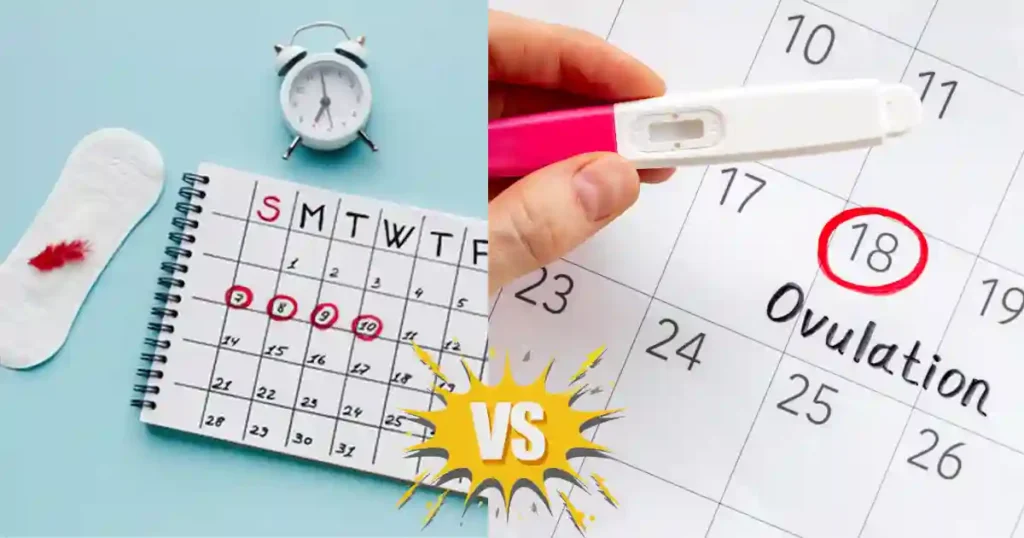

Tracking your fertile window in New York City while grabbing your morning coffee is simple on a phone, but opening a browser on your laptop works too. You might wonder if one platform predicts your exact fertile days better than the other. When evaluating an ovulation calculator app vs website, the truth is simple: neither platform is automatically more accurate. Accuracy depends on the tracking method and data you enter, not on whether you open an app or a site.
Most basic tools use your last period date, cycle length, and past cycle history. I compare accuracy, convenience, privacy, features, data entry, history, notifications, and cost to help you choose the right path. For a simple guess, either option works well. For better results, you should add luteal phase test strips, mucus monitoring, or body temperature checks.
Ovulation Calculator App vs Website at a Glance
Comparing digital tools helps you pick the right workflow for your daily life. The table below breaks down how mobile applications and web browsers compare across key features.
| Feature | Ovulation App | Ovulation Website |
| Cycle calculation | Yes | Yes |
| Period tracking | Usually | Sometimes |
| Notifications | Usually | Rarely |
| Long-term history | Usually | Depends |
| Works on phone | Yes | Yes |
| Works without installation | No | Yes |
| Privacy considerations | App/account dependent | Website/cookie dependent |
| LH test integration | Some | Some |
| Best for | Regular tracking | Quick estimates |
The short answer
- For quick calculations, a website is fine.
- For ongoing tracking, an app usually has more useful features.
- For privacy, compare the actual data policy rather than assuming one platform is safer.
- For ovulation detection, neither a calendar app nor a basic website is enough by itself.
The most important question to ask
What information does the calculator use?
- Cycle dates only?
- Average cycle length?
- LH test results?
- BBT?
- Cervical mucus?
- Other biomarkers?
How an Ovulation Calculator App Works
Most basic calculator apps start with calendar information. The app then applies an algorithm to estimate the fertile window.
Typical information an app asks for
- First day of last period.
- Average cycle length.
- Cycle history.
- Period duration.
- Sometimes symptoms or fertility signs.
Calendar-based prediction
Calendar predictions rely on general cycle math to map your month:
- Estimated ovulation date.
- Estimated fertile window.
- Assumption about the luteal phase.
- Why cycle length alone is not enough to know the exact ovulation day.
What makes some apps more advanced?
Some apps allow users to add:
- LH results.
- BBT.
- Cervical mucus.
- Intercourse.
- Pregnancy tests.
- Wearable data.
App prediction vs biological measurement
Comparing estimates to actual body signals shows clear functional differences:
- Calendar app: Estimates your timing.
- OPK: Detects urinary LH.
- BBT: Tracks a temperature pattern.
- Cervical mucus: Observes a physical fertility sign.
ASRM notes that smartphone calendar apps are increasingly used for fertility awareness, but their ability to precisely predict an individual’s fertile window or ovulation day may be limited.
How an Ovulation Calculator Website Works
A website can perform the same basic calculation as an app. In many cases, the algorithm—not the platform—is the important part.
Typical website inputs
- Last menstrual period.
- Cycle length.
- Period duration.
- Sometimes cycle variability.
Why websites can be convenient
Web software offers swift access without filling your phone memory:
- No installation.
- Quick access.
- Works on desktop and mobile browsers.
- Easy to use once.
- Useful for first-time estimates.
Website limitations
Web tools have specific structural trade-offs:
- May not save cycle history.
- Fewer reminders.
- Less personalization.
- May be supported by ads.
- May use cookies or analytics.
- Some tools provide little information about their calculation method.
Website vs app algorithm
If both tools use the same inputs and the same calendar formula, switching platforms does not make the underlying prediction more accurate.
Is an Ovulation Calculator App More Accurate Than a Website?
This comparison reveals that accuracy comes down to data inputs rather than screen format.
Platform does not equal accuracy
- App does not equal automatically more accurate.
- Website does not equal automatically less accurate.
- Algorithm and data quality matter more.
Calendar-only tools have an important limitation
- They estimate ovulation from cycle history.
- Ovulation timing can vary.
- Even people with apparently regular cycles may not ovulate on the same cycle day every month.
What research says about apps and websites
A study evaluating 20 fertility websites and 33 apps found that only one website and three apps precisely predicted the fertile window used in that study’s standardized 28-day-cycle comparison. The researchers concluded that websites and apps were generally inaccurate, although the clinical impact of that inaccuracy was uncertain.
A larger app comparison
Another study using urine LH data from 949 volunteers found that app-based ovulation prediction had a maximum accuracy of 21% for predicting the actual ovulation day.
Why these findings matter
- Don’t choose an app because it looks more polished.
- Don’t assume a website is basic and therefore wrong.
- Look at the underlying method.
App vs Website for Regular Cycles
Regular cycles can make calendar tools more useful, but they still do not turn an estimate into a measurement.
When a website may be enough
Web tools work well under specific casual conditions:
- You only want a rough fertile-window estimate.
- You don’t need history.
- You don’t want another app.
- You use other fertility signs separately.
When an app is more useful
Dedicated apps fit active daily routines:
- You want monthly tracking.
- You want reminders.
- You want cycle history.
- You want to enter LH or BBT data.
Don’t assume 28-day cycle equals day 14
- Day 14 is an estimate.
- Ovulation timing varies.
- Cycle length alone cannot guarantee the ovulation day.
ASRM explains that the traditional calendar method often assumes a roughly 14-day luteal phase, but also stresses that cycles vary and calendar methods have significant limitations.
App vs Website for Irregular Cycles
Irregular cycles make a simple calendar prediction much less dependable. The problem is not whether the calculator lives on your phone or in Chrome.
Why irregular cycles challenge calculators
- Cycle length changes.
- Ovulation timing changes.
- Historical averages may not represent the current cycle.
Can an app adapt better?
Potentially, if it uses:
- Multiple cycles.
- Current-cycle data.
- LH results.
- BBT.
- Cervical mucus.
But an adaptive algorithm is still an algorithm.
Better tools for irregular cycles
- OPKs.
- Cervical mucus tracking.
- BBT.
- Multi-hormone fertility monitors.
When tracking should become medical evaluation
- Persistent irregular periods.
- Missing periods.
- Repeated inability to identify ovulation.
- Suspected anovulation.
- Fertility concerns.
App vs Website Features Compared
The platform difference becomes much clearer when looking at practical features.
Reminders
App advantage:
- Period reminders.
- OPK reminders.
- Medication reminders where supported.
- Daily tracking notifications.
Cycle history
App advantage:
- Multiple months.
- Graphs.
- Pattern recognition.
- Data trends.
Ease of access
Website advantage:
- No installation.
- Open browser.
- Calculate and leave.
Multiple-device access
Website advantage:
- Can work across devices through a browser.
- Depends on account and website functionality.
Offline use
Potential app advantage:
- Some apps offer offline functions.
- Must be checked for the specific app.
Integrations
Advanced apps may connect with:
- Wearables.
- Digital thermometers.
- OPKs.
- Health platforms.
App vs Website for Privacy
Don’t assume that an app is automatically less private or that a website is automatically safer.
What fertility data can include
- Period dates.
- Cycle length.
- Pregnancy status.
- Sexual activity.
- Fertility test results.
- Symptoms.
- Health information.
App privacy questions
- What data is collected?
- Is an account required?
- Is data shared with third parties?
- Is advertising personalized?
- Can you delete your account?
- Can you export your data?
Website privacy questions
- Cookies.
- Analytics.
- Advertising trackers.
- Account requirements.
- Data retention.
- Third-party services.
Don’t judge privacy by the pink interface
A cute interface tells you exactly nothing about data practices.
What to look for before entering fertility data
- Clear privacy policy.
- Clear data deletion process.
- Transparent third-party sharing.
- Security information.
- Minimal data collection where possible.
App vs Website for Trying to Conceive
The TTC use case changes what better means.
Website for quick planning
Useful if:
- You want a rough estimate.
- You don’t want long-term tracking.
- You already know your cycle pattern.
App for ongoing TTC tracking
Useful if:
- You are tracking multiple cycles.
- You want reminders.
- You want to record OPK results.
- You want to see patterns.
Don’t rely on the predicted date alone
Couples trying to conceive should focus on the fertile window, rather than obsessing over one predicted ovulation day.
Add an OPK for a stronger signal
- App/website: Estimate.
- OPK: LH surge.
- Cervical mucus: Physical fertility sign.
ASRM identifies calendar methods, cervical mucus, ovulation detection devices, and BBT as different fertility-tracking approaches and notes that urinary LH testing can help identify the midcycle LH surge.
Ovulation Calculator App vs Website vs OPK
This comparison matrix highlights how digital predictions stack up against real-world test kits.
| Tool | Main Information | Best Use | Main Limitation |
| Website calculator | Cycle dates | Quick estimate | Calendar assumption |
| Calculator app | Cycle dates/history | Ongoing estimates | Still may be calendar-based |
| OPK | Urinary LH | Detecting LH surge | Does not directly confirm ovulation |
| BBT | Temperature | Cycle pattern | Often retrospective |
| Cervical mucus | Fertility sign | Fertile-window awareness | Requires observation |
Why OPK may be a better upgrade than changing platforms
- Switching website to app doesn’t necessarily add biological information.
- Adding an OPK does.
- App plus OPK can be more useful than app alone.
The practical combination
Use the calculator to estimate when to start testing.
Then:
Use the OPK to look for the LH surge.
Then:
Use other fertility signs for context.
Which Is Better for Beginners?
Beginners usually need clarity, not fourteen graphs and complex notifications.
Choose a website if…
- You want one quick calculation.
- You don’t want an account.
- You don’t need history.
- You want a simple starting point.
Select an app if…
- You want monthly tracking.
- You want reminders.
- You want to save cycle history.
- You plan to use OPKs or BBT.
Choose an OPK if…
- You want to detect an LH surge.
- You are trying to time intercourse.
- Calendar predictions feel too vague.
Best beginner setup
Simple app plus OPK provides:
- Calendar context.
- Cycle history.
- Hormone information.
Which Is Better for Long-Term Fertility Tracking?
For long-term tracking, apps generally have the practical advantage because they can store more information.
What to track over several cycles
- Period start dates.
- Cycle length.
- OPK results.
- Cervical mucus.
- BBT.
- Symptoms.
- Intercourse timing if desired.
Why trends matter
- One cycle can be unusual.
- Several cycles can reveal patterns.
- Trends can help you discuss your cycle with a clinician.
Don’t confuse tracking history with medical diagnosis
An app can show: “Your cycles vary.” It cannot automatically explain why.
What Makes an Ovulation Calculator App or Website Trustworthy?
Trustworthy tools prioritize transparency and evidence over claims.
Transparent calculation method
Look for:
- Explanation of inputs.
- Explanation of fertile-window calculation.
- Clear limitations.
Medical review
Prefer tools that identify:
- Medical reviewers.
- Clinical advisers.
- References.
- Evidence behind claims.
Clear disclaimer
A trustworthy calculator should explain that:
- Results are estimates.
- Ovulation varies.
- It is not a diagnosis.
No exaggerated accuracy claims
Be cautious with:
- 100% accurate.
- Guaranteed ovulation date.
- Never miss your fertile window.
- AI knows exactly when you ovulate.
Updated information
Check:
- Last update.
- Medical references.
- Current privacy policy.
Research reviewing fertility apps has found substantial variation in the quality and depth of information, and some apps lacked strong evidence or professional involvement.
What About AI-Powered Ovulation Apps?
AI helps spot patterns, but it cannot override basic body signals.
What AI may do
- Analyze large amounts of user data.
- Detect patterns.
- Personalize predictions.
- Combine multiple inputs.
What AI cannot magically do
- Directly see an egg being released.
- Guarantee ovulation.
- Guarantee conception.
- Replace clinical diagnosis.
AI vs standard calculator
Comparing basic formulas with advanced models highlights key differences:
| Feature | Basic Calculator | AI/Advanced App |
| Cycle dates | Yes | Yes |
| Historical data | Sometimes | Usually |
| Pattern analysis | Basic | Advanced |
| Multiple inputs | Limited | Often |
| Biological measurement | No | Depends |
| Clinical diagnosis | No | No |
The AI label is not an accuracy certificate
- Ask what data the model uses.
- Look for validation.
- Look for published evidence.
- Don’t equate sophistication with correctness.
U.S. Expert Advice on Ovulation Tracking Apps
Leading medical organizations emphasize understanding tool limits.
ASRM guidance
Reference ASRM’s guidance on:
- Calendar methods.
- Smartphone apps.
- LH testing.
- Cervical mucus.
- BBT.
ASRM specifically recommends that users understand the shortcomings of calendar-based ovulation tracking, including when the calendar method is delivered through an app.
Expert advice to emphasize
- Use apps as tracking aids.
- Don’t treat predictions as exact.
- Add biological fertility indicators when timing matters.
- Seek professional advice when cycles or fertility concerns warrant it.
Quote rule
Relying on verified clinical guidelines protects user health over vague claims.
Common Mistakes With Ovulation Calculator Apps and Websites
- Assuming the app is more accurate because it is smart. Algorithm sophistication doesn’t equal proven accuracy.
- Assuming the website is outdated. A website can use the same algorithm as an app.
- Entering inaccurate cycle dates. Wrong inputs produce poor estimates.
- Treating every cycle as identical. Cycle variation matters.
- Relying on one predicted day. Think in terms of the fertile window.
- Switching between calculators constantly. Conflicting dates create unnecessary confusion.
- Ignoring biological signs. Consider OPKs, cervical mucus, and BBT.
- Assuming a positive OPK guarantees pregnancy. It doesn’t.
When an Ovulation Calculator Is Not Enough
Recognizing when consumer software ends and medical guidance begins ensures better outcomes.
Consider additional tracking if…
- Your cycles vary.
- The predicted dates seem inconsistent.
- You want stronger timing information.
Consider medical advice if…
- Periods are very irregular.
- Periods stop.
- You repeatedly cannot identify ovulation.
- You have known reproductive health concerns.
- You have been trying to conceive without success.
Don’t keep upgrading apps when the question is medical
- Better software cannot diagnose every cause of irregular ovulation.
- More data can be useful, but sometimes the next step is a clinician.
Frequently Asked Questions
Is an ovulation calculator app better than a website?
Not automatically. If both use the same calendar method and inputs, the underlying prediction may be similar.
Are ovulation calculator apps accurate?
Accuracy varies. Calendar-only apps have important limitations because ovulation does not always occur on the same cycle day.
Are websites better than apps for privacy?
Not necessarily. Compare the actual privacy policy, cookies, account requirements, and data-sharing practices.
Is an ovulation app worth using?
It can be useful for recording cycle history and organizing fertility signs, especially when used with other indicators.
What is more accurate than an ovulation calculator?
An OPK can provide additional biological information by detecting urinary LH. Other methods include cervical mucus tracking and BBT.
Can an app tell me exactly when I ovulate?
No calendar-based app can guarantee an exact ovulation date.
Should I use an app and an ovulation calculator website?
You usually don’t need both if they use the same method. One reliable tracker plus biological fertility signs may be more useful.
Is an OPK better than an ovulation app?
They do different things. An app can estimate fertile days, while an OPK detects an LH surge.
Which is best for irregular periods?
Calendar-only tools are less suitable when cycle timing varies. OPKs and other fertility signs can provide additional information.
Can I use an ovulation calculator to get pregnant?
It can help estimate the fertile window, but it cannot guarantee conception.
Final Verdict: App or Website?
Choose a website if…
- You want a quick estimate.
- You don’t want another app.
- You don’t need long-term tracking.
How to Choose an app if…
- You want cycle history.
- You want reminders.
- You want to record fertility signs.
- You want integrations.
Choose an OPK if…
- You want to detect an LH surge.
- You want more than a calendar estimate.
Best overall approach
- For simple use: website.
- For ongoing tracking: app.
- For stronger ovulation timing information: app or website plus OPK.
Final practical conclusion
The best choice is not really app vs website. It’s calendar estimate vs biological fertility information. An app can be more convenient than a website, but convenience does not automatically make its ovulation prediction more accurate. For someone trying to conceive, the bigger upgrade is often adding an OPK or another fertility sign rather than simply moving the same calculator from a browser to a phone.
Final Recommendation
When testing an ovulation calculator app vs website, I found that picking one depends on your goals. Over years of testing digital health tools, I learned that apps win for logging daily symptoms, while websites give fast answers without accounts. But neither platform calculates ovulation better if they use the exact same calendar math. My experience shows the real win comes from combining an app with LH test strips. Pick a clean web tool for a quick check, or grab an app to save your history just pair it with real body signals.