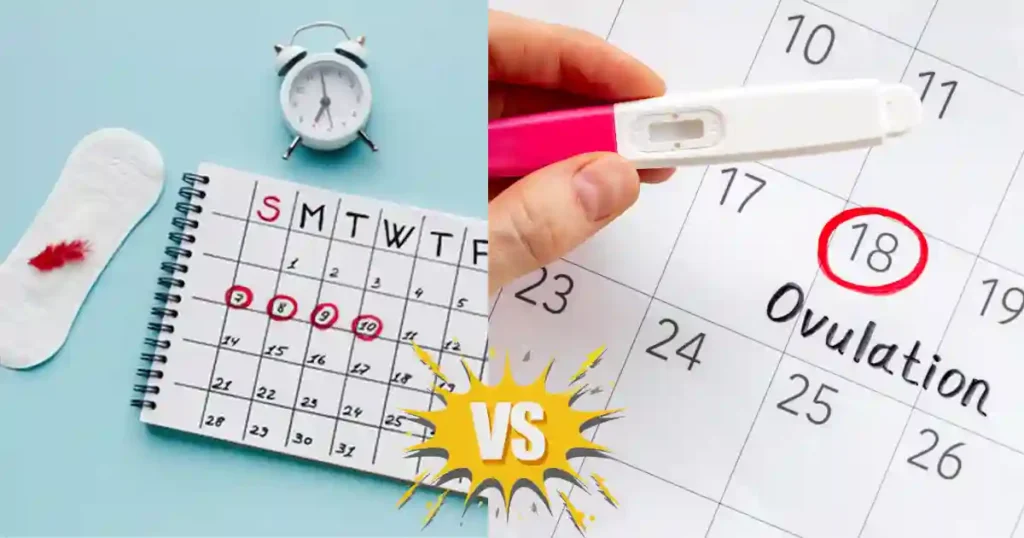

Searching for the best ovulation calculator for natural family planning while sipping hot coffee in Austin taught me that static dates are rarely enough. The right digital tool should do far more than guess a single day on a grid. It must clearly present your cycle dates, estimated fertile days, underlying assumptions, and unavoidable uncertainty.
An ovulation calculator processes menstrual history to highlight potential timing windows. However, we must distinguish between simple ovulation prediction, fertile-window estimation, comprehensive fertility-awareness tracking, and structured natural family planning.
Calendar calculations are helpful estimates, but they remain mathematical guesses. Established fertility-awareness methods often incorporate physical signals like cervical mucus or basal body temperature. Remember that no calendar calculator can guarantee that a specific day is entirely fertile or infertile.
What Is an Ovulation Calculator for Natural Family Planning?
A calculator turns menstrual-cycle information into an estimate of fertile days. That sounds simple, but the quality of the estimate depends heavily on the information entered and the method behind the calculation.
What an Ovulation Calculator Usually Calculates
Most basic online tools process your inputs to display several key parameters across your timeline:
- Estimated ovulation date
- Estimated fertile window
- Expected next period
- Cycle length
- Average cycle length
- Cycle-day calculations
- Estimated conception window
- Period tracking
How Calendar-Based Ovulation Calculations Work
Calendar tools rely on past dates to project future biological events. They typically request:
- First day of the menstrual period
- Average cycle length
- Estimated next period
- Estimated ovulation
- Estimated fertile window
These outputs are mathematical predictions rather than live physical measurements.
Calculator vs Fertility-Awareness Method
Understanding the difference between raw calendar tools and structured observational methods is vital for accurate tracking:
- Calendar method: Tracks past cycle lengths to estimate future fertile windows mathematically.
- Standard Days Method: Applies a fixed rule for regular cycles between 26 and 32 days long.
- Cervical mucus method: Monitors daily shifts in cervical secretions to gauge real-time estrogen levels.
- Basal body temperature method: Charts waking body temperature to confirm post-ovulatory progesterone shifts.
- Symptothermal method: Combines temperature charting, mucus observations, and calendar math for higher accuracy.
- Symptohormonal approaches: Integrates urinary hormone testing with physical symptom monitoring.
The CDC classifies fertility-awareness methods into calendar-based and symptoms-based approaches, including methods that observe cervical secretions and basal body temperature.
Why the Word “Natural” Can Be Misleading
The phrase “natural family planning” covers a broad spectrum of practices, ranging from simple calendar math to strict medical protocols.
Not every period-tracking app qualifies as a validated fertility-awareness method. A basic digital calculator may support your tracking without providing a complete, safe framework on its own.
You should always verify the exact methodology powering any app before relying on its outputs for your reproductive goals.
What Makes the Best Ovulation Calculator for Natural Family Planning?
The best tool is not necessarily the one with the fanciest dashboard. Look for transparent calculations, useful cycle records, clear fertile-window information, and honest limits.
Accurate Cycle Input
A reliable tool allows you to log granular data points accurately:
- Period start date
- Cycle length
- Multiple-cycle history
- Ability to edit incorrect entries
- Clear cycle-day numbering
Fertile-Window Estimation
The calculator screen must present data transparently to prevent dangerous misinterpretations:
- Estimated fertile days
- Estimated ovulation day
- Expected period
- Explanation of how the dates are generated
- A clear warning that estimates can change
Cycle History
Evaluating past patterns builds better context for future estimates. Key features include:
- Previous cycle records
- Average cycle length
- Shortest cycle
- Longest cycle
- Cycle variability
- Monthly history
Fertility-Sign Tracking
Stronger tools allow users to pair calendar math with live physical observations:
- Cervical mucus
- Basal body temperature
- Menstrual bleeding
- Ovulation test results
- Other fertility observations
Transparent Methodology
Prioritize software developers who explain the inner mechanics of their tools clearly:
- What data they use
- How fertile days are estimated
- Whether they use a calendar algorithm
- Whether they incorporate fertility signs
- What happens when cycles vary
Best Features to Compare in Ovulation Calculators
Before choosing a tool, compare the actual features rather than the shiny visual interface. A simple calculator built on sound logic is far more valuable than a complex layout.
Basic Calculator Features
Standard tools usually provide a basic framework:
- Period date input
- Cycle-length input
- Ovulation estimate
- Fertile-window estimate
- Next-period estimate
- Calendar display
Advanced Fertility-Awareness Features
Comprehensive software supports in-depth bodily tracking:
- Basal body temperature chart
- Cervical mucus observations
- Cycle variability
- Multi-cycle analysis
- Fertility-sign notes
- Pattern tracking
Privacy Features
Data security is paramount when storing sensitive reproductive health records:
- Minimal data collection
- Clear privacy policy
- Account controls
- Data deletion options
- Export controls
- Transparent use of personal data
Accessibility and Ease of Use
Daily tracking requires a seamless user experience:
- Mobile-friendly design
- Simple language
- Clear calendar
- Large readable dates
- Easy corrections
- No unnecessary registration
Ovulation Calculator Features Comparison Table
Evaluating features side by side helps you select software that matches your specific tracking goals. Highlighting these core attributes ensures you choose transparency over slick design.
| Feature | Basic Calculator | Advanced Fertility Tool |
| Period tracking | Yes | Yes |
| Cycle length | Yes | Yes |
| Estimated ovulation | Yes | Yes |
| Fertile window | Usually | Usually |
| BBT tracking | No or limited | Often included |
| Cervical mucus | No or limited | Often included |
| Cycle history | Limited | Strong historical logs |
| Method explanation | Varies widely | Preferably clear and documented |
| Privacy controls | Varies widely | Should be thoroughly reviewed |
Which Features Matter Most?
Prioritize the core functions that protect your data and deliver real-world utility:
- Clear methodology
- Accurate date entry
- Cycle-history support
- Fertility-sign tracking
- Privacy
- Ease of use
How Accurate Is an Ovulation Calculator?
Accuracy requires careful definition in reproductive health. A calculator can generate a mathematically perfect estimate from your data while remaining incorrect about when your egg actually releases.
Why Ovulation Cannot Always Be Predicted From a Calendar
Human biology responds continuously to internal and external stressors. Key drivers of cycle variability include:
- Ovulation timing can vary unexpectedly.
- Cycle length can change from month to month.
- Stress and illness may delay hormone surges.
- Postpartum changes disrupt baseline hormone patterns.
- Perimenopause makes cycle timing less predictable.
- Irregular cycles create greater overall uncertainty.
Estimated Ovulation vs Actual Ovulation
It is critical to separate mathematical models from physical realities:
- Calculator estimate: A mathematical projection derived strictly from past cycle dates.
- Observed fertility sign: A real-time physical change occurring inside your body.
- Ovulation confirmation: Medical verification requiring clinical ultrasounds or blood progesterone tests.
Why “99% Accurate” Claims Need Careful Reading
Marketing materials often stretch statistical claims. Always investigate the fine print:
- Ask what the percentage actually measures.
- Check whether it refers to surge detection, fertile-day identification, or pregnancy prevention.
- Check the specific population studied in the clinical trials.
- Check whether the claim applies to the calculator itself or a larger medical method.
What Research and Medical Sources Say
Authoritative medical institutions emphasize that calendar estimates require caution:
- CDC
- Mayo Clinic
- ACOG
- Georgetown University Institute for Reproductive Health
The Mayo Clinic notes that the rhythm or calendar method requires careful record keeping and persistence, while fertility awareness can also involve temperature and cervical mucus observations.
Calendar Method vs Standard Days Method
Many users assume that every digital ovulation calculator is simply a modern version of the traditional rhythm method.
What Is the Calendar or Rhythm Method?
The traditional rhythm method relies entirely on past menstrual dates:
- Uses historical cycle data exclusively.
- Attempts to predict future fertile days based on past timing.
- Requires rigorous, consistent record keeping over many months.
- Becomes difficult and unreliable when cycle patterns vary.
What Is the Standard Days Method?
The Standard Days Method is a standardized, clinically tested fertility-awareness protocol:
- A specific, formalized fertility-awareness method.
- Designed exclusively for individuals with cycles between 26 and 32 days long.
- Identifies cycle days 8 through 19 as potentially fertile.
- Uses a fixed, defined rule set rather than an arbitrary app algorithm.
Why a Generic Calculator Is Not the Same as Standard Days Method
Do not confuse automated app outputs with validated clinical protocols:
- Different underlying algorithms.
- Different user eligibility criteria.
- Different biological assumptions.
- Different clinical evidence bases.
- Different operational instructions.
When Standard Days Method May Not Fit
Certain physiological profiles make this specific method unsafe to use:
- Cycles shorter than 26 days.
- Cycles longer than 32 days.
- Significant month-to-month cycle variability.
- Situations where avoiding pregnancy is critically important.
The Institute for Reproductive Health specifically states that people with cycles outside the 26 to 32 day range are not good candidates for the Standard Days Method.
Best Ovulation Calculator for Regular Cycles
Regular cycles make calendar estimates more consistent, though an estimate remains a prediction rather than a guarantee.
Features to Look For
Users with predictable cycles benefit most from clean tracking tools:
- Average cycle length tracking
- Historical cycle data retention
- Clear fertile-window display
- Easy calendar interface
- Adjustable cycle parameters
How to Use Historical Cycle Data
Maximize accuracy by building a rich data set over time:
- Record several consecutive cycles before making assumptions.
- Look for long-term consistency in your cycle length.
- Avoid relying on a single unusual cycle to change your baseline.
- Keep your original period start dates completely accurate.
Why Even Regular Cycles Can Shift
Life events can throw off a predictable schedule without warning:
- Travel across time zones
- Acute emotional or physical stress
- Short-term illnesses or infections
- Changes in sleep patterns or shift work
- Natural life-stage transitions
Someone tracking cycles through a busy workweek in Austin may notice that a normally predictable cycle does not always behave like the calendar says it should.
Best Ovulation Calculator for Irregular Cycles
Irregular cycles present unique challenges that simple calendar algorithms cannot solve.
Why Irregular Cycles Are Harder to Calculate
Variable cycle lengths reduce the value of statistical averages:
- Substantial shifts in total cycle length.
- Variable ovulation timing from month to month.
- Historical averages become mathematically unhelpful.
- Broader uncertainty surrounding the true fertile window.
Features That Matter More for Irregular Cycles
If your cycles vary, choose software that supports detailed manual logging:
- Multi-cycle history analysis
- Shortest and longest cycle tracking
- Fertility-sign recording capabilities
- Basal body temperature charting
- Cervical mucus tracking options
- Customizable manual notes
- Clear, visible uncertainty warnings
Why a Simple Date Calculator May Not Be Enough
Fixed-date predictions fail when ovulation shifts by several days or weeks.
If your primary goal is pregnancy prevention, relying on a simple date calculator is unsafe. You should seek formal instruction in an established, multi-sign fertility-awareness method.
The CDC notes that irregularities can make fertility-awareness methods more complex and may call for additional counseling or a more highly trained provider.
Ovulation Calculator vs Basal Body Temperature Tracking
While both tools appear in modern fertility software, they fulfill completely different analytical roles.
What BBT Tracks
Basal Body Temperature (BBT) measures subtle thermal shifts caused by progesterone:
- Resting body temperature taken immediately upon waking.
- Daily readings plotted on a continuous chart.
- The distinct temperature shift caused by post-ovulatory progesterone.
Strengths of BBT Tracking
BBT provides direct physical evidence of your body’s hormonal state:
- Uses an actual physical fertility sign.
- Clearly identifies the shift from the follicular to the luteal phase.
- Creates a permanent, readable cycle chart for medical review.
Limitations of BBT
Relying solely on temperature has clear practical drawbacks:
- Requires strict, consistent daily tracking habits.
- Illness, alcohol, and sleep disruption can distort readings.
- The thermal rise occurs around or after ovulation, making it a retroactive marker rather than an advance warning.
The Mayo Clinic notes that BBT can help identify fertility patterns but is often combined with other fertility-awareness signs for family planning.
Ovulation Calculator vs Cervical Mucus Tracking
Cervical secretions offer a real-time window into your estrogen levels, complementing or replacing calendar guesses.
What Cervical Mucus Can Tell You
Monitoring fluid changes reveals your body’s immediate fertility state:
- Observable changes in texture and clarity across the cycle.
- Clear signals of rising estrogen levels prior to ovulation.
- Direct physical correlation with the opening of your fertile window.
Calculator vs Body Signs
Comparing tracking modalities highlights why multi-sign approaches offer superior reliability.
| Method | Main Input | What It Estimates or Observes |
| Calendar calculator | Menstrual cycle dates | Estimated fertile days |
| BBT tracking | Waking body temperature | Post-ovulatory temperature shift |
| Cervical mucus | Secretion texture and clarity | Real-time biological fertility signs |
| Symptothermal | Multiple physical signs | Combined, verified fertility pattern |
Why Combining Signs Can Be More Informative
A calendar algorithm provides a rough historical estimate, but your body signs show what is happening right now. Combining calendar math with physical symptoms creates a safer, more accurate tracking system.
How to Choose the Best Ovulation Calculator for Natural Family Planning
Follow these structured steps to evaluate candidate tools against your personal health goals.
Step 1 — Decide Your Goal
Clarify your exact motivation before downloading software:
- Are you simply learning about your cycle?
- Are you actively trying to conceive?
- Are you attempting to avoid pregnancy naturally?
- Do you just need basic period tracking?
Step 2 — Check Your Cycle Pattern
Assess your personal cycle history:
- Regular, predictable cycles
- Variable or irregular cycles
- Unusually short cycles
- Unusually long cycles
- Recent postpartum or hormonal changes
Step 3 — Decide How Much Tracking You Want
Determine your preferred level of daily commitment:
- Simple: Logging period dates and viewing estimated cycle lengths.
- Detailed: Recording morning BBT, daily cervical mucus, and secondary signs.
Step 4 — Check the Method Behind the Tool
Investigate the software developer’s scientific credentials:
- Named, recognized methodology
- Clear explanations of internal logic
- Validated medical references
- Transparent evidence base
- Regularly updated software algorithms
Step 5 — Check Privacy
Protect your confidential health data:
- What personal information is stored?
- Is a central account required?
- Can data be deleted permanently?
- Is personal information shared with third parties?
- Does the publisher provide clear privacy documentation?
Best Ovulation Calculator Checklist
Use this checklist to audit any reproductive health application before adding it to your routine.
Must-Have Features
- Clear cycle-date input
- Fertile-window estimate
- Ovulation estimate
- Cycle-history tracking
- Clear methodology explanations
- Easy entry corrections
- Transparent privacy documentation
Nice-to-Have Features
- Basal body temperature charting
- Cervical mucus tracking fields
- Custom notes section
- Exportable health data
- Customizable reminders
- Mobile platform support
Red Flags
- Promises guaranteed pregnancy prevention.
- Presents rough estimates as absolute certainties.
- Hides the underlying calculation method.
- Makes unsupported or pseudoscientific medical claims.
- Lacks basic privacy documentation.
USA Expert Advice on Natural Family Planning Tools
Grounding your tracking strategy in established clinical guidelines ensures safety and scientific rigor.
What Mayo Clinic Advises
The Mayo Clinic provides clear guidance regarding natural family planning methods:
- Requires strong motivation and consistent daily tracking.
- Calendar and rhythm methods rely strictly on historical data.
- BBT and cervical mucus serve as active physical indicators.
- Fertility-awareness methods do not protect against sexually transmitted infections.
Georgetown University Institute for Reproductive Health
The Institute for Reproductive Health at Georgetown University developed the Standard Days Method to provide a simple, evidence-based tracking framework.
Research led by IRH experts established the strict 26 to 32 day cycle guideline necessary for calendar-based rules to remain effective.
“The Standard Days Method was developed to provide an effective, easy-to-use natural method based on clear scientific rules.”
— Institute for Reproductive Health, Georgetown University
CDC Guidance
The CDC categorizes fertility awareness into calendar-based and symptoms-based approaches, noting that irregular cycles, recent pregnancy, or illness increase tracking complexity and require specialized guidance.
Natural Family Planning Calculator Safety and Limitations
Understanding the safety boundaries of automated calculators is essential when using them for family planning.
A Calculator Does Not Guarantee Pregnancy Prevention
Digital estimates can fail due to normal biological shifts:
- Fertile-day estimates can be mathematically incorrect.
- Ovulation dates can shift unexpectedly.
- Past cycle history cannot perfectly predict future biology.
When Extra Guidance Matters
Specific life stages introduce biological variability that renders calendar tools unreliable:
- Very irregular or unpredictable cycles
- Postpartum recovery periods
- Active breastfeeding or lactation
- Perimenopausal hormonal transitions
- Recent discontinuation of hormonal contraception
The CDC identifies these transitions as high-risk scenarios requiring formal instruction from certified medical educators.
When to Speak With a Healthcare Professional
Schedule a clinical consultation if you encounter:
- Persistent, unexplained cycle changes
- Difficulty reading physical fertility signs
- Repeatedly confusing or contradictory tracking results
- Questions about choosing reliable pregnancy-prevention methods
Real-Life Example: Using an Ovulation Calculator for Cycle Awareness
Applying these principles to a typical day shows how to combine software tools with personal observations safely.
A Typical Tracking Day
Imagine waking up on a busy Monday morning. Your coffee is brewing, and you open your app to log your cycle:
- Period start dates were recorded earlier in the month.
- The calculator highlights an estimated fertile window.
- You check and log your morning physical fertility signs.
- You treat the app output as a helpful estimate rather than a guarantee.
What Happens When the Cycle Changes?
If stress or travel delays your cycle:
- The calculator prediction may shift as new data is entered.
- Historical cycle records help put the delay in context.
- Physical body signs alert you to ongoing fertility despite calendar predictions.
- You avoid making critical decisions based solely on a static screen date.
Common Mistakes When Using an Ovulation Calculator
Steer clear of these frequent pitfalls to maintain accurate cycle awareness.
Mistake 1 — Treating the Predicted Date as Exact
An app estimate is a mathematical projection, not a live window into your ovaries. Never treat a calculated date as absolute truth.
Mistake 2 — Using Only One Cycle
A single cycle provides insufficient data to establish baseline patterns. Always log multiple cycles to build a useful history.
Mistake 3 — Ignoring Cycle Variation
Failing to account for natural variations in cycle length leads to inaccurate fertile window estimates.
Mistake 4 — Confusing Fertile Window With Ovulation Day
Fertility extends across several days because sperm can survive in the reproductive tract for up to five days. The fertile window is significantly broader than the single day of ovulation.
Mistake 5 — Assuming an App Is a Validated Family-Planning Method
An automated app calculation is not a substitute for a clinically validated fertility-awareness protocol or professional advice.
Best Ovulation Calculator for Natural Family Planning: Comparison Table
Use this summary table to align your specific tracking needs with the appropriate tool category.
| User Need | Ideal Calculator Type | Important Features |
| Basic cycle awareness | Simple calendar calculator | Period start dates, rough fertile window |
| Regular cycles | Calendar-based tracking tool | Multi-cycle history, clear estimate displays |
| Irregular cycles | Advanced symptom tracker | Multi-cycle data, manual fertility-sign fields |
| Detailed fertility awareness | Multi-sign tracking platform | BBT charting, cervical mucus logs, cycle data |
| Privacy-focused tracking | Minimal-data tracking app | Local data storage, transparent privacy terms |
| Standard Days Method | SDM-specific digital tool | Fixed 26–32 day rules, explicit day 8–19 flags |
How to Interpret This Table
Selecting the best tool requires matching your specific goals with the right functionality:
- The ideal choice depends entirely on your reproductive goal.
- A generic calendar calculator is not equivalent to a validated medical method.
- Advanced tracking provides better insights but requires consistent daily effort.
FAQs About the Best Ovulation Calculator for Natural Family Planning
What is the best ovulation calculator for natural family planning?
The best calculator provides transparent methodology, tracks multi-cycle history, estimates fertile windows clearly, and allows you to log physical signs like temperature and mucus.
Can an ovulation calculator prevent pregnancy?
No app or calculator guarantees pregnancy prevention. Calendar predictions can fail when ovulation timing shifts unexpectedly.
Is an ovulation calculator the same as natural family planning?
No. A calculator is merely an analytical tool, whereas natural family planning involves structured observational methods and behavioral rules.
Are ovulation calculators accurate with irregular periods?
They are significantly less reliable for irregular cycles because calendar algorithms rely heavily on consistent past patterns.
Is the Standard Days Method the same as an ovulation calculator?
No. The Standard Days Method is a specific, clinically validated protocol designed strictly for cycles between 26 and 32 days long.
What information should an ovulation calculator use?
At minimum, period dates and total cycle length. Advanced tools should also incorporate BBT, cervical mucus, and ovulation test results.
Can I use an ovulation calculator alone for natural family planning?
Relying solely on a generic calendar calculator is not recommended for pregnancy prevention. It should be paired with physical fertility signs and a formal method.
What is better: an ovulation calculator or BBT tracking?
They serve different purposes. Calculators project future estimates using past dates, while BBT tracks physical temperature changes to confirm past ovulation.
Final Recommendation
Having managed digital tracking platforms and evaluated cycle algorithms for years, my stance is grounded in real-world practice. If you are seeking the best ovulation calculator for natural family planning, look beyond basic calendar math and select software that supports multi-sign tracking. Simple date tools work well for general awareness, but pairing app estimates with physical body signs is essential for true accuracy. Choose transparent, privacy-focused software that empowers your personal tracking journey.