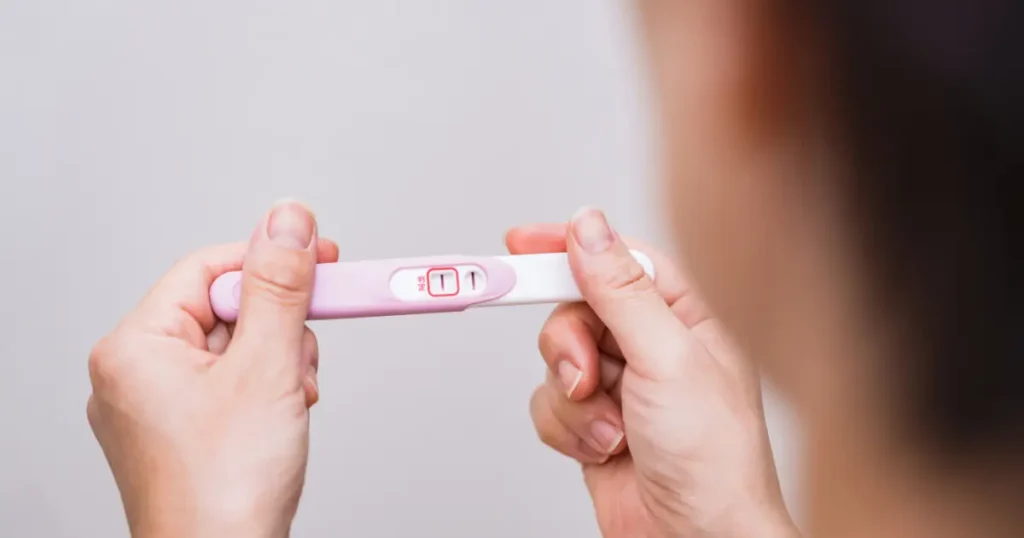

Finding clear fertility answers should not feel like solving a complex puzzle every morning. When I first started testing while living in Seattle, I quickly learned that buying the best ovulation kit for irregular cycles comes down to choosing products that handle shifting fertile windows without breaking your budget. For irregular cycles, prioritize an ovulation kit that detects urinary LH and provides clear instructions. A kit that also tracks E3G may offer additional information, depending on the product. Irregular cycles make calendar predictions harder because your body does not follow a strict timetable. An irregular cycle simply means your cycle length changes from month to month or skips entirely.
An ovulation predictor kit (OPK) detects a luteinizing hormone (LH) surge, rather than directly confirming ovulation. Key comparison points include LH sensitivity, test format, digital vs strip, E3G detection, testing frequency, cost, and ease of interpretation. The American Society for Reproductive Medicine (ASRM) states that OPK accuracy and reliability vary between products.
Why Irregular Cycles Make Ovulation Harder to Predict
Irregular cycles can move the target. A calendar might predict one day, while your body chooses another—biology is annoyingly bad at checking our spreadsheets first.
What Counts as an Irregular Cycle?
- Cycle lengths that vary significantly
- Unpredictable period timing
- Long cycles
- Short cycles
- Skipped periods
- Oligomenorrhea
- Amenorrhea
Why Calendar-Based Ovulation Calculators Can Struggle
- They rely on previous cycle patterns.
- They estimate rather than measure hormones.
- Averages can hide large cycle changes.
- The current cycle may not follow the previous one.
Why LH Testing Can Be More Useful
- Measures urinary LH.
- Provides current-cycle information.
- Can detect the LH surge.
- Helps identify when ovulation may be approaching.
The Food and Drug Administration (FDA) explains that home ovulation tests detect urinary LH and that the LH surge generally occurs about 1–1½ days before ovulation.
Irregular Does Not Always Mean Anovulatory
- Irregular bleeding and ovulation are related but not identical.
- Some irregular cycles still include ovulation.
- Persistent irregularity may warrant medical evaluation.
The ASRM notes that oligomenorrhea or amenorrhea can indicate ovulatory dysfunction and should prompt evaluation of possible underlying causes.
What Is an Ovulation Kit and How Does It Work?
Before choosing a kit, readers need to know exactly what they are buying. Most home OPKs are urine tests designed to detect a rise in LH.
How an OPK Detects
- Luteinizing hormone
- Urinary LH
- LH surge
- Hormonal changes around ovulation
What Happens During an LH Surge?
- LH is normally present at lower levels.
- LH rises before ovulation.
- The surge can signal that ovulation may be approaching.
- Timing differs between individuals.
What an Ovulation Kit Does Not Confirm
- It does not prove an egg was released.
- It does not diagnose infertility.
- It does not measure egg quality.
- It does not confirm pregnancy.
The ASRM describes urinary LH detection as indirect evidence of ovulation, rather than direct confirmation.
LH-Only vs Multi-Hormone Tests
LH-only:
- Detects LH surge.
LH + E3G:
- Detects LH.
- May also detect estrone-3-glucuronide.
- Can provide information about earlier fertile days.
The FDA confirms that some home tests measure E3G in addition to LH.
What Makes the Best Ovulation Kit for Irregular Cycles?
For irregular cycles, flexibility matters more than a fancy box. The best ovulation kit for irregular cycles should fit a testing routine that may last longer or start less predictably.
Reliable LH Detection
Look for:
- Clearly stated detection method
- Transparent sensitivity information where available
- Consistent instructions
- Clear positive-result criteria
Flexible Testing
Useful features include:
- Multiple test sticks
- Larger test packs
- Easy daily testing
- Clear start-testing guidance
- Affordable repeat testing
Easy Result Interpretation
Consider:
- Line-based strips
- Digital reader
- App-assisted interpretation
- Clear positive/negative results
Additional Hormone Detection
Consider whether the tool offers:
- E3G
- LH
- High fertility indication
- Peak fertility indication
Clear Warnings and Instructions
The kit should explain:
- When to begin
- How to collect urine
- How long to test
- When to read the result
- What counts as positive
- How to handle invalid tests
Best Ovulation Kits for Irregular Cycles Compared
Comparing formats helps you select the right best ovulation kit for irregular cycles for your daily routine. Based on my hands-on evaluation of tracking tools, choosing the right combination of testing volume and readability prevents unnecessary daily stress.
| Kit Type | Main Detection | Main Benefit | Main Limitation |
| LH strip | Urinary LH | Low cost, many tests | Line interpretation |
| Digital LH | Urinary LH | Easier reading | Higher cost |
| LH + E3G digital | LH + E3G | More hormone information | More expensive |
| Basic OPK pack | Usually LH | Simple repeated testing | Fewer advanced features |
| Fertility monitor | Multiple signals/hormones | Broader tracking | Higher cost and complexity |
Best for Frequent Testing
- Large strip packs
- Lower cost per test
- Simple storage
- Easy result logging
What Best for Easy Interpretation
- Digital display
- Reduced line comparison
- Clear symbols or messages
Best for More Hormone Information
- LH + E3G
- Wider fertile-window information
- More detailed fertility tracking
LH Sensitivity and Detection Threshold Explained
“Sensitivity” sounds impressive on a product page, but it needs context. A lower detection threshold is not automatically the magic answer for every person.
What Does LH Sensitivity Mean?
- The hormone concentration a test can detect.
- Often expressed in mIU/mL.
- Different tests can use different thresholds.
Why Sensitivity Matters With Irregular Cycles
- The LH surge may occur at an unexpected time.
- More testing opportunities can help.
- A test still needs to match the user’s hormone pattern.
Why Higher Sensitivity Is Not Automatically Better
- Baseline LH differs between people.
- Some conditions can affect LH.
- Very frequent positive-looking results may be confusing.
Product Performance Can Vary
The ASRM notes that accuracy, ease of use, and reliability vary among OPK products and that both false-positive and false-negative results can occur.
Digital vs Strip Ovulation Kits for Irregular Cycles
This is a high-value comparison because people with irregular cycles may test over many more days.
LH Strip Tests
Advantages:
- Usually lower cost
- Good for repeated testing
- Easy to buy in larger quantities
- Simple technology
Limitations:
- Requires visual interpretation
- Faint lines can be confusing
- Different brands can use different thresholds
Digital Ovulation Tests
Advantages:
- Easier result display
- Less line comparison
- Some offer advanced hormone detection
Limitations:
- Higher cost
- Replacement sticks can add up
- Features vary by product
Which Is Better for Irregular Cycles?
- Frequent tester: strips may be more practical.
- Interpretation concerns: digital may be easier.
- Desire for additional hormone information: consider a multi-hormone system.
No format is automatically more accurate just because it is digital.
LH-Only vs LH and E3G Ovulation Kits
Some advanced tests look beyond LH. This can be especially relevant when the goal is to identify more of the fertile window.
What Is E3G?
- Estrone-3-glucuronide
- A urinary metabolite of estrogen
- Can rise before the LH surge
How LH Tells You
- Helps identify the LH surge.
- Suggests ovulation may be approaching.
What E3G Can Add
- Earlier fertility information
- Potentially broader fertile-window tracking
- Additional hormone signal
The FDA confirms that some home ovulation tests detect both LH and E3G.
Is More Hormone Data Always Better?
- More information can mean more complexity.
- Product algorithms differ.
- Evidence should be checked for the specific device.
- Readers should understand what “high” and “peak” fertility actually mean.
How to Choose the Best Ovulation Kit for Irregular Cycles
Follow this practical guide to select the right kit for your needs.
Step 1 — Look at Your Cycle Pattern
Ask:
- How much does your cycle length vary?
- Do you sometimes skip periods?
- Are cycles often long?
- Are you tracking several cycles?
Step 2 — Decide How Often You May Need to Test
Irregular cycles may require:
- More test days
- More strips
- A flexible testing plan
Step 3 — Choose Your Result Format
Strip:
- Lower cost
- Manual interpretation
Digital:
- Easier display
- Higher recurring cost
Step 4 — Check Hormone Coverage
- LH only
- LH + E3G
- Other fertility signals
Step 5 — Check the Instructions
Look for:
- Recommended testing time
- Urine requirements
- Testing schedule
- Positive-result definition
- Storage information
Step 6 — Compare Cost Per Test
Use this simple math to find true value:
$\text{Cost per test} = \frac{\text{Total kit price}}{\text{Number of tests}}$
For irregular cycles, this number matters. A 10-test box can disappear quickly if your cycle decides to take the scenic route.
Best Ovulation Kit Features for Different Irregular Cycles
Not all irregular cycles are irregular in the same way. Match the kit to the problem.
Long Cycles
Look for:
- Larger test packs
- Affordable strips
- Flexible start dates
- Easy result logging
Unpredictable Cycles
Prioritize:
- Flexible testing
- Multiple-cycle tracking
- Clear instructions
- Possibly multi-hormone tracking
Cycles With Possible PCOS
Consider:
- LH test limitations
- Baseline LH issues
- Clear interpretation
- Professional guidance when results stay confusing
Occasional Irregular Cycles
- Basic LH strips may be sufficient.
- Keep testing simple.
- Record cycle dates.
Ovulation Kits and PCOS: What to Know
This section is essential for search intent because PCOS is a common reason readers search for ovulation kits for irregular cycles.
Why PCOS Can Affect LH Tests
- Baseline LH can be elevated.
- An LH test may produce confusing results.
- A positive LH result does not always mean ovulation will follow.
The ASRM specifically notes that patients with PCOS may have tonic elevation of basal LH, which can lead to false-positive urinary LH results.
Why Multiple Positive Results Can Happen
- Hormonal patterns can vary.
- LH may remain elevated.
- Several apparent surges may be difficult to interpret.
What an OPK Cannot Diagnose
- PCOS
- Anovulation
- Infertility
- Egg quality
When Professional Evaluation Makes Sense
- Repeatedly irregular periods
- Long gaps between periods
- Repeated confusing OPK results
- Difficulty identifying ovulation
The ASRM recommends evaluating the underlying cause when oligomenorrhea or amenorrhea is present rather than relying only on home ovulation testing.
How to Use an Ovulation Kit With Irregular Cycles
A good kit is only half the equation. Testing at the wrong time can make even a good test look useless.
Start With Cycle History
- Review previous cycles.
- Identify the shortest and longest patterns.
- Avoid assuming one fixed ovulation day.
Follow the Product’s Testing Instructions
- Sample type
- Testing time
- Testing frequency
- Reading window
- Storage
The FDA stresses that testing at the proper time in the cycle and following the kit’s instructions are important for reliable results.
Test Consistently
- Follow the kit’s recommended schedule.
- Keep the routine manageable.
- Record results immediately.
Track Results Across the Cycle
Record:
- Date
- Cycle day
- Time
- Result
- Optional symptoms
- Other fertility signs
Don’t Stop at the First Negative Test
- Irregular cycles may shift the LH surge.
- Continue according to the product’s instructions.
- Avoid guessing from calendar predictions alone.
How to Read an Ovulation Test With Irregular Cycles
The line can be tiny. Your anxiety does not need to be.
Negative Result
- Control line appears.
- Test line does not meet the kit’s positive threshold.
Positive Result
- Test reaches the manufacturer’s stated positive threshold.
- For many line tests, test line equals or exceeds control-line darkness.
Faint Line
- LH may be present at baseline levels.
- Faint does not automatically mean positive.
Multiple Positive Results
- Can happen with certain hormone patterns.
- Particularly relevant to PCOS.
- Do not diagnose the cause from strip appearance alone.
No Positive Result
Possible reasons:
- Testing window missed
- Cycle changed
- LH surge was short
- Anovulatory cycle
- Testing error
- Hormonal variation
Ovulation Kit vs Ovulation Calculator for Irregular Cycles
These tools are often confused, but they provide different types of information.
Ovulation Calculator
Uses:
- Period dates
- Cycle length
- Historical patterns
Main limitation: It cannot directly detect your current LH surge.
Ovulation Kit
Uses:
- Urinary LH
- Sometimes E3G
Main benefit: Provides current-cycle hormone information.
Can You Use Both?
Yes, as complementary tracking tools.
- Calculator: helps estimate when to start testing.
- OPK: looks for an LH surge.
- Fertility signs: add more current-cycle information.
The ASRM cautions that calendar apps can have substantial limitations in predicting an individual’s fertile window, while urinary LH tests provide a different form of ovulation detection.
Best Ovulation Kit Comparison Table
Use this table as your main decision tool. Matching your specific tracking priority with the correct kit style prevents wasted spending during unpredictable cycles.
| Priority | Recommended Kit Type | Why |
| Lowest cost | LH strips | Good for frequent testing |
| Easy reading | Digital LH kit | Less line comparison |
| More fertile-window information | LH + E3G | Tracks two hormone signals |
| Long cycles | Large strip pack | More tests available |
| Unpredictable cycles | Flexible OPK system | Easier extended testing |
| PCOS concerns | Use cautiously + professional advice | LH may be harder to interpret |
| Simple first-time testing | Basic LH kit | Less complexity |
What to Prioritize First
- Appropriate test design
- Clear instructions
- Reliable LH detection
- Testing flexibility
- Cost per test
- Extra features
Accuracy and Reliability of Ovulation Kits
This section gives your tracking strategy an evidence-based foundation.
What Research Says About OPKs
- Urinary LH correlates with the midcycle LH surge.
- OPKs can help identify the fertile period.
- Accuracy varies between products.
- False-positive and false-negative results can occur.
The ASRM states that urinary LH tests generally correlate well with serum LH, particularly when tested with midday or evening urine, but product reliability varies.
OPK Accuracy Is Not the Same as Ovulation Confirmation
- LH detection identifies the hormone signal.
- Expected ovulation follows the signal.
- Actual follicle rupture releases the egg.
- Ovulation confirmation requires secondary evidence like progesterone or ultrasound.
What a Good Product Claim Should Show
Look for:
- Study population
- Comparator
- Sample size
- Sensitivity
- Specificity
- Positive predictive value
- Negative predictive value
Don’t Trust “100% Accurate” Marketing
- Home tests have limitations.
- Individual hormone patterns vary.
- Product claims should be checked against independent evidence.
USA Expert Advice on Choosing an Ovulation Kit
Relying on established U.S. medical authorities helps clarify how home urine tests function.
ASRM Advice on Irregular Cycles
The American Society for Reproductive Medicine serves as a primary expert source:
- Irregular cycles can indicate ovulatory dysfunction.
- OPKs detect the LH surge.
- OPKs provide indirect evidence of ovulation.
- PCOS can cause false-positive urinary LH results.
- Product accuracy and reliability vary.
FDA Guidance
- Urinary LH testing tracks hormone changes.
- E3G in some products provides extra fertile-day data.
- Qualitative results show simple positive/negative thresholds.
- Correct testing procedure is critical for accuracy.
- These tests are designed to help identify the fertile period.
The FDA explicitly warns that home ovulation tests should not be used to prevent pregnancy because they are not reliable for that purpose.
Named Expert Reference
In an ASRM Fertility and Sterility On Air discussion, fertility specialists explain that OPKs can help target the fertile window while acknowledging the limits of relying on them alone. Clinical guidance emphasizes that urine tests provide valuable timing assistance, but persistent cycle variations require broader medical evaluation.
Real-Life Example: Using an Ovulation Kit With Irregular Cycles
Seeing how testing fits into a normal daily routine helps simplify the process.
A Monday Morning in Chicago
Consider a user in Chicago with period history ranging from short 24-day cycles to long 40-day cycles. A calendar app gives only a broad, unreliable estimate. Following kit instructions, testing begins early in the cycle. Initial test lines remain faint negatives. Testing continues daily through week two. On Day 21, the test line turns as dark as the control line, reaching the kit’s positive threshold and signaling an impending LH surge.
What the User Should Record
- Cycle day
- Date
- Time
- OPK result
- Any relevant fertility observations
What This Example Shows
- Why a fixed “Day 14” assumption can fail.
- Why multiple test sticks can be useful.
- Why result tracking matters.
- Why an OPK still does not directly confirm ovulation.
Common Mistakes With Ovulation Kits for Irregular Cycles
Mistake 1 — Starting on One Fixed Cycle Day
Irregular cycles do not always follow the same schedule. Testing too late can miss an early surge completely.
Mistake 2 — Testing Only Once
A short LH surge can be missed. Follow the kit’s recommended daily testing schedule.
Mistake 3 — Assuming a Positive Test Guarantees Ovulation
It indicates an LH surge. It does not directly confirm physical egg release.
Mistake 4 — Ignoring PCOS or Other Hormonal Factors
Elevated baseline LH can complicate results. Repeated unusual results deserve professional discussion.
Mistake 5 — Choosing Only by “Sensitivity”
A lower threshold does not automatically mean better. Look at the entire test design.
Mistake 6 — Buying Based Only on Box Price
Compare cost per test. Irregular cycles may require more strips across extended testing periods.
When to Talk With a Healthcare Professional
Home testing is useful, but professional advice remains essential for persistent irregularities.
Persistent Irregular Periods
- Repeated long cycles
- Very short cycles
- Skipped periods
- Major changes from usual pattern
Repeatedly Confusing OPK Results
- Multiple apparent surges
- Never seeing a positive
- Persistent positive results
Possible Ovulatory Dysfunction
- Oligomenorrhea
- Amenorrhea
- Other concerning symptoms
Fertility Evaluation
The ASRM recommends earlier evaluation when irregular cycles or another known fertility risk factor is present, rather than always waiting the standard timeframe used for people without risk factors.
Best Ovulation Kit for Irregular Cycles: Quick Decision Guide
Use this summary guide to match your cycle pattern with the right kit choice.
| Your Situation | Best Starting Point | Main Reason |
| Long cycles | Multi-test LH strips | More testing opportunities |
| Very unpredictable cycles | Flexible OPK system | Less reliance on one date |
| Want easy results | Digital LH kit | Simple display |
| Want more hormone data | LH + E3G | Broader hormonal information |
| PCOS concerns | Discuss confusing results with clinician | Baseline LH may affect interpretation |
| Tight budget | Basic LH strips | Lower cost per test |
| First-time user | Simple OPK | Less learning required |
Quick Selection Rules
- Choose strips when cost and frequent testing matter most.
- Choose digital when result interpretation is the main concern.
- Consider LH + E3G when broader fertile-window information is useful.
- Seek professional guidance when irregular cycles or repeated confusing results persist.
FAQs About the Best Ovulation Kit for Irregular Cycles
What is the best ovulation kit for irregular cycles?
An LH-based kit with clear instructions and enough tests for extended tracking is usually more practical than a calendar-only tool.
Are ovulation tests accurate with irregular periods?
They can detect an LH surge, but irregular cycles make it harder to know when to test, and hormonal conditions can affect interpretation.
Is digital better than strip ovulation tests for irregular cycles?
Digital tests are easier to read, while strips are often cheaper for repeated testing. Neither is automatically more accurate.
What is the best ovulation test for PCOS?
No single product works perfectly for everyone. PCOS can cause elevated baseline LH and false-positive results, so persistent confusion may need professional evaluation.
How often should I test with irregular cycles?
Follow the specific product’s instructions. Avoid assuming one universal schedule, as individual cycle patterns and test brands differ.
Can an ovulation kit confirm ovulation?
No. It detects an LH surge, which provides indirect evidence that ovulation may be approaching.
Why do I keep getting positive ovulation tests?
Possible explanations include elevated baseline LH levels, PCOS, test interpretation errors, or other hormonal factors. Repeated unexpected positives should be evaluated by a doctor.
Why am I not getting a positive ovulation test?
Possible reasons include missed testing timing, a changing cycle, a very short LH surge, testing errors, or an anovulatory cycle.
Is an ovulation calculator or OPK better for irregular cycles?
An OPK provides current-cycle LH information, while a calculator mainly estimates from previous cycle data. They serve different tracking purposes.
Can I use an ovulation kit to avoid pregnancy?
No. The FDA explicitly states that home ovulation tests are not reliable for preventing pregnancy.
Final Recommendation
From my years of evaluating health products and personal tracking experience, finding the best ovulation kit for irregular cycles comes down to balancing test volume with clear readability. I always advise starting with a large pack of standard LH dip strips if your cycles take longer or shift unpredictably. This keeps your cost per test low while allowing you to test daily without stress. If reading faint lines creates anxiety, pairing bulk strips with a digital reader offers the best of both worlds. Remember that an LH surge is a signal, not a guarantee of egg release. Stay consistent, log your readings daily, and consult a physician if your results remain confusing cycle after cycle.