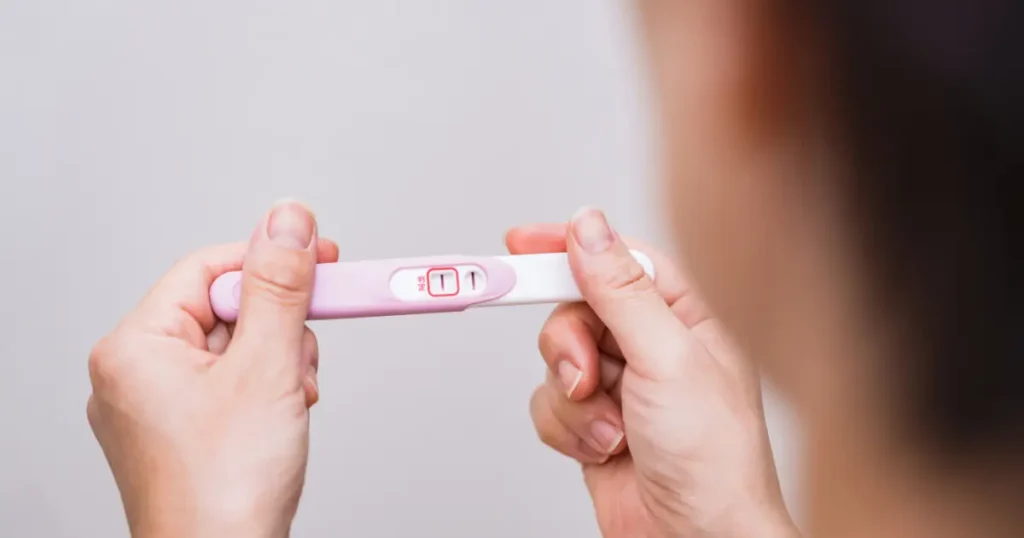
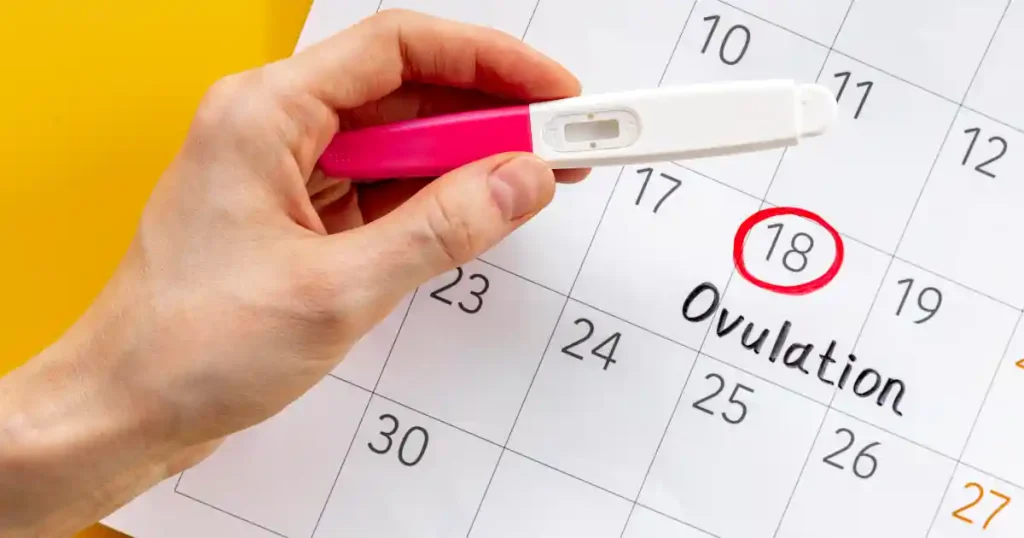
Your calculator says Tuesday. Your body seems to have other plans. Living in Minneapolis, I remember sitting at my kitchen table, staring at my cycle app while my ovulation strip showed a completely different signal. A calendar tool is great for estimating fertile days using basic cycle dates. However, timing can shift even if your period feels regular. When should you upgrade from an ovulation calculator to a tool that measures direct body signs? This guide shows you how to move from simple calendar math to urine test strips, cervical mucus tracking, body temperature shifts, or medical tests.
What Does an Ovulation Calculator Actually Do?
An ovulation calculator is a fine place to start. It relies on standard calendar patterns rather than measuring your actual hormones. Understanding this helps you see when you need a better approach.
How an ovulation calculator estimates ovulation
A calendar app relies on three primary inputs:
- The first day of your last period.
- Your average total cycle length.
- Past cycle dates you entered.
Most calculators assume you always ovulate 14 days before your period starts. This simple math creates a general calendar estimate. It does not prove what your ovaries are doing today.
What an ovulation calculator can help with
Calendar tools offer several practical perks for beginners:
- They show when to start testing with urine strips.
- They give a broad estimate for your fertile window.
- They help you learn your basic monthly cycle patterns.
- They offer a fast, free starting point for tracking.
What an ovulation calculator cannot measure
A calendar tool operates on dates alone. It cannot see or measure:
- Your surge in luteinizing hormone (LH).
- The rise in your estrogen levels.
- Changes in your cervical mucus.
- Shifts in your basal body temperature.
- The physical release of an egg.
Why the predicted day can move
Your cycle is not a rigid clock. Your predicted date can easily shift due to:
- Daily stress or emotional shifts.
- Brief viral illnesses or infections.
- Travel across different time zones.
- Poor sleep or changing work shifts.
- Normal variation in your monthly cycle.
When Should You Upgrade From an Ovulation Calculator?
Knowing when to upgrade from an ovulation calculator saves you time and reduces confusion. Here are the clear signs that your calendar tool is no longer enough.
Your cycles vary more than expected
Your period may arrive early one month and late the next. A calendar math formula struggles when cycle lengths vary. If your shortest and longest cycles differ by several days, an app alone will miss your true fertile window.
Your calculator keeps missing your fertile window
You might notice that your app predicts ovulation for Wednesday, but your body shows clear fertile signs on Sunday. When your app dates clash with physical signals or urine test lines, your app is falling behind.
You want more than a calendar estimate
Upgrading gives you direct, real-time feedback. Real body data helps you time intercourse accurately, pinpoint your surge, and understand your health without relying on broad population averages.
You have been trying to conceive and want better timing
Timing is critical when you want to get pregnant. The American Society for Reproductive Medicine (ASRM) states that fertility awareness methods help identify the fertile window to time intercourse correctly. Switching to real-time tools improves your daily accuracy.
Your cycle is irregular
Calendar predictions break down when periods are unpredictable. An irregular cycle requires a wider testing window. Instead of buying a pricier app, you should add tools that read actual body signals.
You are repeatedly getting confusing results
Using a calendar tool becomes frustrating when:
- Your app predicts fertile days, but your body shows no signs.
- Three different apps give you three different fertile windows.
- Urine test strips show peak results days after your app said you ovulated.
- Your period starts at unexpected times every month.
Signs Your Ovulation Calculator Is No Longer Enough
Small clues often show that your app has reached its limit. Pay attention to these clear warning signs.
Your predicted ovulation date keeps changing
Compare your app predictions over three or four cycles. If the app keeps moving your fertile window around after the fact, it is guessing rather than tracking your actual body signals.
Your fertile window seems too narrow
Most apps highlight a tight three-day window. Human biology is more flexible. A rigid calendar window can make you miss fertile days that happen earlier or later than the standard algorithm expects.
Your period tracking is accurate but your ovulation prediction isn’t
An app can predict your period start date accurately while still missing your ovulation day. The time before ovulation varies much more than the time after ovulation.
You want to know what your hormones are doing
If you want to track real hormone changes, you need urine test strips. Urinary LH tests detect the rapid LH surge that typically occurs 1 to 2 days before you release an egg.
Ovulation Calculator vs OPK: When Should You Switch?
An ovulation predictor kit (OPK) is the most popular first upgrade. It switches your tracking from calendar guessing to hormone detection.
The comparison table below details how these two options perform side by side.
| Feature | Ovulation Calculator | OPK |
| Main input | Cycle dates | Urine sample |
| Measures hormones | No | Luteinizing Hormone (LH) |
| Predicts fertile period | Yes (calendar estimate) | Yes (detects LH surge) |
| Daily testing needed | No | Yes (during fertile window) |
| Cost | Free to low cost | Ongoing stick cost |
| Best for | Initial cycle estimates | Refining precise timing |
| Main limitation | Uses average math | Indirect proof of egg release |
Why OPKs are a logical next step
Urinary test strips read real biological signals. They detect the LH surge that triggers egg release. You can use cheap test strips alongside your app without dropping your cycle history.
What FDA says about home OPKs
The U.S. Food and Drug Administration (FDA) notes that most home ovulation tests detect LH in urine, while some also check estrogen. The FDA emphasizes that these kits identify your fertile window but cannot guarantee pregnancy.
What OPKs still cannot tell you
An OPK detects the hormone signal that prompts ovulation. However, a positive test line is indirect proof. It shows your body is trying to ovulate, but it cannot physically confirm that an egg was released.
Should You Upgrade to an OPK or Add One to Your Calculator?
You do not have to throw away your favorite app. Combining your calendar app with urine test strips gives you the best of both worlds.
Use the calculator to decide when to start
Use your app to view your average cycle length. The app tells you which cycle day to open your box of test strips so you do not waste strips testing too early.
Use the OPK to refine the timing
Dip your urine strips daily as your predicted window approaches. Look for the test line to turn as dark as the control line. Log that positive LH result directly into your app.
Keep the calculator for long-term trends
Your app remains useful for storing cycle history. Over time, comparing your predicted dates against real LH surge dates shows you how your personal cycle behaves.
Why this combination makes sense
ASRM notes that calendar methods and ovulation detection kits are distinct fertility awareness tools. Combining them pairs broad pattern tracking with real-time hormone data.
When to Upgrade From an Ovulation Calculator to BBT
Basal body temperature (BBT) tracking is a low-cost upgrade. It works differently by confirming that ovulation has already taken place.
How BBT works
You take your temperature with a special digital thermometer immediately upon waking every morning. Progesterone released after ovulation causes a slight, sustained rise in your resting body temperature.
When BBT is worth adding
BBT is a great choice if you:
- Enjoy collecting daily health metrics.
- Wake up at the exact same time every morning.
- Want to verify that your body actually ovulated.
- Want a low-cost tool to pair with your urine strips.
BBT’s biggest limitation
Your temperature rises only after you ovulate. This means BBT confirms ovulation after the fact. Cleveland Clinic notes that BBT identifies patterns around ovulation, but the temperature rise happens after the egg is released.
When to Upgrade to Cervical Mucus Tracking
You do not always need to buy electronic devices. Learning to read your cervical mucus is a free way to upgrade your fertility awareness.
What cervical mucus can tell you
Your body produces different types of fluid as estrogen rises:
- Post-period: Dry or low volume.
- Early fertility: Sticky, cloudy, or creamy.
- Peak fertility: Clear, slippery, and stretchy, like raw egg whites.
Why it can be useful
Tracking mucus requires no batteries or test strips. It gives you immediate feedback about rising estrogen levels. Observing clear, slippery fluid tells you your fertile window is open right now.
How it compares with a calculator
A calculator guesses your fertile window using past calendar dates. Cervical mucus tracking lets you observe live biological changes happening in your body today. ASRM notes that cervical mucus changes reliably mark the fertile window and often predict peak fertility better than calendar math.
When to Upgrade to a Multi-Hormone Fertility Tracker
Multi-hormone digital trackers offer the ultimate data setup for home use. They move you far beyond basic calendar estimates.
What multi-hormone systems may measure
Advanced monitors test urine for two key hormones:
- Luteinizing Hormone (LH): Pinpoints the 24 to 36 hours before ovulation.
- Estrone-3-glucuronide (E3G): Tracks estrogen to flag the start of your fertile window early.
Why someone might choose one
These systems are ideal if you want a wider fertile window readout, prefer clear digital screens over reading lines, and want automated data syncing with your phone.
Why more data isn’t always better
Pricier trackers come with higher ongoing costs for test sticks. Extra data can also create unnecessary stress. Having more metrics does not guarantee faster conception if basic strips already catch your surge.
Who probably doesn’t need one yet
You can skip high-cost monitors if you have predictable cycles, feel comfortable reading standard paper strips, or simply want to check your monthly LH surge.
When an Ovulation Calculator Should Be Replaced by Medical Testing
Upgrading does not always mean downloading a new app or buying test sticks. Sometimes you need direct clinical evaluation from a doctor.
You need confirmation that ovulation actually occurred
Home tools provide varying levels of information:
- Calculator: Broad mathematical estimate.
- OPK: Detection of the LH surge.
- BBT: Pattern showing a temperature rise.
- Serum Progesterone: Direct blood test confirming recent ovulation.
ASRM states that an appropriately timed serum progesterone blood test offers objective medical proof of recent ovulation.
Your periods are clearly irregular
If your cycles are wildly unpredictable or vanish for months, changing apps will not solve the underlying issue. A doctor can check for conditions like PCOS or thyroid imbalances.
You repeatedly cannot identify an LH surge
If you test twice daily with OPKs and never see a positive result, schedule a medical review. A doctor can check your hormone levels and verify if egg maturation is occurring.
You have fertility concerns
Seek a medical evaluation based on standard U.S. clinical guidelines:
- Under age 35: Seek evaluation after 12 months of trying.
- Age 35 or older: Seek evaluation after 6 months of trying.
- Known risk factors: Seek help immediately if you have irregular cycles or known pelvic conditions.
ASRM guidelines support these timeframes to ensure you receive timely care.
Which Fertility Tool Should You Upgrade To?
Use the table below to choose the right upgrade path for your specific goals.
| Your Situation | First Upgrade | Why |
| Regular cycles | OPK | Adds direct LH surge detection |
| Irregular cycles | OPK + Mucus Tracking | Gives a wider view of fluid and hormone shifts |
| Wants post-ovulation proof | BBT | Verifies the temperature shift after ovulation |
| Notices fertile fluid | Cervical Mucus | Provides a free, live biological sign |
| Wants full hormone data | Multi-Hormone Tracker | Measures both estrogen and LH levels |
| Needs medical proof | Clinical Testing | Confirms ovulation via blood tests or scans |
Choose an OPK if…
You have regular cycles and want a simple urine test to confirm your LH surge. It is the easiest way to improve your intercourse timing.
Add BBT if…
You want to confirm that ovulation occurred. It requires taking your temperature every morning before getting out of bed.
Add cervical mucus tracking if…
You want a free, natural method. Observing egg-white fluid alerts you that your fertile window is opening.
Talk to a clinician if…
Your cycles are irregular, home tests give confusing results, or you have been trying to conceive without success.
Ovulation Calculator Upgrade Decision Tree
Follow this simple decision path to find your next step.
                  [Are your cycles predictable?]
                           /         \
                         YES          NO
                         /             \
            [Use Calculator + OPK]     [Add OPKs + Track Cervical Mucus]
                      |                               |
          [Need post-ovulation proof?]      [Cycles very irregular?]
                  /        \                        /         \
                YES         NO                    YES          NO
                /            \                    /             \
            [Add BBT]    [Keep OPK]    [See a Doctor]   [Use Bulk OPKs]
Start with one question: Are your cycles predictable?
If your periods arrive like clockwork, keep using your app for logging and add paper OPKs for precise timing. If your periods vary, rely on daily OPKs and cervical mucus checks instead of calendar math.
Do you need to know if an LH surge happened?
Use paper or digital LH test strips. They show when your body prepares to release an egg.
Do you want to know whether ovulation likely already happened?
Start tracking your basal body temperature every morning or talk to your doctor about a serum progesterone blood test.
Do you want more hormone data?
Consider a multi-hormone monitor that tracks both estrogen and LH.
Are you worried something isn’t working normally?
Do not waste money on another paid app. Schedule a visit with your healthcare provider for real answers.
Signs You Don’t Need to Upgrade Yet
You do not always need to spend money on new tools. You can stick with your basic calculator if your current setup meets your needs.
Your cycles are fairly predictable
If your cycle length varies by only a day or two each month, a basic calendar tool works well for general planning.
You only want a rough fertile-window estimate
If you are not in a rush and just want a broad idea of your fertile days, a free calendar app is completely fine.
You’re not actively trying to conceive
If you are simply tracking your period dates for personal awareness, you do not need hormone strips or temperature charts. Never use an ovulation calculator or OPK as birth control.
You already have enough useful cycle data
Collecting too much data can build unnecessary stress. ASRM notes that fertility awareness methods can sometimes increase anxiety when intercourse becomes tied to rigid tracking schedules.
Common Mistakes When Upgrading From an Ovulation Calculator
Avoid these simple mistakes when moving beyond calendar math.
Buying an expensive tracker before learning your cycle
Start with cheap LH strips. Only spend money on high-end monitors if basic strips fail to give you clear answers.
Treating an OPK as a perfect ovulation predictor
An LH surge signals that your body is trying to ovulate. It is not an absolute guarantee that an egg was successfully released.
Using too many apps at once
Different apps use different algorithms. Inputting data into three apps at once leads to conflicting fertile dates and confusion. Pick one primary app and stick with it.
Ignoring your own observations
Do not let an app algorithm override what your body shows you. If your app says you are not fertile but you see egg-white cervical mucus, trust your physical signs.
Assuming more technology means more accuracy
A complex monitor cannot override natural cycle variation. Fancy gadgets collect data, but they cannot force your body to follow a rigid schedule.
U.S. Expert Advice on Moving Beyond a Calendar
Medical experts emphasize using home tracking tools wisely.
Dr. Erica Newlin, MD — Cleveland Clinic
Dr. Erica Newlin, an Ob/Gyn at Cleveland Clinic, notes that ovulation predictor kits help pinpoint the most fertile days of your cycle. She explains that OPKs detect the LH surge that happens 24 to 48 hours before ovulation. Dr. Newlin stresses that while these tools help time intercourse, they should be used to support your journey rather than create extra stress.
ASRM guidance on calendar prediction
The American Society for Reproductive Medicine cautions that app algorithms cannot perfectly predict ovulation days for every individual. ASRM recommends combining calendar tracking with physical body signs or hormone tests for better accuracy.
Quote policy
Dr. Erica Newlin, MD, notes, “Ovulation predictor kits may be particularly helpful if you don’t have regular cycles… They can help you determine the timing of ovulation.”
How Much Should You Spend on Your First Upgrade?
Here is a quick look at standard costs for upgrading your tracking tools.
Free upgrade
Observing your cervical mucus costs nothing. You can also track your BBT using a standard digital thermometer you already own.
Low-cost upgrade
Bulk packs of paper LH test strips cost between $15 and $25 for 50 to 100 strips. This keeps your cost per test under $0.50.
Mid-range upgrade
Digital OPK starter kits cost $30 to $50. They display digital symbols like smiley faces, removing the need to read line darkness.
Higher-cost upgrade
Multi-hormone digital monitors range from $80 to $200, with monthly test stick refills costing $20 to $40.
Don’t confuse price with accuracy
Higher prices buy you convenient digital displays and phone syncing. They do not buy higher biological accuracy than cheap paper strips.
Frequently Asked Questions About Upgrading an Ovulation Calculator
When should I stop using an ovulation calculator?
You do not need to delete your app. Keep using it to record period start dates while using urine strips to pinpoint ovulation.
Is an ovulation calculator accurate enough for trying to conceive?
It offers a general starting estimate. However, adding LH test strips provides far better accuracy for timing intercourse.
Should I upgrade from an ovulation calculator to an OPK?
Yes, switching to an OPK is the most effective first step if you want clear, hormone-based fertile window data.
Is an OPK more accurate than an ovulation calculator?
Yes, an OPK measures actual LH levels in your urine today, whereas a calculator relies on averages from past dates.
Should I use an ovulation calculator and OPK together?
Yes, use the calculator to estimate when to open your test box, then use the OPK to confirm your actual LH surge.
What should I use if my periods are irregular?
Rely on bulk paper OPKs and cervical mucus tracking. If cycles remain unpredictable, consult a healthcare provider.
Is BBT better than an ovulation calculator?
BBT confirms that ovulation occurred after the fact. A calculator estimates future dates based on past cycle history.
Is cervical mucus better than an ovulation calculator?
Observing egg-white cervical mucus gives you real-time physical proof of rising estrogen, making it more reliable than calendar math.
When should I see a doctor instead of upgrading my fertility app?
See a doctor if your cycles are very irregular, you never get positive OPK lines, or you have been trying to conceive for 6 to 12 months.
Can I use an ovulation calculator to prevent pregnancy?
No, calendar tools and OPKs are not reliable contraception methods and should not be used to prevent pregnancy.
Final Guide: What Should You Upgrade To?
Here is your quick summary for moving beyond calendar math.
If your cycles are predictable
Keep your free calendar app for basic history and add basic paper OPKs to confirm your exact fertile days.
If your cycles vary
Switch to bulk paper OPKs and track your cervical mucus daily to catch shifts in your fertile window.
If you want to understand your pattern
Combine paper OPKs with morning BBT charting to track both your upcoming surge and post-ovulation temperature shift.
If you want more hormone data
Invest in a digital multi-hormone monitor that measures both estrogen and LH levels.
If you need to know whether you actually ovulated
Skip the phone apps and schedule a serum progesterone blood test with your healthcare provider.
The core message
Upgrade when you need clearer biological information, not just because an app has a prettier interface.
Final Recommendation
Having tested dozens of cycle tools and analyzed tracking methods, my experience shows that upgrading from an ovulation calculator to basic paper LH test strips is the single best move for most people. An app gives you a great broad estimate, but pairing it with low-cost urine strips gives you real-time hormone data without overspending. If your cycles are irregular or confusing, do not keep buying pricier apps; bring your cycle logs to a doctor for personalized care.