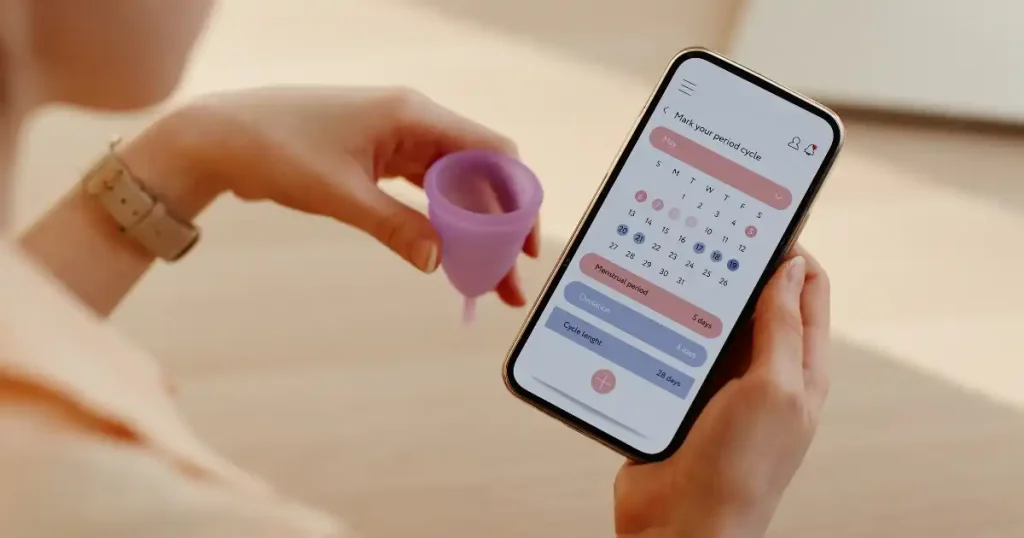
Searching the app store for an ovulation tracker in Seattle can leave you staring at dozens of pink icons. Some promise AI magic. Some predict exact dates. Others try to log everything short of your morning coffee. Learning what to look for in an ovulation tracking app helps you cut through the marketing noise. A good tool helps you understand your cycle. It should not pretend calendar math guarantees your exact fertile day. ASRM notes that calendar apps are one option for fertility awareness, but warns that calendar math alone has real limits. To pick the right tool, you should look at prediction methods, LH support, BBT graphs, cervical mucus logs, history features, privacy terms, medical reviews, ease of use, cost, and data export options.
What Should You Look for in an Ovulation Tracking App?
Finding the right digital tool means evaluating core functions rather than trusting high star ratings. The summary table below shows key criteria to weigh before installing any tool.
| Feature Category | Core Purpose | Value Level |
| Prediction Method | Explains how fertile days are calculated | Critical |
| Biomarker Support | Logs LH tests, BBT, and cervical mucus | Very High |
| Privacy Policy | Controls how personal health data is shared | Critical |
| Data Export | Allows sharing records with a clinician | High |
| User Interface | Enables quick daily logging without clutter | High |
Start with the prediction method
Look for an app that clearly explains:
- How it predicts ovulation.
- What data it uses.
- Whether it relies mainly on cycle dates.
- Whether it adapts to cycle history.
- Whether it uses biological fertility signs.
Look for more than calendar predictions
A stronger app may let you track:
- LH tests.
- Basal body temperature.
- Cervical mucus.
- Period dates.
- Cycle length.
- Fertility symptoms.
- Other relevant cycle observations.
Look for clear limitations
A trustworthy app should tell users:
- Predictions are estimates.
- Cycle timing can vary.
- A predicted ovulation date is not proof that ovulation occurred.
Don’t choose based on the prettiest interface
Nice design helps. It does not prove accuracy. A shiny graph cannot compensate for a weak prediction method.
Check How the App Predicts Ovulation
Understanding the math behind your screen helps you evaluate accuracy claims. Two tools can look identical while using totally different prediction systems.
Calendar-based prediction
Calendar methods use basic inputs:
- Period start date.
- Cycle length.
- Previous cycle patterns.
Why calendar prediction has limits
Ovulation does not always happen on the same cycle day. Cycle length does not perfectly reveal ovulation timing. A regular-looking cycle can still have variation. ASRM notes that smartphone calendar apps can be useful for fertility awareness, but their ability to precisely predict an individual’s ovulation day may be limited.
Data-driven prediction
Look for apps that use:
- Several cycles of history.
- Current-cycle information.
- Multiple fertility indicators.
Does AI-powered mean more accurate?
AI may help analyze patterns, but AI is not the same as direct biological measurement. Accuracy claims should always have published evidence behind them.
Questions to ask before trusting an AI claim
- What data does the model use?
- Has the method been independently studied?
- Is the validation published?
- Does the company explain limitations?
- Is the prediction based mainly on calendar history?
Look for LH and Ovulation Test Support
Integrating test strip logs transforms a basic calendar into an active tracking system. This feature helps spot real hormone shifts.
What LH testing tells you
Luteinizing hormone surges right before your body releases an egg. Urinary LH tests identify this midcycle surge. A positive test shows that ovulation is likely near. ASRM describes urinary LH testing as an ovulation-detection method and notes that ovulation may occur within the following couple of days; false-positive results can also occur.
App features for OPKs
Look for:
- Manual positive/negative entry.
- Strip photo logging.
- Digital test integration.
- Test-time records.
- LH trend charts.
- Notifications for testing.
Why OPK integration can matter
The calendar estimates when to expect fertility. LH testing provides another biological signal. The combination can be more informative than calendar tracking alone.
What to avoid
- Apps claiming a positive OPK guarantees ovulation.
- Apps presenting LH data as a medical diagnosis.
- 100% accurate language.
Check for Basal Body Temperature Tracking
Waking body temperature gives vital context after ovulation takes place. Logging BBT daily helps confirm pattern trends across months.
What BBT tracking does
BBT tracking records your baseline resting temperature each morning. It helps identify a temperature shift associated with ovulation. It can help review patterns after they happen.
What makes a good BBT feature?
Look for:
- Easy temperature entry.
- Decimal temperature support.
- Fahrenheit and Celsius options.
- Clear temperature graphs.
- Notes for unusual readings.
- Wearable integration if desired.
Manual vs automatic BBT entry
Manual entry requires typing your readings into text boxes every morning. Bluetooth thermometers push data directly into your log. Wearable devices capture continuous temperature metrics overnight. Automatic syncing cuts down on input errors.
Important limitation
BBT can be useful for recognizing a pattern. It is not a magic crystal ball for predicting the exact moment of ovulation.
Look for Cervical Mucus Tracking
Physical body signs provide direct signals about changing hormone levels. A solid app offers easy ways to record these changes.
What users may track
- Dry.
- Sticky.
- Creamy.
- Slippery.
- Clear/stretchy cervical mucus.
Why cervical mucus matters
ASRM notes that cervical mucus changes as estrogen rises before ovulation and can provide a low-cost fertility-awareness signal.
Good app design for mucus tracking
- Simple daily selection.
- Clear descriptions.
- No confusing medical jargon.
- Optional notes.
- Trend view across cycles.
Avoid overly rigid interpretations
Bodies vary. Not everyone sees textbook patterns. The app should explain this rather than scare users.
Check How Well the App Handles Cycle History
Storing past data allows software to adjust its guesses based on your personal trends. Long-term records help highlight normal shifts.
Essential history features
Look for:
- Period start dates.
- Cycle length.
- Cycle variation.
- Previous fertile-window estimates.
- LH results.
- BBT history.
Does the app learn from your data?
Check whether it:
- Updates predictions.
- Uses previous cycles.
- Allows corrections.
- Explains why predictions change.
Can you edit mistakes?
You should be able to correct a period date, remove a mistaken LH result, fix an incorrect temperature, and edit symptom entries without resetting your whole log.
Can you export your history?
Prefer apps that let you export data, download records, and share relevant information with a clinician.
Choose an App That Works With Irregular Cycles
Irregular cycles make standard calendar predictions far less reliable. Custom options help keep data tracking useful.
Why irregular cycles need more flexibility
Cycle length can vary widely from month to month. Ovulation timing can shift without warning. Average-cycle calculations may become less useful when your dates change often.
Features that help
Look for:
- Multiple-cycle history.
- LH testing.
- BBT tracking.
- Cervical mucus tracking.
- Custom cycle lengths.
- Flexible predictions.
Red flags
Be cautious if an app:
- Gives one exact ovulation date.
- Ignores cycle variation.
- Uses only average cycle length.
- Claims to predict irregular cycles with certainty.
When an app is not enough
If cycle irregularity is persistent or you have fertility concerns, a clinical evaluation provides answers that software algorithms cannot match.
Check the App’s Accuracy Claims
Marketing terms like hyper-accurate often mask simple calendar math. Checking independent research keeps your expectations realistic.
Look for independent evidence
Ask:
- Has the algorithm been studied?
- Who conducted the study?
- Was it independent?
- What outcome was measured?
- Was the study peer-reviewed?
Understand what accuracy means
An app might claim accuracy for period prediction, fertile-window prediction, ovulation-day prediction, or pregnancy prediction. These are not the same thing.
Calendar prediction is not ovulation confirmation
Research involving 949 volunteers found that cycle-app predictions were no better than 21% accurate for predicting the actual ovulation day in that study. The authors concluded that cycle-length information alone cannot accurately predict ovulation day.
Don’t trust a percentage without context
Ask:
- Accurate compared with what?
- How many users?
- What population?
- What definition of accuracy?
- Was the study independent?
Look for Medical and Evidence-Based Content
Health apps should provide verified medical facts rather than sensational tips. Reliable tools back up claims with solid science.
Look for medical references
Prefer apps that provide:
- Sources.
- Clinical references.
- Medical reviewers.
- Author credentials.
- Clear health information.
Look for balanced explanations
Good educational content should explain:
- Fertile window.
- Ovulation.
- LH surge.
- Cervical mucus.
- BBT.
- Cycle variation.
- When to seek medical advice.
Be cautious with unsupported fertility claims
Red flags include guaranteed conception, perfect ovulation prediction, works for everyone, or clinically proven claims with no details. A review of fertility apps found wide variation in the quality and depth of fertility information, with some apps offering limited evidence or overly restrictive assumptions about cycles.
Pay Close Attention to Privacy
Fertility data contains intimate personal details. Reviewing privacy rules protects your sensitive health history from unauthorized sharing.
What data might the app collect?
Potentially:
- Period dates.
- Pregnancy information.
- Sexual activity.
- Fertility test results.
- Symptoms.
- Health information.
- Device information.
- Location or identifiers.
Read the privacy policy before signing up
Check:
- What data is collected?
- Why is it collected?
- Who receives it?
- Is it used for advertising?
- Can you delete it?
- Can you export it?
Does the app share health data?
The FTC specifically warns that health apps may collect and share sensitive health information and that they may not necessarily be covered by HIPAA in the same way a healthcare provider is.
Real-world privacy lesson
The FTC has taken enforcement action involving fertility apps, including Flo and Premom, over alleged or established data-sharing practices. This makes privacy more than a theoretical checkbox.
Privacy checklist
- Clear privacy policy.
- Minimal data collection.
- Clear sharing rules.
- Data deletion option.
- Export option.
- Strong account security.
- Transparent advertising practices.
Check Whether You Control Your Own Data
Data ownership allows you to move your historical logs wherever you want. You should always hold full control over your personal records.
Can you export your data?
Look for:
- CSV export.
- PDF reports.
- Health-platform integration.
- Downloadable history.
Can you delete your account?
Check whether deletion removes the account only, removes stored health data completely, requires contacting support, or has an unnecessary waiting period.
Can you use the app without an account?
Using an app locally without creating a cloud profile can be a great way to protect your personal information.
Can you turn off data sharing?
Check the settings menu right after installation rather than assuming the default profile options keep your data private.
Compare Ease of Use and Daily Tracking
Quick data entry ensures you stick with your logging routine over time. Frustrating layouts often lead to abandoned apps.
Look for quick daily logging
Ideally, logging your daily symptoms should take just a few taps with clear buttons, easy editing, and zero endless forms.
Avoid information overload
You probably do not need to log twenty different symptoms every single morning just to calculate your fertile window.
Check notifications
Useful reminders can include:
- Period tracking.
- LH testing.
- BBT entry.
- Fertile-window reminders.
Control notification settings
Look for custom schedules, quiet hours, and individual notification controls so alerts do not disturb your daily routine.
Test the app before paying
Use the free version if available. Ask if the interface feels easy, if the graphs look clear, or if critical tools are locked behind a paywall.
Compare Free vs Paid Ovulation Tracking Apps
Price tags do not guarantee better predictions. Weighing free tools against paid upgrades keeps your budget intact.
What a free app may offer
- Period tracking.
- Basic fertile-window estimates.
- Basic cycle history.
- Some reminders.
What premium plans may add
- Advanced charts.
- More fertility signs.
- Wearable integration.
- Advanced analysis.
- Educational content.
- Export features.
Don’t pay for decorative features
A premium subscription is not automatically worth your money just because the app displays colorful background themes.
What is worth paying for?
Prioritize useful fertility tracking, strict data control, evidence-based education, reliable hardware integrations, and smooth daily usability.
Look for OPK, Wearable, and Health Platform Integration
Connecting smart hardware streamlines your daily data collection. Syncing sensors cuts down on manual typos.
OPK integration
- Manual test entry.
- Strip image analysis.
- LH trends.
- Digital test syncing.
Thermometer integration
- Automatic BBT uploads.
- Fewer manual errors.
- Daily temperature history.
Wearable integration
Potential data may include:
- Temperature trends.
- Sleep patterns.
- Heart rate.
- Other sensor information.
Apple Health and other health platforms
Check what data can be imported, what data can be exported, whether syncing is optional, and what happens when you disconnect.
Look for Clear Fertile-Window Information
Clear layout design prevents confusion about your estimated fertile window. Apps must present predictions clearly.
Does it show a range or one day?
Prefer tools that clearly display an estimated fertile window, estimated ovulation timing, and clear confidence indicators where appropriate.
Does it distinguish prediction from observation?
Prediction shows your fertile window may be approaching based on calendar math. Observation shows your LH test strip was positive today.
Avoid apps that create false certainty
A tiny calendar icon should never feel like an absolute medical verdict.
Check the App’s User Experience
Smooth performance makes daily tracking feel effortless. Fast screens keep your routine stress-free.
Look for simple navigation
Period entry should be easy. Fertility signs should be easy to find. Charts should be readable at a glance.
Check accessibility
Look for readable text, high contrast themes, screen-reader support where applicable, clear icons, and multiple language options.
Check mobile performance
Verify if the app loads quickly, avoids crashing, syncs data reliably, and runs without draining your phone battery fast.
Read recent reviews carefully
Don’t only read short five-star comments. Look for user feedback regarding data loss, altered predictions, subscription issues, privacy updates, and sync errors.
Best Ovulation App Features by User Type
Matching tool features to your personal goals prevents unnecessary feature clutter. Different users require different tracking setups.
The comparison table below maps specific app setups to different tracking needs so you can pick the right fit quickly.
| User Type | Priority Features | Ideal Secondary Tools |
| Beginner | Simple calendar, clear education | Basic period reminders |
| Trying to Conceive | Fertile window, LH strip logging | BBT charting tools |
| Irregular Cycles | Flexible history, symptom logging | Multi-hormone support |
| Privacy-Focused | Local data storage, account-free use | Clear data export options |
Best for beginners
Prioritize a simple interface, clear explanations, basic cycle tracking, and zero aggressive fertility claims.
Best for TTC
Prioritize LH tracking, clear fertile-window displays, multiple fertility signs, and detailed historical logs.
Best for irregular cycles
Prioritize multiple data types, LH test support, BBT charting, and flexible cycle history inputs.
How to Compare Two Ovulation Tracking Apps
Testing apps side by side reveals which tool best supports your routine. Step-by-step checks save time and prevent extra accounts.
Step 1 — Check the prediction method
Determine if the tool relies on calendar math alone, or if it uses multiple fertility signs, LH test logs, and BBT data.
Step 2 — Check evidence
Look for transparent methodology, published clinical research, and verified medical review credentials.
Step 3 — Check privacy
Verify data-sharing practices, advertising policies, account deletion options, and export features before creating an account.
Step 4 — Test daily use
Check if logging daily entries feels quick, if reminders arrive on time, and if graphs stay easy to read.
Step 5 — Check cost
Evaluate free tier tools, premium subscription tiers, free trial terms, and cancellation steps.
Step 6 — Score them
Use a simple 1 to 5 rating scale across accuracy evidence, fertility tracking, privacy rules, usability, data control, cost, and integrations.
Ovulation Tracking App Red Flags to Avoid
Clear warning signs help you spot untrustworthy software early. Spotting poor practices keeps your personal health details safe.
100% accurate ovulation prediction
No calendar-based app should ever be treated as infallible.
No explanation of the algorithm
You should always know what input data the app uses to predict your cycle dates.
No privacy policy
Missing or hidden privacy terms represent a major warning sign.
Aggressive subscription tactics
Watch out for free trials with unclear renewal steps, hidden cancellation buttons, or basic data locked behind paywalls.
Unsupported medical claims
Avoid software claiming to balance hormones, guarantee conception, or diagnose underlying fertility problems.
Too much confidence from too little data
Entering a single period start date should never generate an overly precise biological prediction.
U.S. Expert Advice on Choosing a Fertility App
Medical experts urge users to treat digital predictions as estimates. Clinical research highlights real tracking limits.
ASRM’s position on fertility tracking
ASRM recognizes fertility-awareness approaches such as:
- Calendar tracking.
- Smartphone apps.
- Cervical mucus monitoring.
- Ovulation detection devices.
- BBT tracking.
However, ASRM emphasizes the shortcomings of calendar predictions when trying to pinpoint individual ovulation days.
Dr. Michael Zinaman as a research reference
Dr. Michael Zinaman from the Albert Einstein College of Medicine has co-authored published research evaluating the accuracy of calendar methods and cycle tracking apps. The findings demonstrate that standard cycle math alone cannot reliably predict exact ovulation days for every individual due to normal biological variation.
Practical expert message
Choose an app for the quality of its tracking system and evidence, not simply for how confident its prediction sounds.
How to Use an Ovulation Tracking App Correctly
Accurate data inputs ensure your tracking app produces useful trends. Consistency improves your overall experience.
Enter period dates correctly
Record the actual first day of menstrual bleeding, and avoid guessing dates whenever possible.
Track consistently
Use the same tracking approach each cycle, and record relevant fertility signs as they happen.
Add LH results when appropriate
Record LH test strip results at the correct time, following the manufacturer’s precise testing instructions.
Add BBT consistently
Measure your waking temperature under similar morning conditions, and note unusual factors like illness or travel.
Review several cycles
Look for long-term patterns across multiple months rather than stressing over one unusual cycle.
Can an Ovulation App Replace an Ovulation Test Kit?
Apps and physical test kits perform completely different tasks. Combining both tools gives you the clearest picture.
What an app does
An app estimates fertile dates, organizes entries, stores historical logs, and sends helpful logging reminders.
What an OPK does
An OPK detects urinary LH levels to give you a direct biological signal right before ovulation.
Why using both can make sense
Use the app to track your cycle, estimate when fertility may approach, plan when to start OPK testing, and record your test results.
Neither tool guarantees pregnancy
Both tools provide useful tracking context, but neither guarantees conception.
When an Ovulation Tracking App Is Not Enough
Software tools cannot diagnose underlying medical conditions. Knowing when to consult a physician ensures safe care.
Consider medical advice if you have
- Persistent irregular cycles.
- Missing periods.
- Repeated uncertainty about ovulation.
- Fertility concerns.
- Other symptoms that worry you.
Don’t keep switching apps forever
If you experience unexplained cycle irregularity, downloading another tracker app will not solve the underlying medical question.
Take your tracking history with you
Exporting your app data creates clear summary reports that help your healthcare provider evaluate your cycle patterns.
Frequently Asked Questions
What is the most important feature in an ovulation tracking app?
A transparent prediction method and the ability to track useful fertility signs matter most.
Should an ovulation app track LH?
Yes, LH tracking is a valuable feature for anyone using ovulation predictor kits.
Should an ovulation app track BBT?
Yes, tracking BBT helps users view clear temperature shift patterns across cycles.
Is an AI ovulation app more accurate?
Not automatically. Look for independent published evidence supporting the specific algorithm.
Are free ovulation apps good?
Some free apps work well. Judge features, privacy, and data rules rather than price alone.
What is the best ovulation app for irregular cycles?
The best app supports multiple biological signs like LH and BBT rather than relying only on calendar math.
Should I choose an app with medical experts?
Medical reviews provide a positive signal, but you should still check published evidence and methods.
Can an ovulation app tell me exactly when I ovulate?
No calendar-based app can guarantee an exact ovulation day.
Are ovulation tracking apps private?
Privacy practices vary. Always read the privacy policy before entering sensitive health details.
Can I use an ovulation app without sharing health data?
Some apps offer local storage or account-free modes, but you should verify this in the settings menu.
A Simple Checklist for Choosing an Ovulation Tracking App
Using a step-by-step checklist helps you compare features before downloading software. This list keeps your evaluation objective.
Before downloading
- Explains how ovulation is predicted.
- Tracks cycle history.
- Supports useful fertility signs.
- Has clear limitations.
- Provides medical references.
- Has a readable privacy policy.
- Explains data sharing.
- Allows data deletion.
- Allows data export where possible.
- Has clear pricing.
- Offers useful reminders.
- Does not make guaranteed fertility claims.
Before paying
- Test the free version.
- Check premium features.
- Read recent reviews.
- Check cancellation terms.
- Decide whether extra features solve a real need.
How to Score an Ovulation Tracking App
A simple scoring system keeps your decision grounded in facts. Scoring apps from 1 to 5 prevents impulse downloads.
The table below outlines a balanced rating framework to help you grade tools objectively.
| Category | Weight Level | Focus Criteria |
| Prediction Method | High | Transparent inputs and clear limits |
| Fertility Signs | High | Support for LH, BBT, and mucus logs |
| Privacy Rules | High | Strong policies and zero unwanted data sales |
| Usability & Export | Medium | Fast daily entry and CSV/PDF options |
The five features to prioritize
- Transparent prediction method.
- LH/OPK support.
- Multiple fertility signs.
- Strong privacy controls.
- Evidence-based education.
Final Selection Guide
Choose a basic app if…
- You mainly need period and cycle tracking.
- Your cycles are fairly predictable.
- You want simple reminders.
Choose an advanced app if…
- You track LH.
- You use BBT.
- You want multiple fertility signals.
- You want detailed history.
How Choose a privacy-first app if…
- You want minimal data collection.
- You care about data deletion.
- You want strong control over sharing.
Don’t choose an app because…
- It promises perfect accuracy.
- It says AI in giant letters.
- It has the prettiest pink calendar.
- It has the most features.
- Everyone on social media uses it.
The core decision
The best ovulation tracking app gives you useful information, explains its limits, protects your health data, and fits your real tracking habits.
Final Recommendation
When deciding what to look for in an ovulation tracking app, I recommend focusing on privacy rules, data control, and multi-sign tracking instead of marketing claims. From my personal testing of cycle trackers, apps that let you log LH strips and BBT alongside period dates offer far better value than calendar-only tools. Pick an app that protects your data, lets you export records for your doctor, and clearly states its math limits.