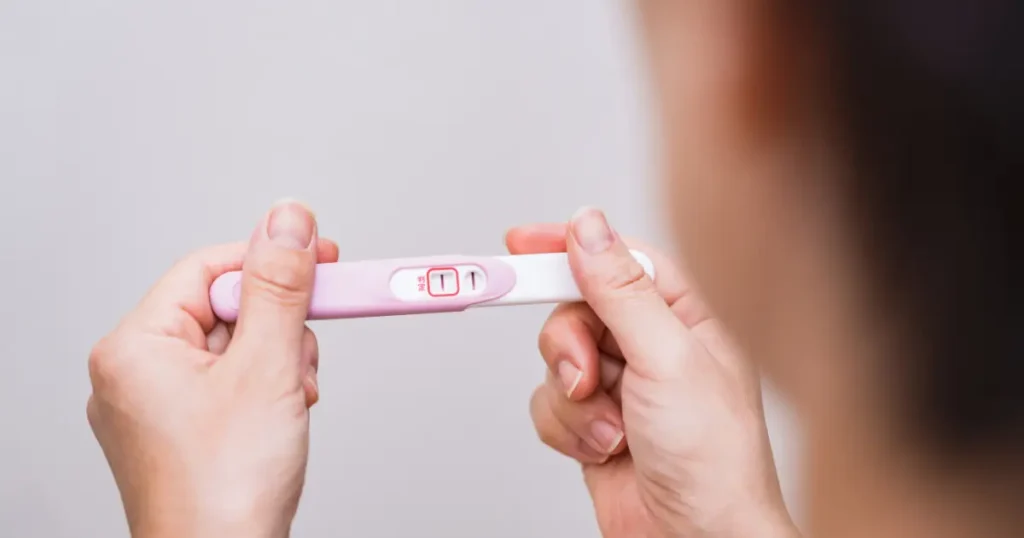
Your ovulation tests look right. Your temperature chart shows a clean rise. Also, Your period comes on time. Yet month after month, nothing happens. That’s when many people start asking: can you ovulate and not release an egg?
The short answer is that it appears to be possible, and the main condition behind it has a long name: luteinized unruptured follicle (LUF) syndrome. It’s also a topic where experts still debate how common it is and how much it matters. In this guide, I’ll explain what it is, why normal tests can miss it, and how doctors check for it. I’ll also be clear about what we don’t know. This is general education, not a diagnosis.
The Short Answer: Can You Ovulate and Not Release an Egg?
Strictly speaking, ovulation means an ovary releases an egg. So if no egg comes out, that isn’t true ovulation. But your body can show every usual sign of ovulation without that last step.
That’s the part that surprises people. Let’s break it down.
Ovulation versus the signs of ovulation
At home, you never see the egg. You only see clues that come from hormones. An LH surge, a rise in temperature, and a rise in progesterone are all signs that go along with ovulation.
Those clues work well most of the time. But they measure hormones, not the egg itself. In rare cycles, the hormones can do their job while the follicle stays closed.
What this can look like in a real cycle
A follicle grows and matures. Your body sends the LH surge. The follicle changes and starts making progesterone. Your temperature rises and your period arrives on schedule. But the egg stays inside the follicle.
From the outside, that cycle looks normal. That’s why this can go unnoticed for a long time.
What each sign really shows
This table explains why a normal-looking cycle doesn’t always prove the egg was released.
| Common Sign | What It Actually Shows |
|---|---|
| Positive ovulation test (OPK) | An LH surge happened |
| Temperature rise (BBT) | Progesterone went up |
| Urine progesterone (PdG) test | Progesterone went up |
| Mid-luteal blood progesterone | The follicle or corpus luteum is making progesterone |
| Regular period | The uterine lining shed |
What Is Luteinized Unruptured Follicle (LUF) Syndrome?
LUF syndrome is the best-known way to ovulate and not release an egg. The name sounds heavy, but the idea is simple. The follicle behaves as if ovulation happened, but it never opens.
Here’s how it works, and why it’s so easy to miss.
How it works
A follicle is a small fluid-filled sac that holds an egg. Normally, after the LH surge, the sac ruptures and releases the egg. The empty sac then turns into a structure that makes progesterone.
In LUF, the sac starts making progesterone but doesn’t rupture. The egg stays inside. On an ultrasound, the follicle may stay in place instead of collapsing.
Why it’s easy to miss
Because the follicle still makes progesterone, the usual checks look normal. An OPK shows a surge. A BBT chart shows a rise. A progesterone test comes back at a level that suggests ovulation.
That’s why it’s sometimes described as anovulation in disguise. Standard home tracking and blood tests can’t tell the difference. Only repeated ultrasound scans can show whether the follicle ruptured.
How common is it?
Here I want to be careful. From what I found, estimates vary widely between studies. One study of women with unexplained infertility found it in about 4% of them. Other sources quote much higher numbers in specific groups. Some research also suggests it can happen occasionally in fertile women.
Experts also debate how often it is a true cause of infertility, since ultrasound criteria and study designs differ. Treat any single percentage with caution. If you want an exact figure for your situation, ask a fertility specialist.
Normal ovulation versus LUF
This table shows where the two cycles look the same and where they differ.
| Feature | Normal Ovulation | LUF Syndrome |
|---|---|---|
| LH surge | Yes | Yes |
| Progesterone rise | Yes | Yes |
| Temperature rise | Yes | Often yes |
| Follicle ruptures | Yes | No |
| Egg released | Yes | No |
Other Ways a Cycle Can Look Like Ovulation Without an Egg
LUF isn’t the only way. A few other situations can create a similar picture, though in different ways. Knowing them helps you understand your own results.
Each one has a different cause and a different next step.
An LH surge without ovulation
An LH surge doesn’t guarantee ovulation. In some cycles, the surge happens and no egg follows. This is more common with PCOS, high stress, and perimenopause. In those cases, you may see a positive OPK and no real ovulation.
That’s one reason I’d never rely on an OPK alone. Pairing it with BBT or a progesterone test adds helpful evidence. But even those can’t catch LUF, as the table above shows.
A follicle that never matures
Sometimes follicles start to grow but don’t reach full size. They stall, and the cycle ends without an LH surge or egg release. This is a plain anovulatory cycle. You may still bleed, but not from a true ovulatory cycle.
This pattern is common with irregular cycles, PCOS, low energy, and some life stages. A doctor can look for the cause.
Empty follicle syndrome
In IVF, a rare problem called empty follicle syndrome can occur. Doctors collect fluid from follicles that look normal, but no eggs are retrieved. This is a different situation from natural cycles, but it shows that a follicle doesn’t always mean an egg you can use.
It’s mostly discussed in fertility treatment, so it won’t apply to most readers. I mention it so the term doesn’t confuse you in your own research.
How the scenarios compare
Use this table to see how each case differs.
| Scenario | What May Happen |
|---|---|
| LUF syndrome | Follicle makes progesterone but doesn’t rupture |
| LH surge without ovulation | A positive OPK, but no egg released |
| Stalled follicle growth | No surge and no ovulation |
| Empty follicle syndrome | Follicle looks normal, but no egg found in IVF |
Why a Follicle Might Not Rupture
The honest answer is that we don’t fully know. In many people, no clear cause is found. In others, doctors suspect a link to another condition or a medicine.
The evidence here is limited and mixed. So I’ll keep this section careful.
Factors that have been linked
Some studies and clinical sources connect LUF with conditions like endometriosis and hormone imbalances, including PCOS. Some research also suggests that certain pain relievers, called NSAIDs, may interfere with follicle rupture when taken around ovulation. Results on this are mixed.
This is where I’d say talk to your doctor before changing anything. Don’t stop or start a medicine on your own because of something you read.
What the evidence looks like
This table sums up what’s reported and how firm it is. It isn’t proof of cause.
| Possible Factor | What We Know |
|---|---|
| Endometriosis | Linked in some studies; evidence is limited |
| PCOS and hormone imbalance | Reported in some studies; not fully settled |
| NSAID use near ovulation | Some research suggests an effect; findings are mixed |
| No clear cause | Common, and often nothing is found |
How Doctors Check Whether an Egg Was Released
If you suspect this, you can’t confirm it at home. The check happens in a clinic. It takes time and a few visits, but it’s simple in concept.
Here’s what that looks like.
Why standard tests can’t tell
OPKs, BBT charts, urine progesterone tests, and blood progesterone all depend on hormones. In LUF, the hormones look normal. So these tests can’t separate a true ovulation from an unruptured follicle.
If you’ve done everything right and the results look good but pregnancy hasn’t happened, it doesn’t mean you failed. It may mean you need a different kind of test.
Serial transvaginal ultrasound
The most reliable way to check is a series of vaginal ultrasounds across one cycle. The doctor watches the follicle grow to full size. Then they check whether it collapses after the LH surge or stays intact.
Signs of rupture can include the follicle shrinking and a small amount of free fluid in the pelvis. If the follicle stays in place, that may point to LUF. Doctors often repeat the check over more than one cycle, since a single cycle can mislead.
Where blood tests fit
Blood tests still matter. They help show whether progesterone rose and can help find causes like thyroid problems or high prolactin. But they can’t prove the egg was released.
Your doctor may combine ultrasound, blood tests, and your tracking notes. That gives a fuller picture than any one test.
What each test can and can’t detect
This table shows how well each test spots the problem.
| Test | Can It Detect LUF? |
|---|---|
| OPK (LH test) | No, it only shows the surge |
| BBT chart | No, it only shows progesterone |
| Urine PdG test | No, it only shows progesterone |
| Blood progesterone | No, it can look normal |
| Serial ultrasound | Yes, it can show whether the follicle ruptured |
What Happens If LUF Is Suspected
A diagnosis can feel like a lot. But it can also bring relief. After months of “everything looks normal,” you finally have an explanation to work with.
Treatment depends on your whole situation, so I’ll keep this general.
Monitored cycles and a trigger shot
Some clinics monitor the follicle by ultrasound. When it reaches the right size, they may give a trigger injection that helps prompt rupture. They then time sex or insemination around it.
Whether this fits you depends on your age, history, and test results. Your doctor will explain the pros and cons.
Ovulation medicines and fertility treatment
Doctors may also use ovulation medicines, intrauterine insemination (IUI), or IVF. An older study of women diagnosed with LUF reported that many conceived after follicle stimulation, but it was small and old. I wouldn’t treat it as a guarantee.
The choice depends on other factors too, like sperm quality, fallopian tube health, and age. Ask your doctor about the full picture, not just LUF.
It may not happen every cycle
One thing I found interesting is that LUF may not occur in every cycle. Some people have it in one cycle and release an egg in the next. That’s one reason repeat monitoring helps, and one reason people sometimes still conceive naturally.
If you ever get a diagnosis, ask whether you’d expect it to repeat. Your doctor can tell you what the evidence suggests for your case.
Myths About Ovulating Without Releasing an Egg
This topic has a lot of half-truths. Some come from internet forums. Some come from oversimplified articles.
Here are the ones I’d correct first.
| Myth | Reality |
|---|---|
| “A positive OPK proves an egg was released.” | It only shows the LH surge. |
| “A temperature rise proves ovulation.” | It shows progesterone, not egg release. |
| “A normal progesterone test rules it out.” | LUF can produce normal progesterone. |
| “You can diagnose it at home.” | Only ultrasound can check whether the follicle ruptured. |
| “If you have LUF, you’ll never conceive.” | It may not occur every cycle, and treatments exist. |
| “LUF explains all unexplained infertility.” | Many causes exist, and experts debate how often LUF is the cause. |
What You Can Do Now
You don’t need to panic. Most people with a normal-looking cycle do ovulate. But if you’ve been trying for a while, it’s smart to be proactive.
Here’s a practical way to approach it.
Keep your tracking notes
Write down your OPK results, BBT readings, and any progesterone test results. Note your cycle length and any symptoms. These notes help your doctor see the pattern and decide whether ultrasound tracking makes sense.
Bring them to your visit. A clear log saves time and makes your questions more specific.
Questions to ask your doctor
A few good questions can help the visit go further.
- Do my tests suggest that an egg is being released?
- Would ultrasound follicle tracking help in my case?
- Could another condition, like endometriosis or PCOS, be involved?
- Should I change any medicines, such as pain relievers?
- What are my options if tracking shows a problem?
When to book a visit
You don’t need to wait for a perfect chart. Consider a visit if any of these apply.
- You’ve been trying to conceive for 12 months and you’re under 35.
- You’ve been trying for six months and you’re 35 or older.
- Your tests show ovulation, but you haven’t conceived after several cycles.
- Your cycles are shorter than 21 days or longer than 35 days.
- You’ve missed several periods in a row and you’re not pregnant.
- You have pelvic pain, very painful periods, or heavy bleeding.
If you’re over 40, or you already know of a fertility concern, many doctors suggest checking sooner.
Quick Answers About Ovulating Without Releasing an Egg
Short, direct answers help when you’re tired of searching. Here are the questions I see most.
For personal advice, a fertility specialist can look at your history and tests.
Can you ovulate and not release an egg?
It appears so. In luteinized unruptured follicle (LUF) syndrome, the follicle matures and makes progesterone but doesn’t rupture. The hormone signs look normal, but no egg is released.
Can an ovulation test be positive if no egg is released?
Yes. An OPK detects the LH surge, not the egg. The surge can happen without ovulation, and in LUF it happens while the follicle stays closed.
Can you have a normal period if you don’t release an egg?
Yes. A period can follow a cycle without egg release. That’s why a regular period doesn’t prove ovulation.
How do you know if you have LUF syndrome?
You can’t know from home tests. Serial transvaginal ultrasound across the cycle is the main way to check whether the follicle ruptures. A fertility specialist can arrange it.
Can you get pregnant with LUF syndrome?
It may be possible in cycles where the follicle does release the egg, since it may not happen every cycle. Treatment options also exist. A specialist can explain what’s realistic for you.
Is LUF syndrome common?
Estimates vary widely, and experts debate how often it causes infertility. If you’re worried, a doctor can look at your own situation instead of relying on a single statistic.
Final Thoughts
The biggest lesson is that signs of ovulation aren’t the same as ovulation. An LH surge, a temperature rise, and a progesterone rise all show hormones at work. They don’t prove an egg left the follicle. If you ever wonder, can you ovulate and not release an egg, the cautious answer is yes, in some cycles, and only an ultrasound can show it.
I’d keep your expectations balanced. This isn’t the most likely reason for a delay, and experts still debate how often it matters. But if your tracking looks normal and pregnancy isn’t happening, it’s a fair question to bring to your doctor. Keep your notes, ask clear questions, and don’t blame yourself. A good workup can turn a confusing pattern into a plan.